
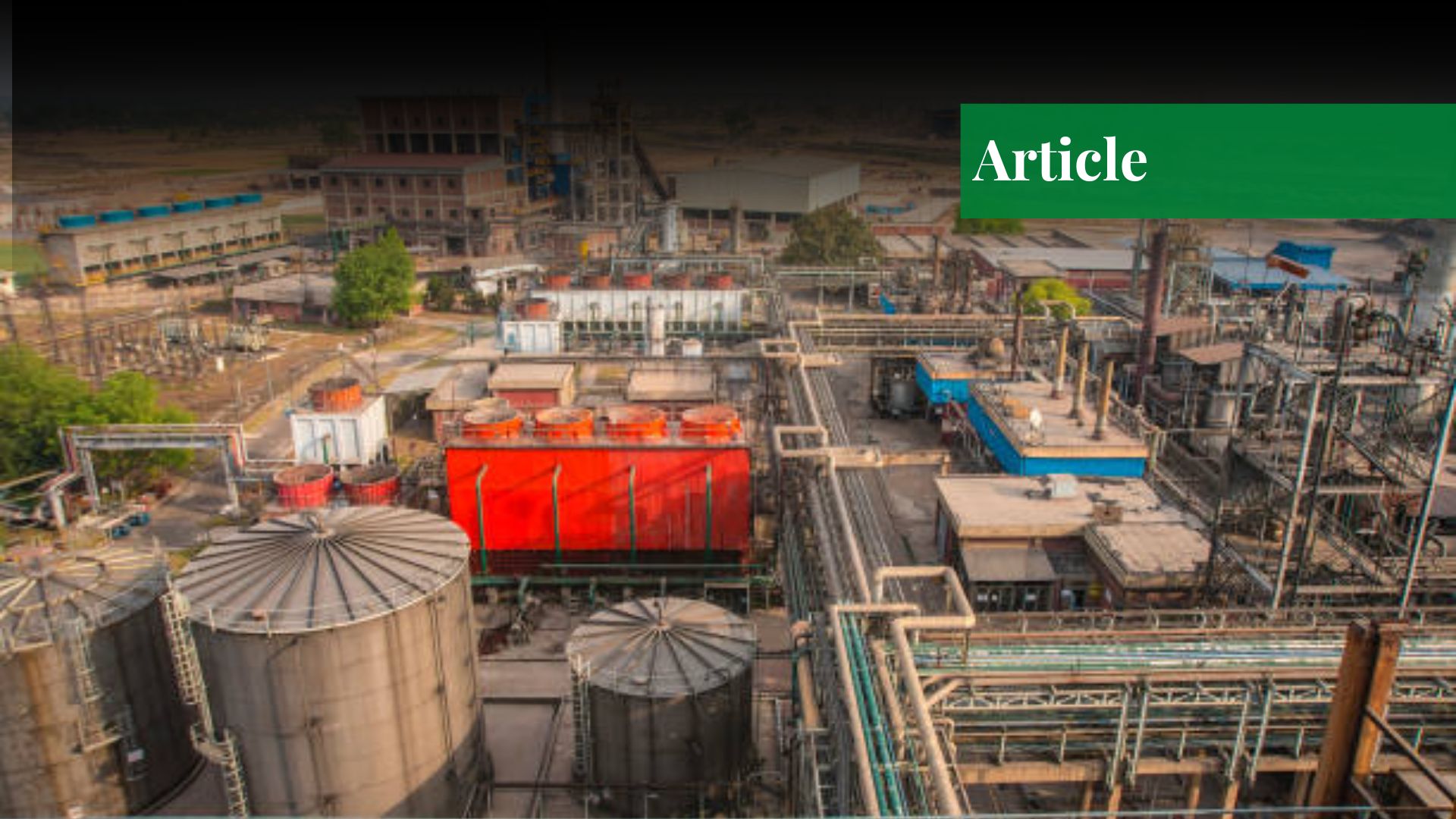

Pakistan Steel Mills Corporation, commonly known as Pakistan Steel Mills (PSM) or Pak Steel, is located in Karachi, Sindh, and stands as a symbolic representation of Pakistan’s industrial aspirations. Established in the 1970s with the assistance of the Soviets, Pak Steel aimed at reducing the reliance on imported steel and fostering a self-sufficient economy. However, constant economic strain, political interference, and mismanagement led to its non-operation since June 2015. Recent revival efforts, particularly a partnership with Russia, have signaled a turning point in the history of this industrial giant, making it once again relevant for Pakistan’s economy.
The Genesis of Pakistan Still Mills
It was not so long after independence that Pakistan realized the need for a domestic steel industry. The government, under the leadership of then-Prime Minister Liaquat Ali Khan, pursued the idea that a self-reliant steel and iron industry was crucial for the economic and industrial growth of the country. The dependence on imported steel was not only costing expenditure but also leading to industrial vulnerability. The concept was formally presented in the Five-Year Plan (1955-60), with the Council of Scientific and Industrial Research (PCSIR) advocating for the construction of a national steel mill. However, discussions over the financing, sourcing, and locations delayed the project for approximately two decades. Finally, on July 2, 1968, Pakistan Steel Mills Corporation was finally set up.
In the 1950s, the Soviet Premier Nikolai Bulganin offered technical and financial support to proceed with the establishment of steel mills in Pakistan. After extensive negotiations, an agreement was signed in 1969 with the then USSR’s V/O Tiajproexport for the preparation of a feasibility report and the establishment of a steel mill in Karachi. The decision to rely on imported iron ore instead of domestic resources sparked controversy and debates.
Earlier, two West German companies named Krupp and Salzgitter AG, had offered to build steel mills based on domestic iron ore in Kalabagh. Despite positive feasibility tests, the decision was inclined in favor of the Soviet Union aligning with the political and bureaucratic vision of a single public-sector steel mill. Though PSM was commissioned as a private company in the public sector in 1968, the nationalization campaign in 1972 brought it under government control.
The 1971 agreement with the USSR for the techno-financial support of a coastal-based mill proved monumental. The foundation stone for this high-profile project was laid by then-Prime Minister Zulfiqar Ali Bhutto on December 30, 1973. Construction began in 1974 under the supervision of Soviet engineers and experts. Sprawling over 18,600 acres, PSM was designed to produce 1.1 million tonnes of steel annually. The first blast furnace was commissioned in 1981, marking Pakistan as a steel-producing nation. The formal inauguration was launched by General Zia-ul-Haq on January 15, 1985. At its peak, Pak Steel was a major contributor to the country’s GDP by offering various electrical, mechanical, metallurgical, and electronic services.
Challenges and Decline
Despite its promising start, PSM took a downward trajectory during the 1990s. The internal and external challenges turned the once-thriving industry into a “white elephant” for Pakistan’s economy.
Mismanagement and Corruption
PSM suffered from chronic management issues exacerbated by political interference and interest wars. Corruption cases further contributed to the loss of resources and money. An audit report in 2011 declared that PSM suffered the loss of Rs. 10 billion due to corrupt practices and Rs. 12 billion due to mismanagement.
Outdated Technology
The mill’s infrastructure, based on the USSR’s blast furnace and oxygen furnace technology, gradually started to lose its worth. Unlike other countries’ Soviet-financed mills, Pakistan failed to expand its steel mill. Iran expanded its mill to a capacity of 3 million tonnes, whereas Pakistan remained stagnant and did not invest in modernization.
Financial Distress
Pakistan Steel Mills has accumulated whopping debts with a net loss of approximately Rs. 600 billion, including Rs. 224 billion in operational loss and Rs. 335 billion in outstanding payments. In 2020, it was revealed that the government had provided Rs. 58 billion to PSM since 2008 through five bailout packages. High energy costs and unpaid dues led to the suspension of supply by Sui Southern Gas in 2024.
Labor Issues
PSM had a bloated workforce with many workers hired through political patronage. The overstaffing, combined with an unskilled labour force, stalled productivity. In 2020, 9,350 employees were fired after announcing a Rs. 20 billion compensation package for the sacked staff. This decision led to inadequate compensation and unemployment for many workers and their families.
Failed Privatization
Privatization was proposed as a solution to the constant deficits faced by PSM. Attempts made in 2006 under the then-Prime Minister Shaukat Aziz were halted by the Supreme Court, citing irregularities in the process. Subsequent attempts in 2015 and 2023 faced a similar fate as resistance was shown by workers, unions, and political groups.
By 2015, PSM’s capacity had declined to zero, and the losses soared to reach Rs. 600 billion in 2024. The federal government’s decision to shut down PSM in 2024 marked the lowest point in its history.
Recent Revival Efforts
In response to continuous economic strain and public backlash, the authorities began to redirect and reshape the course of the Pakistan Steel Mills. In 2023, the caretaker government took a bold decision to remove PSM from the privatization list. Rather, the Ministry of Industries and Production was directed to form a revival plan for PSM. On December 22, 2023, the Senate Standing Committee on Industries and Production advocated for immediate action, proposing public-private partnerships, training programs, investment in advanced technology, and the restoration of a skilled workforce. In 2024, the federal government allocated 4,840 acres of land to Sindh for a special economic zone (SEZ) and directed that 700 acres of earmarked land be kept intact for the reestablishment of PSM.
The most significant development is the Pakistan-Russia partnership formalized in July 2025. The accord was signed in Moscow by Pakistan’s secretary of industries and production and the director general of Russia’s Industries Engineering LLC. This pact underscores the revival of a long-standing industrial partnership between both countries. It also aims to upgrade the infrastructure, improve the technology, and restart production at PSM, building upon the legacy of the Soviet to initiate it.
The move has come after the bilateral discussions had intensified at the end of 2024 and the start of 2025. Earlier, Sindh’s chief minister, Murad Ali Shah, was reported to have asked for Russian support during his meeting with Ambassador Albert P. Khorev. These discussions gained further hype at the start of the year when a team of Russian technical experts visited to assess the feasibility of PSM’s revival. A planned summer deal between both countries to build a new steel mill in Karachi at a strategic location has also been the talk of the diplomatic town. The collaboration between Pakistan and Russia is a part of a broader economic realignment, including expanding trade and deepening energy cooperation.
A Path Forward
Reviving Pakistan Steel Mills requires more than nostalgic optimism: persistent commitment to cutting-edge technology, transparency, non-politicization, and environmental regulations are a few steps to begin with. Strategic financing and smart investment can overcome the estimated $1 billion cost for modernization. By leveraging the Pakistan-Russia partnership, PSM can be integrated into the broader economic frameworks to increase its export potential. By ensuring a skilled labor force and reliable administration, PSM can reduce the annual steel import by 30% while adding 0.5 to 1% to the GDP. By responsible execution, PSM can regain its status as a precursor of economic progress, transforming from a symbol of downfall to a metaphor of rejuvenation.
If you want to submit your articles and/or research papers, please visit the Submissions page.
To stay updated with the latest jobs, CSS news, internships, scholarships, and current affairs articles, join our Community Forum!
The views and opinions expressed in this article/paper are the author’s own and do not necessarily reflect the editorial position of Paradigm Shift.

Laiba Khalid is a university student and emerging content writer with a keen focus on socio-political issues, governance, and policy. With a background in English and an interest in current affairs, she brings a critical and youth-driven perspective to contemporary debates. Laiba is particularly interested in bridging academic insight with real-world challenges. She writes with a commitment to clarity and research-based analysis.