

The 21st-century geopolitics is primarily focused on great power rivalry, particularly between the US and the PRC. The two powers have been confronting each other for a long time through diverse ways, i.e., deterrence, compellence, etc. Renewal of Chinese hegemony in the Indo-Pacific has caused concern in the US strategic community. China’s 9-dash lines surround almost 99% of the South China Sea, occupying other sovereign countries’ territories. Most of such states fall into the category of US Pacific allies, where US military footprints stand against the Chinese threat. But in the case of the Philippines, the US’s erstwhile big military base, Americans lost their grip strategically in the early 1990s.
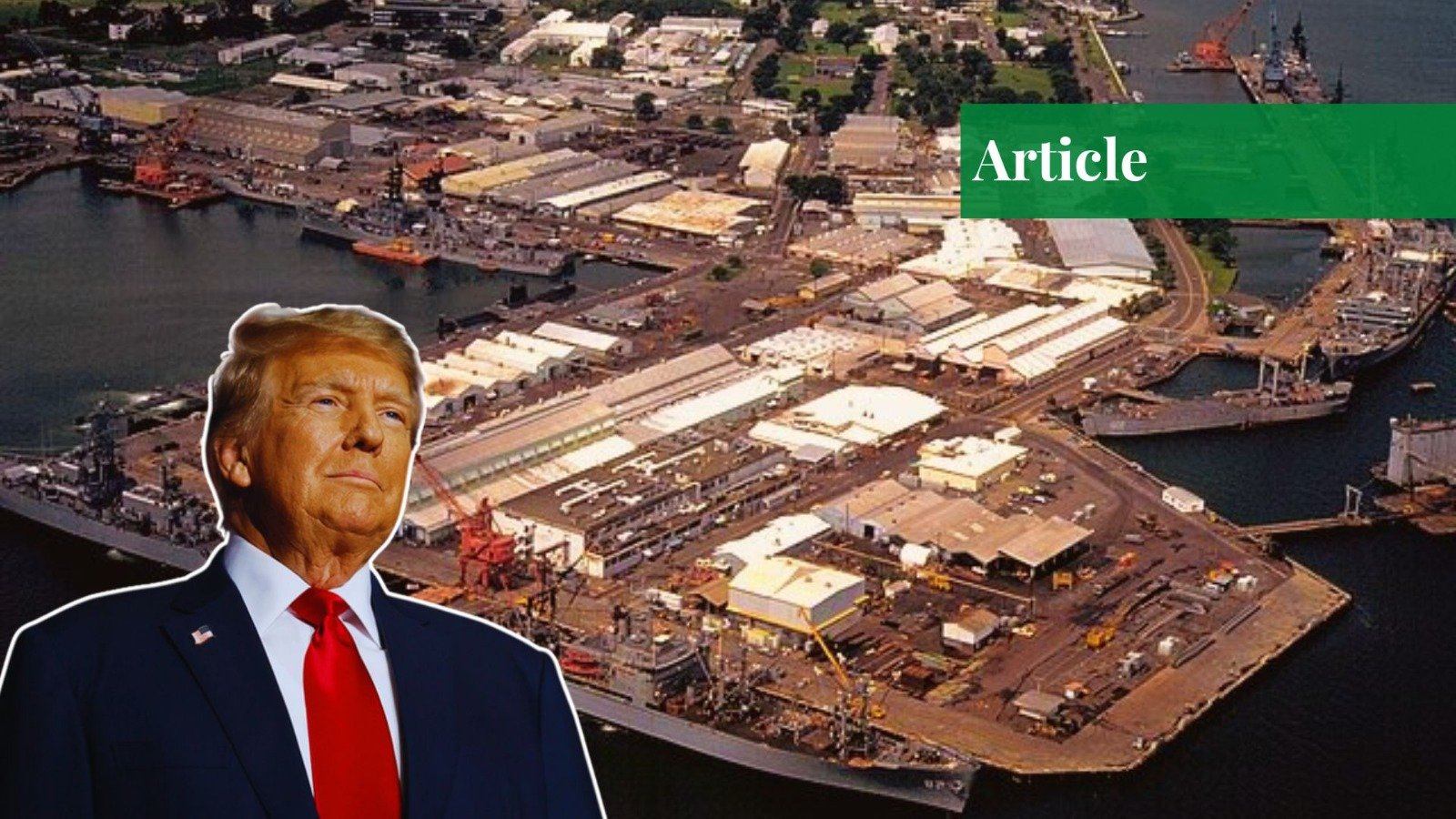
Just imagine a huge blue bay, once filled with American warships on stand-by. Now, the same place in the Philippines stirs again in a new surge of tensions in the South China Sea. Subic Bay’s deep waters keep secrets of past battles and current rivalries, dragging the US into the mix again against China’s aggressive moves. The US constructed a key base there during the Cold War. It shut down in 1992 following a volcanic eruption and domestic ballots. Recently, a new agreement has allowed US soldiers to rotate through. This is while China is reinforcing troops in the area. China moves forward, and the US responds to maintain equilibrium in the region.
History of the US and the Philippines
The Philippines’ Subic Bay fell directly into US control in 1901. It developed into the largest overseas naval base by the time of World War II. Vessels moored there to battle Japanese forces throughout the Pacific. During the Vietnam War, the base provided troops with repair and resupply. More than 10,000 sailors resided nearby in Olongapo. Subic was dealing with massive carriers and subs by the 1980s. It represented the power of the US. During that time, there was the development of strong relations between the two countries.
In 1991, a volcanic eruption caused immense damage to the base. Additionally, the Philippines terminated the lease in 1992 in the face of anti-base protests. The US withdrew, leaving behind docks and runways. Subic Bay transitioned to a free-port zone. However, the old naval shipyards remained intact, awaiting utilization. To this day, its proximity to major sea lanes renders it crucial. The natural shelter of the bay is well-suited for large ships. Geopolitics never went away; it just bided its time.
Strategic Significance of Subic Bay
The recast of Subic Bay as a US military logistics center is an extraordinary enterprise. It is the establishment of a high-tech ammunition plant and depot in the Subic Bay Freeport zone. Subic Bay has a strategic location in the middle of Southeast Asia, with direct access to the critical shipping lanes. In contrast to other bases that specifically aim for the docking of fleets or accommodation of troops, this new base would be tailored with the purpose of having a constant and instant supply of munitions for the US and allied troops fighting throughout the Indo-Pacific. The natural and central location of Subic Bay allows it to become one of the biggest naval bases in the world, including the accommodation of aircraft carriers. This makes it an irreplaceable strategic resource for forward-deployed operations.
Enhanced Defense Cooperation Agreement
The EDCA was signed between the Philippines and the US in 2014. This defense agreement was for a period of 10 years. The year 2025 is seeing the re-emergence of this defense pact. This agreement is the foundation for Subic’s comeback. It indicates a partnership founded on trust and mutual objectives. Article 3 of the agreement clearly lays out the essence of the US presence in the Philippines. It declared, “With regard to consideration of the opinions of the Parties, the Philippines authorizes and agrees that United States forces, United States contractors, and vessels, vehicles, and aircraft operated by or for United States forces may perform the operational activities with regard to agreed locations.”
Revival of the US Indo-Pacific Strategy
Started as the ‘Pivot to Asia’ by the Obama administration, the US Indo-Pacific strategy was designed to construct a rebalancing framework in the region. Focused on the prime objective of containment of China, the Indo-Pacific Strategy lays out the aims and joint objectives to restore the US historical place of eminence. This is what the Trump administration is attempting to do through the Subic military project. Subic Bay’s reactivation is exactly what this doctrine calls for. It gives America the capability once more of holding forward-deployed logistics and quick response in the disputed waters, particularly the South China Sea and Taiwan Strait.
Response to China’s Military City Threat
The reactivation of the US-Philippines combined military action has a distinct symbolic and strategic significance within the framework of counterbalancing China’s ascension. The last decade has seen Beijing undertake a massive naval expansion, acquiring aircraft carriers, guided missile destroyers, and nuclear-powered submarines. Concurrently with this, China is constructing the world’s largest military city, measuring about 10 times larger than the Pentagon. Therefore, Subic Bay is a natural solution to this concentration. Located at the end of the first chain of islands, a strategic line of defense along which Japan to Taiwan and the Philippines extends, the base caters to a traditional US and allied policy of containment. Possession of this chain prevents Chinese naval forces from having unrestricted access to the Western Pacific.
Philippines Self-Reliant Policy
For Manila, the return of an American military base at Subic has both symbolic and pragmatic implications. President Ferdinand Marcos Jr. justified the plan under his administration’s policy of a self-reliant defense posture. He himself said, “Are we not already a target for China? I believe what we need to be considering is defending the Philippines.” His statements put the issue not as a foreign enticement but as a matter of practical necessity to enhance national defense in the wake of increasing Chinese aggression in the West Philippine Sea. Defense Secretary Gilbert Teodoro Jr. has further mentioned, “The project will not just be a military facility but will also have a commercial foreign direct investment type of model. We can see a private company doing it on a commercial scale, so that they could employ individuals on a commercial scale, subject to the size.”
Conclusion
The revival of the US military presence in Subic reflects the intimate historical ties between Washington and Manila. Shedding its geo-economic relevance, Subic is again turning out to be the hub of the Great Game in the Western Pacific. The Subic revival depicts the changing dynamics of the Indo-Pacific, where Manila has once again come into the orbit of great power competition. Thus, it reflects both the need to deter China’s hegemonic designs in the region and the Philippines’ decision to play a more active role in the regional strategic space.
If you want to submit your articles and/or research papers, please visit the Submissions page.
To stay updated with the latest jobs, CSS news, internships, scholarships, and current affairs articles, join our Community Forum!
The views and opinions expressed in this article/paper are the author’s own and do not necessarily reflect the editorial position of Paradigm Shift.

He is pursuing a BS in International Relations programme from International Islamic University, Islamabad and has a keen interest in research works, policy analysis, defence and strategic studies and conflict resolution.