

Introduction
Pakistan is among the top 10 largest tobacco producers in the world and an important market for tobacco products. Since its independence, tobacco farming and products have significantly contributed to Pakistan’s economy. The central tobacco-growing region of Pakistan is Khyber Pakhtunkhwa, which yields an average of 70-75 million kg of tobacco annually. Only 0.21% of the total irrigated land in Pakistan is used to grow tobacco. Still, the crop generates significant tax revenue and employment opportunities, generating Rs. 190 billion for the national treasury and employing 75,000 individuals, 45,000 of whom belong to Khyber Pakhtunkhwa.

History of Tobacco Cultivation in Pakistan
In 1947, when Pakistan gained independence, the country had no farms for growing tobacco. Although the British American Tobacco Company operated in the region, it primarily imported tobacco, which was then manufactured into cigarettes and other tobacco products for sale. Tobacco farming in Pakistan began in 1948, and by 1969, the country had become self-sufficient, no longer requiring imports of raw tobacco. Instead, Pakistan emerged as a significant exporter.
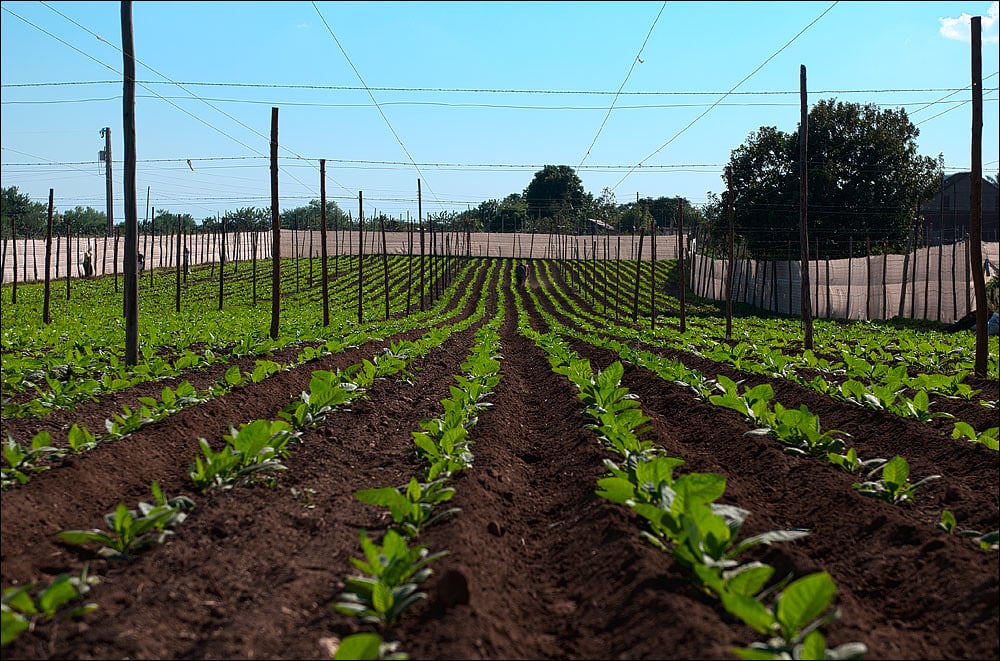
What started on just 20 acres of land has grown into a substantial revenue-generating industry that continues to expand. An interesting aspect of the tobacco industry in Pakistan is that a recent survey indicates that from 1980 to 2020, tobacco yield increased from 40,000 tons to 70,000 tons, while the area used for cultivation expanded by only 4,000 hectares. This shows that although Pakistan has significantly increased its tobacco yield over time, only 16% more land is utilized for this crop. Currently, the most significant companies in the Pakistani tobacco market include Pakistan Tobacco Company (PTC) – a subsidiary of British American Tobacco (BAT) – Philip Morris International (PMI), and a few local companies.
Economic Influence of the Tobacco Industry in Pakistan
In recent years, especially since the early 2000s, the tobacco industry in Pakistan has significantly influenced the country’s economy. The industry contributes approximately Rs. 190 billion annually to the national treasury. By 2018, Pakistan had become the world’s fifth-largest exporter of raw tobacco. However, there is a darker side to this industry. Although Pakistan is generating revenue from tobacco, and statistics show this revenue is increasing annually, it only accounts for 20% of the potential tax revenue that should be collected from the tobacco industry.
According to a statement by British American Tobacco (BAT), which holds more than 80% of the market share in Pakistan’s tobacco sector. 54% of the cigarettes sold in the country are illicit. In 2021, the percentage of legal/registered cigarettes sold in Pakistan was 80%, while illicit/unregistered cigarettes made up 20% of the sales. This, however, changed when, in 2022-23, Pakistan, abiding by the requirements of the WHO, applied a 45% tax on cigarettes being sold.
However, this gave birth to a grave problem overnight, and this was when the illicit cigarette market saw a boom in the country. Local tobacco growers and manufacturers started to manufacture their cigarettes in unregistered companies and sold them in the local markets without the taxes that were otherwise levied on the registered brands. Right now, the situation is that multiple unregistered/unregulated local manufacturers do not come into the tax net and make up 80% of the market.
An important thing to note is that because these manufacturers are unregulated, the quality of the products sold is not disclosed. Unlike the registered brands, the contents and precautions are not made transparent by these local manufacturers, which has resulted in a tobacco pandemic across the country. Due to the significantly lower prices of these products, the local population, including the working class and the youth of the country, has started buying these poor-quality cigarettes over the expensive legal ones that are mostly imported and have an excessive tax levied on them. This has consequently resulted in a rise in cigarette-related health issues, which include but are not limited to cancer.
Another aspect to be considered in this regard is that of smuggled cigarettes. In recent years, there has been a significant rise in the smuggling of import-quality cigarettes in Pakistan. Because they are unregulated, no duty fees are applied, making them cheaper. In the same markets, the brands imported are subject to a 200% excise rate, making them much more expensive. This is why people buy smuggled cigarettes, as they offer the same quality as the imported goods but at a much lower price. These smuggled cigarettes include brands like Dunhill, Marlboro, Pine Mini, and Benson & Hedges, to name a few.
According to a recent survey, approximately 104 cigarette brands are being sold below the minimum legal price in Pakistan, which makes up a significant portion of the market. Although Pakistan has applied a 150% excise duty on the cost of cigarettes, it is only 45%, while the WHO recommends a minimum of 70% tax on cigarettes. This means that Pakistan is already getting 56% less than what it can potentially earn from this industry. On top of that, due to 80% of the market turning illicit, there is no tax being collected on that either, which is another loss in the potential revenue collection, resulting in a significant gap in tax revenue from tobacco products in local markets.
The illicit tobacco market has impacted legal tobacco businesses in the country. Despite being one of the most significant sources of revenue for Pakistan, tobacco farmers and local laborers are often found to be below the poverty line. This situation highlights the consequences of a lack of policies and monitoring by government agencies in the tobacco sector. Research shows that illicit cigarettes are sold in the country at only a quarter of the price of legal cigarettes, which raises concerns. In a recent interview, former Prime Minister of Pakistan Shahid Khaqan Abbasi said that Pakistan’s struggling economy relies on revenue from the tobacco industry to manage its growing debt and that the government and agencies like the Federal Board of Revenue (FBR) need to regulate the sales of tobacco products at the retail level.
WHO Framework Convention on Tobacco Control
In 2003, the World Health Organization adopted a treaty known as the Framework Convention on Tobacco Control (FCTC) under Article 19 of its constitution. This treaty aims to reduce the use of tobacco products and the associated health risks. Pakistan is one of the 181 countries that have signed this treaty. The FCTC provides various guidelines to decrease tobacco consumption, including banning promotional advertising of tobacco products, prohibiting sales to and by minors, and requiring warnings about the health risks of tobacco use.

A key guideline outlined in Article 6 mandates that signatories implement price and tax measures to reduce demand for tobacco and restrict the sale of untaxed and duty-free tobacco products. As per the guidelines of this treaty, Pakistan applied a 150% excise duty increase in the years 2022-2023 to deter the usage of tobacco products in the country. This excise rate is still significantly less than the requirements under Article 6 of the FCTC. The increase in excise rate has negatively affected the situation in Pakistan, where, as soon as the increase was implemented, it gave rise to an overnight illicit market, causing a 12% decline in the revenue that was previously generated from the tobacco industry. Additionally, as the untaxed and unregistered cigarettes make up 58% of the total sales, the quality of these products is uncertain as they are not being regulated by any government agency, unlike the products of the registered manufacturers, which is causing serious health concerns.
Inadequate Policies and Lack of Proper Implementation
Although Pakistan increased excise rates on cigarette sales by Article 6 of the FCTC, the country’s tobacco taxation policies (TTPP) failed to achieve their goal of reducing cigarette smoking. The policy was poorly designed and inadequately implemented, resulting in several flaws. One major issue is that the tax was only applied to cigarettes, even though they are just one of many tobacco products used in the country.
Other widely used products, such as hookahs, shisha, vapes, and nicotine pouches, were not subject to the same. Additionally, the treaty requires the countries to display health warnings on product packaging to discourage users; however, this requirement was only partially implemented in Pakistan’s tobacco market. Pakistan has also largely failed to comply with the requirement prohibiting sales by or to minors, as no significant efforts have been made by the relevant agencies. To this day, the country’s minority population remains a victim of its tobacco pandemic.
Conclusion
The Pakistani tobacco industry has always had a strong influence on policymaking, and due to there being cutthroat competition in the industry, all the competitors lobby for what favors them the most. For this situation to be resolved, the Pakistani government and the concerned governmental agencies need to take a unified stance and strictly implement a framework that applies to everyone. The first step to achieving this will be a strict regulation by the FBR and other concerned agencies at the retail level, making sure revenue collection is guaranteed.
Pakistan needs to develop a clear and objective policy for the future, like those of other major tobacco markets around the world. This policy should benefit the economy while also discouraging the use of tobacco products. Recently, there has been a surge in the use of smokeless tobacco (SLT) and SNUS products, which include vapes and nicotine pouches. These products are widely used by the youth in the country yet remain unregistered and unregulated, with no taxes imposed on their manufacture or sale. These products should be properly taxed and regulated to bring them into the tax system. The Pakistani tobacco industry has significant potential to improve the country’s economy, but it also faces serious challenges that could be harmful if left unregulated.
If you want to submit your articles and/or research papers, please visit the Submissions page.
To stay updated with the latest jobs, CSS news, internships, scholarships, and current affairs articles, join our Community Forum!
The views and opinions expressed in this article/paper are the author’s own and do not necessarily reflect the editorial position of Paradigm Shift.

Fatima Mazhar is a 9th-semester law student at the International Islamic University, Islamabad. She is currently serving as the chairperson of the Law Students Council, Pakistan.