
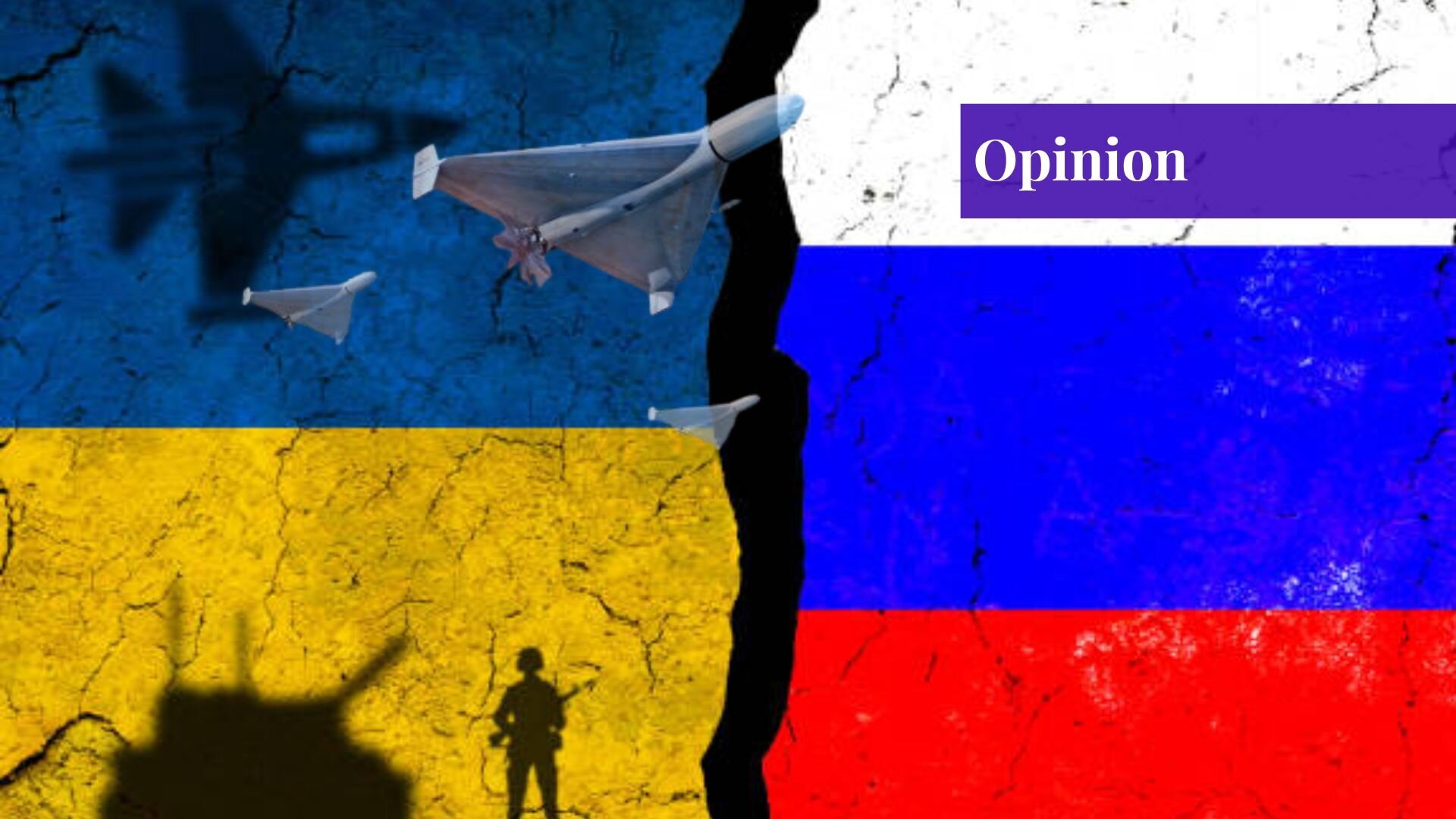

Russian Generals: Ukraine’s Targets
Livy, the historian, tells us that Tarquin the Proud, the last king of Rome, often advised his son Sextus Tarquin to eliminate the powerful citizens and top generals in the Italian cities that Rome wanted to conquer. In the early days of the Roman kingdom, this brutal mechanism deployed by the Tarquin family helped Rome to consolidate its power as the leading city in Italy. The Ukrainian tactic of targeting the top Russian generals on the war front and within Russian territory is a palpable illustration of Tarquin’s admonition to his son.
Since Russia launched its full-scale invasion of Ukraine in 2022, eleven Russian generals have succumbed to death, adding serious damage to Moscow’s military apparatus. Compared to the ratio of senior officers’ losses that Russia suffered in both the Soviet invasion of Afghanistan and the Second Chechen War, the current ratio of casualties of Russian generals is a pure shock to the Kremlin, as Putin initially expected to have a fervent military victory. But, contrary to what Moscow planned, Ukraine’s indirect approach seemed to have been much more effective.
Killing Russian generals, especially the technocrats like Igor Kirillov, who led the Radiation, Biological, and Chemical Defense Forces, was a major blow to Russian war machinery. Despite having endured Putin’s aggression for 40 cruel months in the true sense of valor, Ukraine now faces its toughest moment as Russian drones have begun to penetrate Ukrainian airspace at an unprecedented level, raising fears about how much longer Ukraine can hold the line.
Cracks in the Facade
Some may argue that the liberal voices from the West supporting Kyiv are insufficient, as Ukraine struggles with unreliable partners. In contrast, Russia has strengthened its alliances with Iran and North Korea. This pessimism arises from the current chaos in Ukraine, which may not fully reflect the reality. What is increasingly evident is the gradual erosion of Russian power. However much Russia tries to pose, its internal structure is in the doldrums due to the array of sanctions imposed upon Russia since the Ukrainian invasion, exhausting all its resources. Moreover, the alliances that Putin bolstered for Russian advancement lack their fullest potential, as their members are weaker than Russia. Especially, the devastating effects of Israel-US strikes in Iran have made Tehran vulnerable to standing with Moscow.
Amidst the firepower and massive supply of soldiers from Russia, Ukrainians have managed to make a stir in the Russian psyche through indirectly hitting the weakest points in Russia, wherein assassinating top Russian generals is one move. It is evident that what Ukraine felt before Moscow’s aggression has found its way home, as Russians equally feel a sense of trepidation due to Ukraine’s unprecedented level of drone attacks penetrating the comfort zones of many Russian citizens.
Parades of the ships that were meant to be the limelight of Russia’s much-celebrated Navy Day were cancelled for security reasons, indicating how Russia feels vulnerable due to the terror they triggered. Chaos espoused by Ukraine across Russia has had concrete effects on ordinary Russians, which will have detrimental consequences for Moscow’s military objectives. In the last week of July, Ukrainian drones attacked a power plant, leading to a disruption of the Volgograd railway. Then again, tit-for-tat attacks of Ukraine targeting Sochi, a resort city and Russia’s showcase, mortified the Kremlin as the elite Russian summer breakers had to stay underground before the massive drone strikes.
Meanwhile, the threatening remarks made by Trump during his visit to Scotland are adding one more burden to the Kremlin. Mark Galeotti, one of the leading experts on Russia, states that Putin’s endgame is to wait for the best deal from the West by procrastinating any negotiation with Ukraine, which could worsen the effects on Russia, as the West may eventually unite as a solid alliance against Russia. For instance, the joint declaration made by the Dutch and Norwegian ministries of defense declared that they would jointly protect any arms transported to Ukraine through Poland. Australia’s armed Abraham tanks are expected to arrive in Kyiv after a nine-month wait, adding another layer to Ukraine’s defense apparatus.
On the face of it, the next few months will be the decisive period of the war, deciding which factors will carve its end. On one side, the Trump administration continues to fasten its sanctions upon Moscow to pressure the Russian Federation, and on the other side, Russia keeps intensifying its ground offensive supported by drone strikes in Ukraine. The question that arises is how long Russian forces can sustain their operations as circumstances are increasingly turning against them. This situation serves as a stark reminder of the Carthaginian forces under Hannibal, who were positioned just a few miles from Rome when unexpected attacks in North Africa led to the disastrous outcome of Hannibal’s campaign. Overall, economic sanctions, the deployment of new arms in Ukraine, and Ukraine’s covert operations targeting senior officials in Russia are significant factors that could disrupt Putin’s objectives.
If you want to submit your articles and/or research papers, please visit the Submissions page.
To stay updated with the latest jobs, CSS news, internships, scholarships, and current affairs articles, join our Community Forum!
The views and opinions expressed in this article/paper are the author’s own and do not necessarily reflect the editorial position of Paradigm Shift.

Punsara Amarasinghe is a post-doctoral researcher affiliated with Scuola Superiore Sant Anna, Pisa. He is a PhD holder in Public International Law from the Institute of Law, Politics and Development at Scuola Superiore Sant Anna (Sant Anna School for Advanced Studies) in Pisa, Italy. He holds LL.M. from the South Asian University, New Delhi, and completed his undergraduate studies in law at the Faculty of Law, University of Colombo, Sri Lanka.
He completed another master's degree in international relations from the HSE, Moscow. He has held two visiting research fellowships at the Global Legal Studies Centre at the University of Wisconsin, Madison, and Sciences PO, Paris. He was affiliated with the Minerva Center for Strategic Studies at Hebrew University, Jerusalem for a brief period in 2019.