

Dr. Ghulam Mohey-ud-din is an urban economist from Pakistan, currently based in the Middle East. He holds a PhD in economics and writes on urban economic development, macroeconomic policy, and strategic planning.
The Illusion Of Stability In Firefighting: A Cycle Of Instability
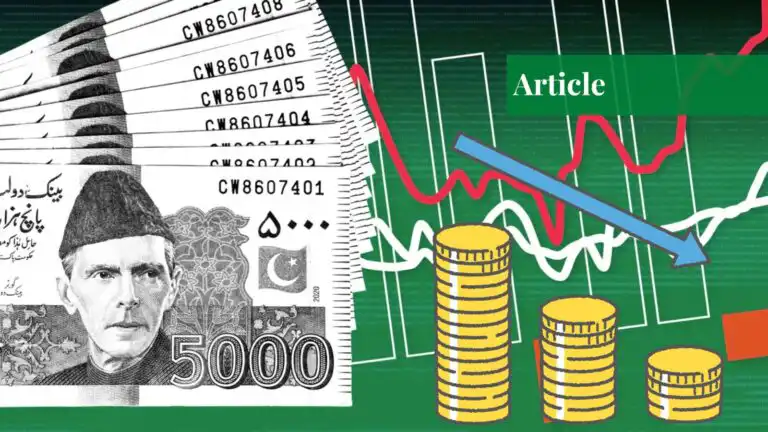
For years, Pakistan has existed in a state of perpetual emergency in terms of economic firefighting. Every crisis – whether it was a balance of payments, inflation, or debt – has been addressed with short-term solutions instead of long-term structural changes. As a result, there are some alarming statistics. Pakistan’s tax-to-GDP ratio has hovered at around 10.6 percent. The country’s public debt has exceeded 70 percent of its GDP (gross domestic product). And despite periods of currency adjustment, Pakistan’s exports have remained stagnant at $32 billion.
These statistics are not just numbers or data; these are examples of how Pakistan has been unable to transition from an economy based upon consumption, rent-seeking, and foreign assistance to one that is based on production, innovation, and export growth. Pakistan’s fiscal and external accounts continue to exist in a vicious cycle of deficit, debt, and dependence on outside assistance. The false sense of security provided today by remittances and international assistance (such as the record-breaking $38.3 billion received by Pakistan in FY25) may provide a level of stability; however, this is fragile and is likely to collapse at some point in the near future.
Deep Structural Flaws: The Economy Behind the Numbers
The many macro-economic weaknesses in Pakistan’s economy arise from deep structural cracks that no amount of short-term policy fiddling will ever fix.
a. Fiscal fragmentation and elite capture: Federal and provincial governments have conflicting incentives. Provincial governments do whatever they want to spend money on, yet collect very little in taxes, whereas the federal government is saddled with unaffordable debt service and subsidy burdens. State-owned enterprises alone lose over PKR 500 billion per year, thus taking away valuable fiscal room. Furthermore, the tax system is regressive – taxing consumers (primarily the poor) for their purchases, while exempting large numbers of wealthy individuals in agriculture, real estate, and retail.
b. External sector myopia: Export stagnation is not a temporary issue – it is structural. Pakistan’s export basket is narrow and dominated by low-value textiles and raw materials. Bangladesh and Vietnam both diversified into high-value manufacturing and IT, while Pakistan has not been able to elevate itself along the value chain. Pakistan’s import-to-export ratio is greater than 2 to 1, indicating significant and ongoing competitive disadvantage.
c. The human capital trap: With a female labor participation rate of 24%, combined with low-quality education, the majority of Pakistan’s human capital is being underutilized. The Human Capital Index of 0.41 indicates that a child born today will only be 41% as productive as he/she would be if they were living under ideal conditions. Even worse, approximately 40% of all Pakistani children remain stunted, a number which has not changed in over a decade – an economic tragedy that has gone unnoticed behind social neglect.
d. Energy and climate fragility: The energy circular debt, now at PKR 4.7 trillion, is a clear example of the inefficiencies inherent within Pakistan’s state-dominated power sector. Simultaneously, climate shocks have progressed from episodic to systemic events, resulting in catastrophic floods in 2022 and 2025, which destroyed agricultural output and infrastructure. According to Pakistan’s ND-GAIN Vulnerability Index, Pakistan is ranked among the most vulnerable countries in the world.
Blueprint For Transformation: From Crisis To Competition in the Pakistan Economy
In order to achieve a true paradigmatic shift, Pakistan will need to develop a new economic model on three fundamental pillars – fiscal credibility, productive capacity, and human resiliency.
Fiscal Credibility: The government must stop simply implementing ad hoc austerity measures and instead implement rule-based fiscal management, with a legally binding requirement to maintain a primary surplus of at least 1.5% of GDP. The broadening of the tax base to include agriculture, retail, and real estate, and the rationalization of exemptions, will help increase government revenues. Additionally, transparent privatization and restructuring of the country’s loss-making state-owned enterprises (SOEs) could potentially save the country nearly 1% of GDP each year.
Productive Capacity and Exports: Pakistan’s future will depend on the development of an export-driven industrial economy, not protectionism. A credible export diversification plan should seek to expand non-textile exports to $15 billion by FY28 through increased value added in sectors such as engineering, IT-enabled services, and agro processing. Pakistan’s trade policies should focus on simplifying customs procedures – fewer tariff bands, faster customs clearance, and regional integration with Central and South Asia.
Human Resiliency and Inclusion: Economic resiliency begins with people. Pakistan will need to invest in early childhood nutrition, universal foundational learning, and increasing women’s participation in the labor market. Increasing the female labor participation rate from 24% to even 30% could add 2-3 percentage points to Pakistan’s GDP. Conditional cash transfers should be linked to school attendance and health outcomes rather than merely providing support for consumption.
A New Framework for Energy-Climate Management
All development agendas will fail as long as climate and energy vulnerabilities are unmanaged in Pakistan. Therefore, the government needs to move from emergency disaster response to a proactive, building-resilience approach. To do this, all Public Sector Development Projects (PSDP) need to be climate-screened, and the government needs to expand flood insurance coverage for farmers. In addition, the government needs to set a goal to have at least 30% of its energy derived from renewable sources by 2028.
Pakistan’s ongoing budgetary drains due to energy subsidies should be replaced with targeted cash support to vulnerable groups, and allow for market-based tariffs to increase efficiency and attract private sector investments. Sustainability and solvency need to be the two primary objectives of energy policy in Pakistan.
How to Become a Developing State?
In the end, Pakistan’s problems are ones of governance and vision, not simply of economics. Pakistan must transition into a developmental state where long-term planning, meritocracy, and high-level bureaucracy make decisions on policies rather than patronage or rent distribution.
This would require the ability to continue to develop policy in spite of changes in government, competent regulatory bodies, and institutions capable of implementing regulations and laws. Success stories such as those of East Asia were not miracles of good fortune – they were a result of sustained economic visions and long-term, well-articulated policy plans. Pakistan must follow the same disciplined policy-making process.
Beyond Crisis Response to Sustainable Growth
Pakistan’s current trajectory – characterized by continued cycles of International Monetary Fund (IMF) programs, fragmented, short-term fiscal fixes, and populist subsidy programs – will not lead to sustainable economic growth. Instead, what is required is no less than an economic reset of the entire country:
- From consumption-based economies to production-based economies;
- From elite capture systems to accountability-based systems, and
- From crisis response mechanisms to systemic reforms.
The challenges facing Pakistan are significant, but so too are the opportunities. A young population, a strategic geographic location, and a rapidly developing digital ecosystem mean that Pakistan still has the potential for future success. It is the lack of coherence in government policy and the lack of courage in decision-making that is preventing Pakistan from achieving its full potential.
It is time for action; Pakistan cannot afford another decade of wasted time and resources.
If you want to submit your articles and/or research papers, please visit the Submissions page.
To stay updated with the latest jobs, CSS news, internships, scholarships, and current affairs articles, join our Community Forum!
The views and opinions expressed in this article/paper are the author’s own and do not necessarily reflect the editorial position of Paradigm Shift.