
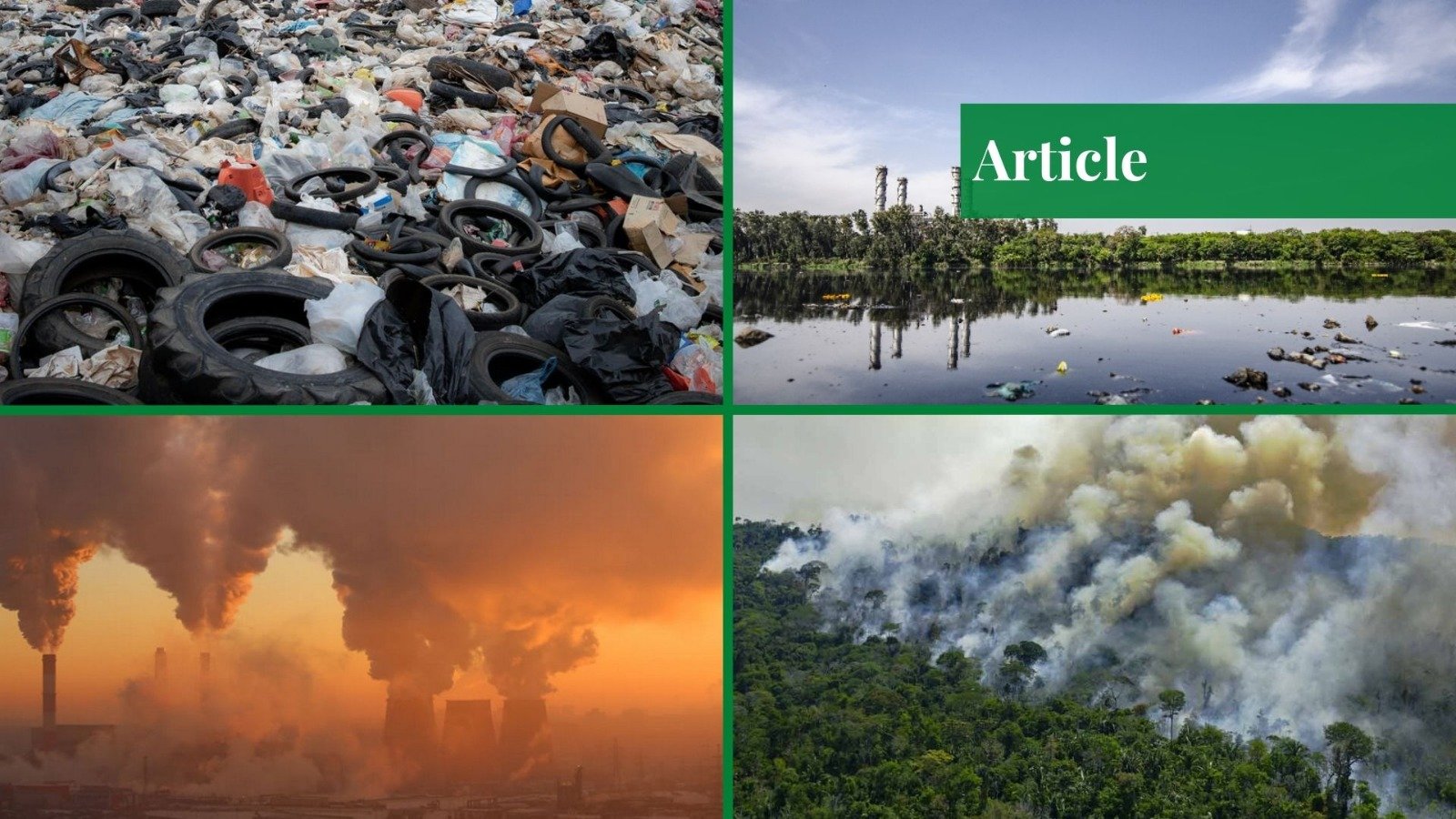

Earth is our only home. Fresh and clean air is the right of every person. However, human activities have marred the quality of this planet. Pakistan is no exception. The climate is changing, and it is making Pakistan face storms, dry weather, and more floods. How we can make it livable and habitable is now a matter of deep attention for the whole world. In our posh areas, the intensity of the smog or environmental pollution may be minimal, but in densely populated areas, the degradation is more visible, taking a heavy toll on human lives.
The extreme weather events are becoming more frequent in Pakistan. When glaciers melt too fast, at first there is more water, but later the water is reduced, leading to droughts. We must recognize that the Pakistani economy is a water economy. But we do not take it as a priority. We must understand that environmental sustainability is a fundamental part of food security in the country.
The Adverse Impacts of Environmental Degradation
The adverse effects of climate change include an increase in temperature and an increased frequency of severe weather. Global warming has affected the important sectors of Pakistan, causing economic disruption. It makes agriculture, which is dependent on the water of the Indus Basin, more unpredictable. Agriculture contributes about 22% to 24% to Pakistan’s GDP and employs nearly 38 to 40% of its labor force. Climate variability has led to a reduction in agricultural production and increased crop failure risks. There are fewer crops than there were earlier.
In such a scenario, the need for training the farmers becomes very important. Apart from the issues of scaling up and producing the right technology, another challenge is how we’re going to create the human resources that are going to train the actual consumers. The important question is how to make them skilled in technology and use it to their advantage. Will they be really receptive to learning?
Increasing Health Issues
Global warming is increasing the number of health risk cases due to extreme heat. Eliminating this risk and protecting people from strong heat and saving lives are important. Pakistan increasingly faces floods, droughts, heatwaves, and occasional cyclones along the coastal belt. Sea level rise is expected to displace millions of people as it threatens low-lying coastal areas in Sindh and Balochistan. Because of increased coastal erosion, buildings and farmlands are damaged. Increases in temperature and precipitation also affect biodiversity in Pakistan. Furthermore, the changes in rainfall are disturbing natural ecosystems. The natural environmental systems and sea species are getting disrupted. Because of changing temperatures, many animals are losing their homes.
Urban Heat Island Effect
In cities like Karachi and Lahore, rapid urban growth has outpaced infrastructure. Too many buildings and not enough trees result in stronger heat waves. Rapid urbanization, reduced green cover, and dense construction have increased the urban heat island effect in Karachi, Lahore, and major cities.
Agriculture and Weather Change
The role Pakistan has to play in agriculture is highly sensitive to changes in climate. Pakistan depends on agriculture for most of the food, and farming is easily affected by bad weather, so it is more prone to risk. Financial and technical resources for adaptation to climate change are required. Limited resources do affect Pakistan’s ability to mitigate the effects of climate change. We have polluted the environment with agricultural waste, but we seldom talk about this. We must start discussing this, as it is an integral part of the economy.
Waterborne Diseases Caused by Water Pollution
The number of patients with waterborne diseases and the infant mortality rates have a direct link to GDP. Water-stressed countries all over the globe impact the GDP. We have to really see and make some decisions based on factual data and our climate vulnerability because the way we are managing and governing our water resources is not a solution; rather, it is adding to the problem. Wastewater treatment is the area where very few people feel the need for some prompt action.
If we look at the quality of water, many Pakistanis do not have access to safe drinking water. Adding to the gravity is the fact that the industrial effluents are contaminating the water. Organizations like WWF Pakistan address two areas basically: environmental advocacy and promotion of improved water management practices. Under the Pakistan Environmental Protection Act (PEPA) 1997, no person is allowed to discharge effluents, emissions, or noise exceeding the National Environmental Quality Standards (NEQS). But unfortunately, industrial and vehicular emissions are contaminating all the fresh water resources in the country.
Water is directly related to the livelihood of the people, so this commodity is precious. We have to switch to the model of access, quality, and equality. We must minimize the waste coming from the agricultural sector. We are wasting 60 percent of our water resources due to an inadequate water management system. Pakistan loses nearly 40–60% of its available water due to inefficient irrigation and poor infrastructure.
Possible Solutions
PPP Model and NPO Collaboration
If the public institutions are finding difficulties regarding capacity, the government needs to work towards solving this issue to bridge the gap. This can be through public-private partnerships (PPP) or some NPOs. Even if government intervention is not there, the community itself must gather and try to find a solution to overcome the problems caused by increasing environmental degradation.
Capacity Building of Farmers
Easy solutions to help stop pollution include doing our best to keep the environment clean and green. We have to do certain things. We must make our behavior environmentally friendly, which is our social responsibility. Plants and urban vegetation regulate local area temperature and improve air quality.
Awareness and training for the farmers are important. Farmers must be notified not to burn crops, as the crop residue burning creates smog, which pollutes the air. Connecting the people incharge to the ground reality so that they can understand the problems of the marginalized, whether with technology or with AI, is the need of the time. We should also go for standardization regarding engineering technology in agriculture since it is a challenge in itself to ensure technological reach for thousands of users in the agricultural field.
NGOs and Climate Experts
NGOs serve as advocates for the environment. They can also contribute to environmental decision-making. The solutions that these NGOs can offer include advocacy for environmental issues, and pushing for policies that protect it with the help of experts on climate. These experts can conduct research and provide data by studying the impact of human activities on the environment. They report on any violations or shortcomings and organize different hearings, consultations, and public meetings.
They can provide training and education to help people understand the policy issues and monitor the impact and efficacy of these policies. They can also monitor if there is any violation. By facilitating public participation, they give citizens a voice in the decision-making process, thereby building community capacity. Overall, they play a very constructive role.
Introducing New Technologies by PARC
In Pakistan, the PARC (Pakistan Agricultural Research Council) is introducing two new technologies. One is responsible for irrigation. It aims to decide when to irrigate and how to irrigate. Secondly, it is promoting drip and subsurface irrigation systems that increase water-use efficiency, particularly in water-scarce regions. Bottom of Form
The US has developed an advanced, data-driven smart irrigation technology. The water pipes are laid near the roots of the crops to avert the losses. So, this smart irrigation gives controlled water when required. Likewise, India has also introduced many irrigation reforms. India has launched national irrigation reforms under PMKSY to improve water efficiency. It has also made one authority, the irrigation task force on macro irrigation. Now with consistent government support, things are changing there.
Conclusion
Pakistan has to traverse many miles to stand at par with the successful countries in the arena of war against climate change. It’s better to start it as soon as possible, as delay will only cost us beyond repair.
If you want to submit your articles and/or research papers, please visit the Submissions page.
To stay updated with the latest jobs, CSS news, internships, scholarships, and current affairs articles, join our Community Forum!
The views and opinions expressed in this article/paper are the author’s own and do not necessarily reflect the editorial position of Paradigm Shift.