
Frequently, every individual who lives in any state or entity, regardless of its sovereignty, has heard that: if you do not interfere in politics, politics will interfere in your life. Hence, this scenario and these lines quite significantly reflect the entire political interest of a nation. The whole debate is not only about how and where politics will intervene in our individual and collective lives, but also what the ramifications could be. The answer to this question simply lies not only in what is predicted by government and institutional frameworks, but also in what politics truly is when deciding the future of economic balance and survival. All of the activism or drama influenced by any political ideology or philosophy is directly proportional to individual and collective life. In Pakistan, also, if anyone says that he is not interested in politics merely because he does not like it, then he is an immature citizen. Individually or collectively, politics and government policies are consequences of citizenship rights exercised through elections. We all have the right to vote; hence, the government is also formed through our combined efforts of selection. That is why governments are established and removed.
The main discourse in this article is about middle-class survival amidst and in the post-truth war that has been launched by nefarious Zionist ideology and American imperialism. The middle class talks less about these global problems and more about their inner struggle to live. After all, if government and global geopolitics negate 80 percent of the world population, then what remains is the “theory of survival of the fittest.” This theory is mainly an outcome of power—whoever has power survives; otherwise, they are slaughtered and fall into the dustbin. Could this theory still, in the practical world, allow the majority to live? Comparatively, if we contemplate the affluent class and the lower-income class, this concept is still thriving, where most decisions and standards of life favor the former class. This gap is morally obliterating and socially unacceptable. Now, we look at how this division leaves the middle class in a pandemic and a plunge.
The middle class, an outcome of social stratification theory, mainly constitutes a higher proportion of the world population. What are the problems they face in this phase of war? How does the crisis deepen the struggle of this enduring class? Will they be able to recover from here? If so, then how and what would be the probable causes?
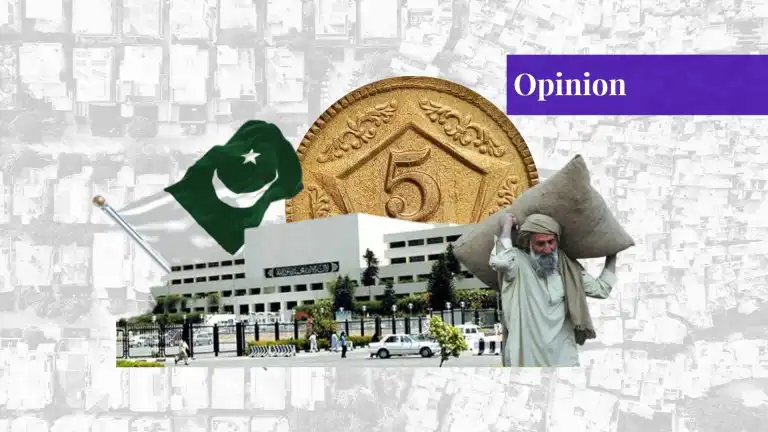
The middle class, as a system of demarcation of income and capital value, mainly focuses on government- and state-centered activities. In Pakistan, the ratio of the middle class is much higher than in First World countries; hence, their per capita income should be high. Alternatively, this is not the story, because every facet of authoritative decision-making is not bent towards the care of the major proportion; rather, it is centered on a few individuals who hold power. Power makes decisions, so decisions are grasped only by those who hold the monopoly over it. The middle class does not hold this monopoly in the majority of world politics; consequently, they are lesser decision-makers. The middle class in Pakistan is also facing this bleak and objective reality. They are facing a myriad of internal crises, which are delineated here.
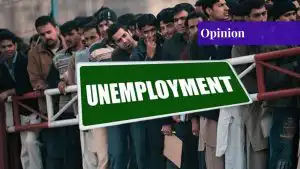
In most of the world, there are no favorable circumstances of economic prosperity, so the results are also not symmetrical. Unemployment is a major crisis humanity has faced in this decade. The ratio is significantly high in Pakistan, mainly as a result of ineffective legislation, scarce resources, corruption, lower trade volume, and export imbalance. This aspect of the issue is also felt in middle-class life.
An identity crisis within a multinational state of clans is a surfaced problem. Pakistan has a profound crisis of identity failure—Sindhi, Punjabi, Pashto, Baloch, and other smaller tribes. Whereas on religious grounds, there are also divisions into many schools of thought, which create friction and a confounding situation in society. Because of this nexus of integrated contradictions, the middle class faces this devastating reality.
Import and export volume, often called the cornerstone of a substantial economy, has clear implications for middle-class survival. The total GDP of Pakistan is 400 billion dollars, comprising 25 crore people. Per capita income is an economic indicator that represents a country globally. At present, Luxembourg has the highest per capita income. This indicates the quality of individual lives there, including lifespan, purchasing power, healthcare, and other facets.
Technological disruption and biotechnology imbalance, considering the global context and Pakistan, are also less developed. Technology and machine work after the Industrial Revolution reshaped global standards of trade and exports. This structural and decisive economic security and revenue generation system holds great value in today’s capitalism-driven ideology. In Pakistan, there are fewer technology companies. So, when there is no industry, there will be fewer job opportunities.
A skilled labor market is a boon for any country. Unfortunately, this class of workers in our country is going through a difficult phase. About 65 million laborers from Pakistan are working in Gulf countries, which is far less than the Indian labor market. This gap of inefficiency produces long-term effects on middle-class life because they have no other option to sustain themselves.
Political instability is one of the reasons why our economy is not stable enough to produce tangible results. Political division and the concept of divide and rule have been major concerns for experts and analysts. This ideology and political indifference create an egregious attitude toward harmony and peace in the state, which can result in civil unrest.
Education, on the other hand, is an effective source of income and prosperity in any country. A better-educated society and civilized nation maintain a stable environment. They build a class of valued individuals whose dominance over other nations persists, especially through the use of soft power, as seen in European countries after the Protestant Reformation.
Foreign policy, diplomatic relations, and strategic location also have significant implications for a nation-state. Despite global geopolitics, decisions should be based on international law and sovereignty. However, alliances and the dynamics of the changing world order influence them. In today’s context, Pakistan cannot make binary decisions, such as obtaining cheap oil from Iran, merely because of sanctions imposed by the USA, even though it would reduce heavy reliance on Gulf energy.
These are the hard-hitting causes of drastic geopolitics and politics affecting the majority of individuals worldwide, including Pakistan. So, how can we be safe from it? Where does the state stand in times of need? What should the policies be? Lessons from history endorse cooperation and mutual discussion in times of hostility and animosity. Respect for law, sovereignty, international law, and humanitarian norms emphasizes dialogue and challenges world leaders to choose discussion over escalation. Dehumanization is not the solution to these problems. Mutual harmony, peace talks, and wise discourse could provide better prospects for international order and tranquility. In such times, Pakistan should adopt a foreign policy as a constructive tool, form convenient agreements with regional states, and maintain legislative provisions that are people-centric, aiming to strengthen the middle class and ensure the survival of many.
If you want to submit your articles and/or research papers, please visit the Submissions page.
To stay updated with the latest jobs, CSS news, internships, scholarships, and current affairs articles, join our Community Forum!
The views and opinions expressed in this article/paper are the author’s own and do not necessarily reflect the editorial position of Paradigm Shift.

Mohsin Ali Somroo is a dedicated and aspiring law student with a keen interest in legal research, critical analysis and the pursuit of justice.