

Dr. Ghulam Mohey-ud-din is an urban economist from Pakistan, currently based in the Middle East. He holds a PhD in economics and writes on urban economic development, macroeconomic policy, and strategic planning.
The increasing export restrictions on rare-earth processing machinery, synthetic-diamond tooling, and lithium-battery material that China has been imposing are not just technical trade adjustments; rather, they are tools of geoeconomic statecraft. By increasing the control of the processing technology and the technological inputs of the downstream manufacturing process through licensing, Beijing solidifies its control of the energy-transition supply chain even as it is changing mineral dependence into strategic capabilities.
In the case of Pakistan’s minerals, the consequences are short-term. Islamabad, over the years, has depended on the Chinese machinery, technical know-how, and capital in extractive operations; in Saindak copper-gold, and in exploratory activities in the rare-earth processing. However, with Chinese export controls tightening the access to advanced processing technologies, Pakistan has a structural dilemma to choose: should it continue being technologically dependent or should it diversify its strategic alliances?
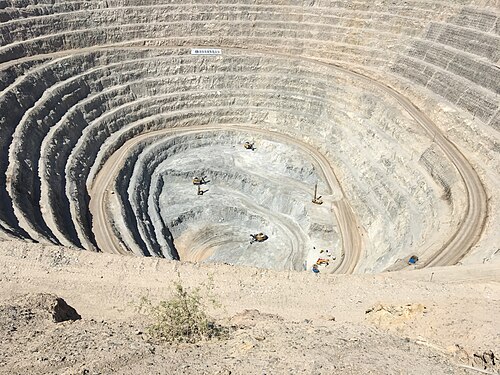
Islamabad has chosen the path of diversification. A framework contract with one of the U.S. critical minerals companies is an indication that there is an attempt to establish the processing capacity domestically and enter the Western supply chains. Simultaneous engagement with Saudi Arabia will harness Pakistan’s mineral interests with the industrialization plans adopted by Riyadh in its Vision 2030, which will demand long-term sources of battery and magnet components. The fact that the concentration of rare-earth has been shipped to U.S. buyers early and in large quantities underlines that this turnaround is not symbolic.
The stakes are substantial. The mineral endowment of Pakistan is relatively high but not exploited. The copper-gold reserves at Reko Diq, and the reserves of antimony, nickel, and rare earths in Balochistan and the Khyber Pakhtunkhwa, promise to transform Pakistan from one that is permanently exposed to external vulnerability to one that is export-led and resilient. Yet, the abundance of resources does not in itself result in strategic autonomy, but needs three enabling pillars: processing technology, patient capital, and credible security governance.
In the past, the first two pillars were provided by China. Today, as technological limits become stricter, the United States provides processing knowledge and entry to the market, whereas Saudi Arabia provides capital richness and assured demand. This puts the third pillar of security as the most decisive variable on the side.
The reaction of Islamabad has been very securitised. The military engineering organisation called the Frontier Works Organisation (FWO) is increasingly becoming a key to the new mineral governance regime. Strategic resource management has been brought to the national security level through the Special Investment Facilitation Council (SIFC), in which the military has institutional presence. The rationale is understandable: speed up the process of making decisions, safeguard the strategic resources, and demonstrate to the outside investors that the policy would be consistent.
Securitization is risky, however. Balochistan, the hub of most high-value mineral reserves, is politically apprehensive. The extractive projects have long been perceived as exploitative and foreign to the region, causing militancy in the region. A governance approach that places a major emphasis on centralised governance and the lack of transparent provincial involvement encourages the grievances that insurgents take advantage of. Security can safeguard infrastructure; it cannot fulfil a lasting social contract.
The hedging calculus of Pakistan is rational, however, with a strategic approach. The over-reliance on one partner in technology limits the bargaining power. In case processing capacity is bound solely to Chinese equipment and expertise, Islamabad will be reduced to a price-taker both in business and in relation to geopolitics. Through a combination of the U.S. technology and Saudi financing at the same time being in operating relations with Beijing, Pakistan seeks to position itself as a multipolar node instead of a subordinate appendage to one of the blocs.
The geographic aspect of the strategy is also important. Plans of a minerals corridor between Afghan reserves and the Pakistani refining bases and subsequent export via the Arabian Sea, which might pass through Pasni, would rebalance trade in the region. This type of corridor may bring Afghanistan into the organised mineral markets, offer Gulf states with diversified sources of supply, and minimise overconcentration in Gwadar.
But this would necessarily collide with Chinese interests inherent in the China-Pakistan Economic Corridor (CPEC) and with Iranian interests with Chabahar in the middle of it. Mineral corridors are not simply logistical projects but are geopolitical signalling mechanisms.
There must be a long-term mineral policy that should be diplomatically tuned. Pakistan needs to ensure that it has positive relations with Beijing without being technologically dependent. It will have to take advantage of the Western involvement without being sucked into bloc war. And it should make sure that Gulf capital is linked to value addition at home, not to keep on contributing to dependency on exporting raw material.
To pull Pakistan into alternative critical minerals supply chains could move forward on the diversification goals, but will only be successful with institutional fortification, rather than single transactional deals. Processing plants must have access to a dependable power supply, regulatory control, a professional workforce, environmental control, and open revenue systems. In the absence of these, investment is extractive and not transformative.
In the case of Pakistan, there are three strategic imperatives. To start with, institutionalise a federal-provincial minerals compact that has a clear distribution of royalties, community development funds, and compulsory disclosure of revenue flows. Resource federalism needs to be institutionalised and not negotiated on a case-by-case basis. Second, communicate a graded value-addition strategy that opens up diversified technological collaboration; American, Saudi, European, Japanese, and, where practicable, Chinese. It should be risk dispersion and not replacement dependency. Third, decouple security implementation from political management. Separating local grievances (legitimate) and violent actors is not a compromise issue but rather a critical ingredient to investment sustainability. A 20-year mining concession cannot be based purely on convoy protection; it will be based on legitimacy.
Pakistan has been compelled to look inward following the Chinese export controls and has reached the point of inflexion. It can be a fringe supplier of raw material, which can be easily leveraged, or it can be a controlled player in a multipolar mineral economy by rising the value chain. It is a complicated and torturous route, but it comes with something that Pakistan has long desired, but so far has never privy to, a strategic agency in a period that is characterised by geoeconomic competition. In the new struggle over key minerals, Pakistan is no longer merely a terrain. It is becoming a key actor.
If you want to submit your articles and/or research papers, please visit the Submissions page.
To stay updated with the latest jobs, CSS news, internships, scholarships, and current affairs articles, join our Community Forum!
The views and opinions expressed in this article/paper are the author’s own and do not necessarily reflect the editorial position of Paradigm Shift.