
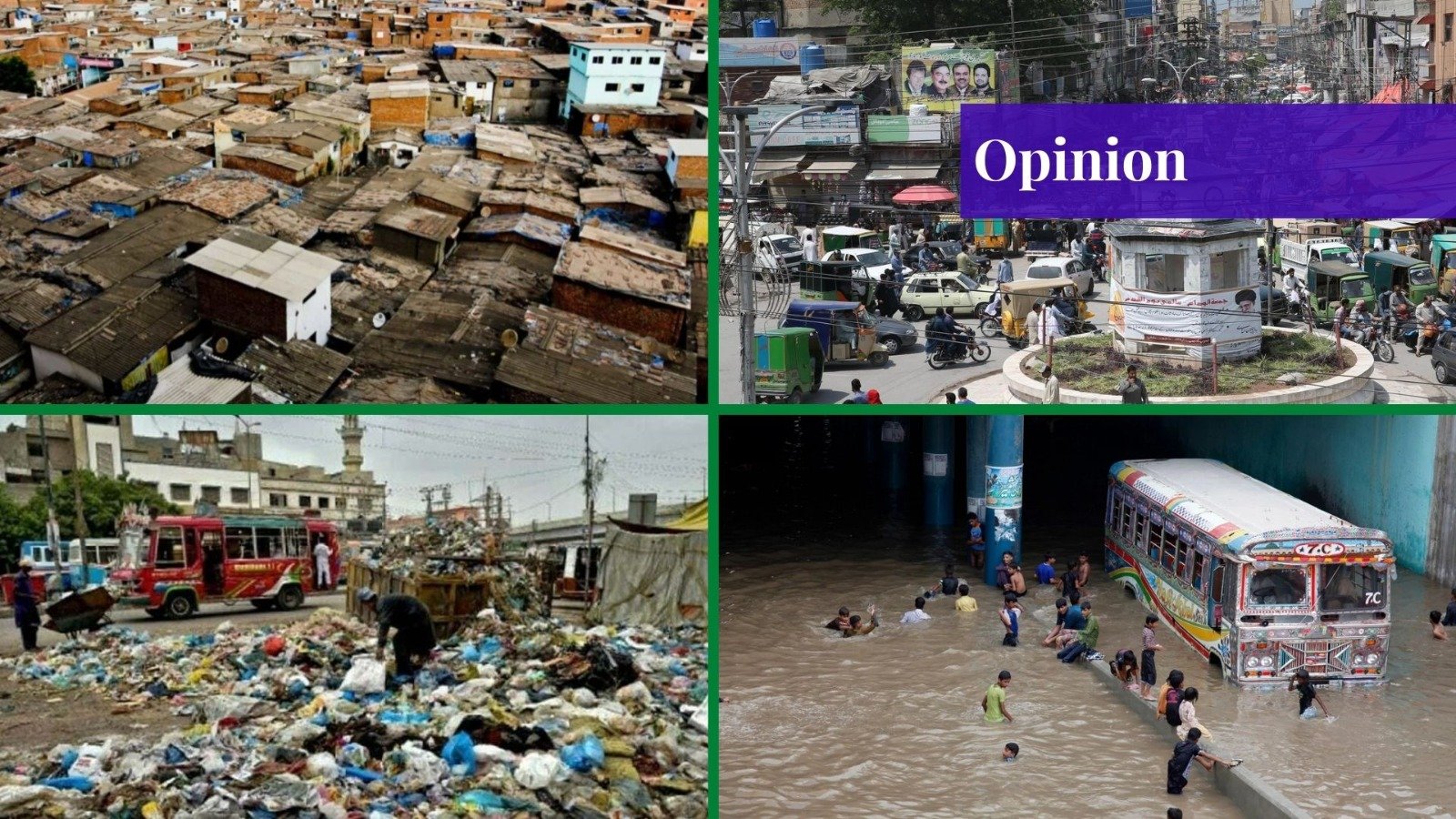

Cities should be the places that spark off development, create new ideas, and open the doors. But the metropolises of Pakistan, from Karachi to Lahore to Rawalpindi, are suffocating due to uncontrolled sprawl, traffic congestion, clumsy plans, and ineffective governance. Unless there is an underlying transformation in the way these cities are run, the economic future of Pakistan will remain trapped in a low-growth trap, and Pakistan’s urban failure shall evermore remain a stain on the state.
The metropolis of Pakistan has ceased to push the economy but has become the one that slows it down. It is easy to reside, work, travel, and relate in a well-organized city. Nowadays, Karachi or Lahore is like walking through molasses. Commuters spend hours in traffic jams, and delivery riders lose time and fuel going through traffic congestion. The unpredictability of logistics and the increase in transport costs affect businesses negatively. The annual cost of mobility failures in developing countries is 2–3 per cent of GDP. The actual price must be even greater with the congestion in Pakistan, the low quality of public transportation, and the lack of proper care on the streets. Cities are supposed to agglomerate talent and increase productivity, but they have become productivity traps.
The dysfunction is most evident through the housing model. Pakistan continues to grow by building low-density, gated communities that propagate the cities far beyond the capacity of the infrastructure. Such developments are beneficial to land developers but weaken the economic existence of cities as they force their populace to drive long distances to work, study, and other services. An employee taking two hours to get to work is not only wasting time, he/she is also wasting chances. The families who are not able to afford the formal housing market are left in the informal settlements that have no access to water, sanitation, or even connectivity. The poor dissipate into the background, the middle classes are tired, and the cities are sterile. The internationally tested intervention, which is vertical, mixed-use housing supported by transit, is still stalled by building regulations that are obsolete and still clinging to horizontal sprawl.
Central to most of this dysfunction are the outdated zoning laws in Pakistan. These colonial relics of the cities consider cities as a grid rather than an active ecosystem. The system forces residential, commercial, and industrial activity apart in order to kill the vibrancy that drives productivity. A store on the ground floor of a house is a transgression because every economic activity has to be located in specified commercial areas. Yet ironically, in small towns (and even in the informal katchi abadis of our largest cities), anyone can open a shop, set up a workshop, or run a small enterprise without the state objecting.
Usually, offices are concentrated along commercial roads, and apartments are not encouraged, but instead detached houses are. In contemporary cities of the world, homes are located above cafes, studios are placed next to offices, and individuals are walking to work, grocery shops, and transport. Density is the driver of innovation, and mixed use is the driver of entrepreneurship. The cities of Pakistan have been confined to a pattern that stifles the two.
The weakness of public transport contributes to the crisis. The megacity of Karachi, with more than twenty-five million people, lacks any mass-transit base. The service of Lahore through the metro and Orange Line assists, though it serves only a small portion of the urban territory. The majority of the population uses rickshaws, vans, and minibuses to transport millions of laborers. The result is expected: low mobility, low opportunity, and low economic development. Employees are unable to access jobs outside a limited radius, companies are unable to tap larger labor markets, traffic is stifling, and overreliance on cars exacerbates pollution and inefficiency. Public transport is not a luxury; it is the foundation of urban economic activity, the framework on which productivity, inclusion, and mobility are based.
All these failures are enhanced by the mode of governance. Cities in Pakistan are not governed through empowered local governments but through disjointed institutions that report to provincial bureaucracies. Municipal corporations are financially non-autonomous. Cities are poorly coordinated in terms of their planning authorities. Where there are local governments, they are disempowered and defunded. Cities such as Istanbul, Dubai, Singapore, and Seoul improved their development through increasing metropolitan power and putting accountability on city administrations to citizens. Pakistan has gone contrary to this by centralization and undermining the institutions that make cities functional.
Although such a picture is quite bleak, the collapse is not an everlasting situation. Cities in Pakistan can be brought back to life, but that will only take place when we realize that cosmetic solutions will not rescue them. It is necessary to reconsider the way we move, develop, and govern with the help of a structural rethink. The movement of people in urban areas should not revolve around patchwork development of roads, but rather around a mass mode of transportation that will provide millions with reliable and rapid services.
Housing policy should alter its approach from speculative sprawl to mid-rise and mixed-use construction that will bring people nearer to employment. Zoning must be changed into density and flexibility to allow organic clustering of economic activity. Digitized permitting and foreseeable regulations to promote small businesses should be used to reduce red tape. Most significantly, cities should be ruled by strong local governments with actual budgets, planning authority, and accountability systems rather than provincial secretariats located far away.
Cities in Pakistan provide over half of the GDP. Healthy urban systems are needed in industry, technology, commerce, and services. It is the way we plan, regulate, and govern these engines that has led to them sputtering. Provided that Pakistan remains fixated on cities as real estate banks as opposed to driving engines of national prosperity, the economy will always hang in the low-growth trap.
Nonetheless, when we rethink mobility, housing, zoning, and governance with gravity and boldness, then our cities will become seats of productivity, opportunity, and innovation—able to drive national growth for decades to come. Powerful cities develop powerful countries. The economic future of Pakistan can be salvaged by beginning with its cities.
If you want to submit your articles and/or research papers, please visit the Submissions page.
To stay updated with the latest jobs, CSS news, internships, scholarships, and current affairs articles, join our Community Forum!
The views and opinions expressed in this article/paper are the author’s own and do not necessarily reflect the editorial position of Paradigm Shift.

Dr. Ghulam Mohey-ud-din is an urban economist from Pakistan, currently based in the Middle East. He holds a PhD in economics and writes on urban economic development, macroeconomic policy, and strategic planning.