
Introduction
Global power structures have always been affected by energy politics. The global oil market has operated under the “petrodollar system” since the 1970s, where oil is exported for US dollars. This system has reinforced US financial predominance and has had a profound impact on the political economies of states that produce oil. However, the global order is transitioning to a multipolar system and is experiencing rapid transitions away from fossil fuels toward renewable forms of energy, and the nature of global energy politics is also changing.
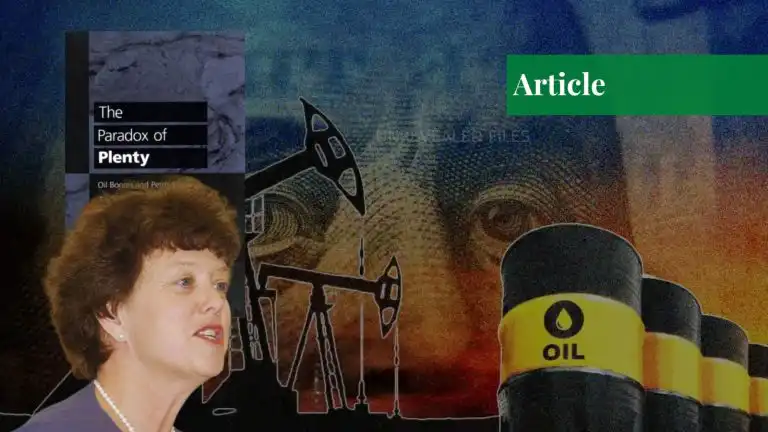
In order to understand how this transformation is occurring, it’s necessary to increase our understanding of Terry Lynn Karl’s concept known as the paradox of plenty, appearing in her book from 1997 titled The Paradox of Plenty, and then again in 1997 in her book, The Perils of Petro-State: Reflections on the Paradox of Plenty. These works show that oil wealth often produces political and economic vulnerability instead of creating long-term sustainable development; additionally, Oil Politics in the Middle East: Understanding the Genesis of the Petrodollar Strategy helps to explain how the petrodollar system developed and shaped international energy politics.
Therefore, by connecting all of these ideas together, this article will address how post-petrodollar energy politics involve not only a shift in currency but also the structural challenges that petro-state nations face due to a transforming global order.
The Genesis of the Petrodollar System
During the collapse of the Bretton Woods system in the mid-1970s, the US reached an agreement with large-scale suppliers such as Saudi Arabia for them to sell oil in US dollars only and then use profits from those sales to purchase US Treasury securities. This transformed the US dollar into an international currency since every oil transaction now had to take place using the American dollar.
The report “The Political Economy of Oil in the Middle East” discusses how the relationship between oil-producing nations and the oil-consuming world has been shaped by military support to those nations, then financial assistance to help them develop into energy production regions. This process has created an abundance of dollars in circulation from oil sales, thus solidifying the US as the center of the world’s financial system.
In addition, OPEC countries use this model to collectively decide how much oil they will produce among themselves, as well as how much they will impact the price of oil within each member country, thus adding another layer of international political ramifications in terms of energy.
Understanding the Paradox of Plenty
According to Terry Lynn Karl, while oil-rich countries generate large amounts of revenue from oil, these same countries typically experience extensive structural problems in the long term due to the abundance of money generated by their oil. In her book The Paradox of Plenty, when Karl studied oil-rich countries, she concluded that oil boom periods do not create wealth; instead, they result in some of the poorest countries with the weakest government institutions, high degrees of corruption, and a great deal of instability.
The following are the characteristics listed by the author as characterizing the petro-state:
- Rentier State Structure: Petro-states rarely, if ever, collect tax revenue from citizens, thereby causing the government to depend on oil revenues for revenue rather than taxes.
- Weak Accountability: Since the government does not receive a large amount of taxes from its citizenry, the citizenry places little pressure on the government to be accountable.
- Centralization of Power: Oil revenues give the executive branch an increased amount of power, thereby making it more difficult for democratically elected legislative bodies to hold the executive branch accountable.
- Volatility of the Economy: The volatility of the economic climate is largely due to the fluctuations in oil prices, which can cause massive fluctuations in wealth in countries that rely on oil.
Karl stated that when a country depends mostly on oil money, it doesn’t develop other industries or strong government systems. Because oil brings easy income, leaders don’t feel pressure to improve the economy. But such an approach is risky. If oil prices fall or demand decreases, the country suffers badly because it has no other strong sources of income.
Energy Politics in the Petrodollar Era
The functioning of the world economy and country interactions has largely been affected by oil’s influence for political purposes and through international relations during the petrodollar era. In the case of the monarchy-owned Gulf nations, this was done through the ceding of ownership of oil as a resource to the US in exchange for military protection provided by the American armed forces. By doing so, these monarchies used the money generated by the sale of oil to provide services, or “welfare,” to their citizens in order to maintain domestic stability.
Using these oil revenues to fund a portion of their respective governments (monarchies) created an environment of globally integrated economies (economic interdependence) by moving a massive volume of money through Western banks (petrodollars) and into the global financial markets (capital markets).
At the same time, the petrodollar recycling created an environment where many oil-rich nations could use their oil revenues to increase domestic expenditures and become highly dependent on public sector employment while avoiding having a diversified economy. Consequently, oil has proven to be both a global commodity and a means of gaining geopolitical equities.
Shifts in the Global Energy Order
An evolving scenario across many parts of our planet has made the energy order increasingly complex. There are three main trends affecting energy politics today. First, oil-exporting and importing countries want to investigate whether they could use alternative currencies to the US dollar in conducting energy transactions. For example, China has been advocating for the purchase of energy commodities using the yuan, while Russia is seeking to limit its use of the dollar due to restrictions placed upon it by economic sanctions. Additionally, BRICS countries are considering alternative currencies for energy transactions in addition to the dollar.
The second change is that renewable energy sources are growing at a significant pace. Countries are making commitments to decrease their reliance upon fossil fuels through global initiatives. For example, countries have committed under the Paris Agreement to decrease their reliance upon fossil fuels. This will ultimately reduce demand for oil in the future because an increasing number of consumers will switch from gasoline-powered automotive engines to electric auto manufacturing, and consumers will also begin producing their own electricity using solar or wind energy rather than obtaining it through fossil fuels.
The third change is that energy security has been redefined by the effects of the Russia/Ukraine conflict. The recent conflict has underscored the dependence of Europe on Russian natural gas, leading to countries across Europe seeking to diversify their sources of energy. In response, the European Union has begun disbursing greater amounts towards renewable energy generation sources while also exploring
Petro-States in the Post-Petrodollar Era
Although there are many different currencies used to value oil, there are still issues that Karl mentioned regarding petroleum; another issue oil-dependent states face is not just how much oil costs each day, but also ways to maximize and manipulate their revenue from oil. Oil-dependent states face several challenges as they transition to a new energy economy, such as:
- Reduction in Revenues: Oil-dependent states will experience significant revenue declines as global demand for oil declines and the world transitions to a cleaner energy future. Countries that have relied heavily on the revenue generated by oil will experience the greatest adverse effects.
- Opportunity for Economic Diversification: Following the paradox of plenty principles, countries will create stable long-term investments and reduce dependency on oil through economic diversification. Many of the Gulf states are now investing in economic diversification to create stable, post-oil economies (such as developing infrastructure, tourist development, and technology development).
- Strategic Realignment: Producers of oil have begun to look for more ways to partner with others around the globe. Saudi Arabia continues to have excellent relations with the US, while at the same time, strengthening its relationship with China. These two examples show a multipolar approach to energy diplomacy.
Energy Transition and New Resource Politics
Energy politics will not diminish despite an overarching decline of petroleum’s supremacy. In reality, it is already beginning to transition from its current state of focus on insufficient supply to one where critical minerals necessary for renewable technologies are being procured, e.g., lithium and cobalt, etc.
These developments also introduce new forms of geopolitics, as countries that possess those resources will likely have similar difficulties as traditional petro-state nations if their democratic institutions are inadequate to sustain them. Thus, the rationale behind resource curses will emerge in a much different manner than it has historically.
Conclusion
After the end of the petrodollar period, energy politics continues to be a slow-changing process as opposed to an immediate end. In years to come, global oil exports may shift towards various currencies, and alternative forms of energy will help reduce long-term dependence on oil. Still, the current structure of petro-states relying heavily on rent, having weak or broken institutions, and experiencing significant economic uncertainty remains the major focus of energy politics today.
Using the same books referenced makes it clear that the primary question is no longer if the dollar is going to be dominant, but how do we deal with the political economy of oil? In the new global order, power will be based not just on the amount of oil reserves available but on your level of institutional strength, ability to diversify your economy, and ability to adapt to new markets. Energy politics will be influenced more by reform and governance than by currency or market.
If you want to submit your articles and/or research papers, please visit the Submissions page.
To stay updated with the latest jobs, CSS news, internships, scholarships, and current affairs articles, join our Community Forum!
The views and opinions expressed in this article/paper are the author’s own and do not necessarily reflect the editorial position of Paradigm Shift.

Shanza Sajid is a final-semester student of international relations at Bahria University Islamabad with a strong passion for global politics and policy analysis.