
Introduction: Regime Collapse Is Not State Stability
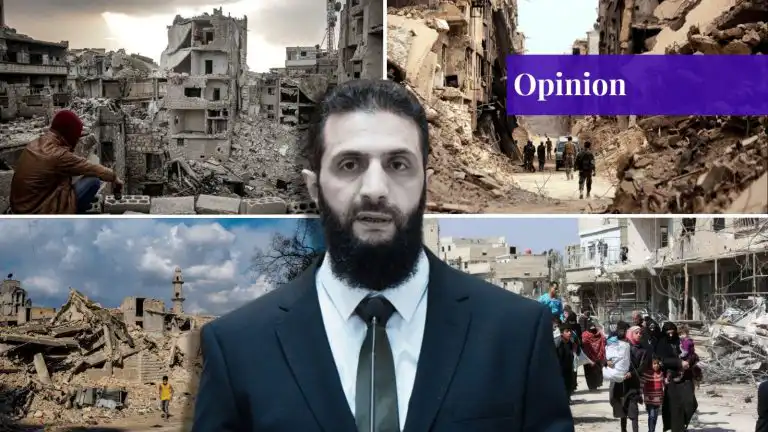
In December 2024, Syria witnessed a historic turning point in the 14-year-old civil war. Years of authoritarian rule had collapsed; Assad’s regime had fallen. The Syrian civil war, inspired by the “Arab Spring” in Tunisia and Egypt in 2011, had come to an end. It began with peaceful protests, but peace didn’t prevail, and they were met by government opposition. Assad’s government used deadly force to crush the masses, which led to further escalations nationwide. The violence escalated faster than expected, eventually making way for a brutal civil war. This civil war displaced millions of civilians, costing almost half the population.
The collapse of Bashar al-Assad’s government in December 2024 is marked as one of the most important political collapses in the contemporary history of the Middle Eastern region. For the first time in a period of over 50 years, Syria moved beyond Ba’athist authoritarian rule and transitioned into a fragile phase. As yet, the history of authoritarian regimes shows that the collapse of regimes does not guarantee a state’s stability; rather, it often creates a leadership void that can trigger fragmentation and militia competition and can also lead to a renewed civil conflict.
Today Syria stands at a crucial point. The central question is no longer whether the Assad regime is gone or whether the new political revolution can create a state that is strong enough, united enough, and legitimate enough to prevent another civil war. My argument here is clear: transitional governance in Syria is ultimately stabilizing the state superficially, but structurally it is reproducing the same drivers that led to civil war, militarization, division, and weakened institutions. If it continues in this pattern, it risks another internal conflict rather than bringing long-term peace.
The Transitional State
Post-Assad’s fall, Syria entered a new period of transition marked by a temporary change in the constitutional framework. This change also restructured state institutions and formed a transitional government. On record, this appeared to be a revolution, but transitions succeed only when institutional change is matched by political reconciliation.
For now, Syria’s transition remains dominated by the former military networks and armed political state actors. While the new leadership promotes unity amongst the nation and promises institutional reform, real political power remains centered around security structures and complete authority. This pattern is common in states going through a post-conflict transitional phase where one elite replaces the other rather than creating a promising political institution.
“Nation-states fail because they can no longer deliver positive political goods to their people. Their governments lose legitimacy.”
Robert I. Rotberg
The core issue here is political legitimacy. This quotation is particularly relevant in the case of Syria. If the current transitional government is unable to deliver security, economic recovery, and equal political participation, the structural foundations of instability shall remain the same.
Fragmentation of the Security Landscape: A Dangerous Warning Sign
The biggest threat to Syria’s stability as a state is not the electoral timelines or restructuring of the constitution; rather, it is the armed fragmentation. Despite the efforts to integrate the military into the national security structure, Syria still contains multiple armed non-state actors who are operating within the state. Negotiations with Kurdish-led forces remain uncertain. Implementation of integration agreements continues to remain fragile. In many areas, the current government has struggled to impose complete authority, and the criminal networks, local militias, and retaliatory violence still remain.
Historically, the post-conflict states reveal that when multiple armed actors coexist in a state, especially during transitional phases, civil uprisings often re-emerge in hybrid forms, even if the nationwide civil escalation does not immediately return. This reinforces a global lesson. Syria’s instability is not limited to its borders; it affects regional security, migration, extremism, and economic stability.
“Weak or failed states are the source of many of the world’s most serious problems.”
Francis Fukuyama
Sectarian Divide: The Ghost of Syria’s Civil War
Sectarian divide is another major warning sign. According to the regional observers, during the early phases of transition, there were attacks on minorities, particularly the Alawite and Druze populations. This divide is dangerous because the Syrian civil war was not completely ideological or geopolitical; it was deeply sectarianized. If the minority communities fear retaliation, they are more likely to rely on the militias for protection. This phenomenon recreates the security dilemma that fueled the Syrian civil war. Without minority protection and complete transitional justice, the sectarian divide could easily transform into a renewed armed conflict.
Economic Collapse: Potential Driver of Future Conflict
Economic instability remains one of the biggest obstacles to long-term stability. Syria’s economy has been deeply damaged after a decade of war. Although multiple regional investments and reconstruction agreements are slowly emerging, the recovery remains uneven and politically challenged. Economic disparity fuels militia recruitment, criminal economies, and political radicalization. No transitional state in history has succeeded if the citizens of the state experienced peace economically worse than war.
Here, Syria’s case reflects a global governance lesson on a broader scale. Syria is not just in transition; it is a test case that shall determine whether post-conflict state-building can succeed in the 21st century.
Syria’s International Recognition: Stability First, Democracy Later?
The phased easing of sanctions and the normalization with the global and regional actors have given Syria a sense of diplomatic legitimacy and an economic breathing space. However, international recognition can still reinforce flaws in the domestic political structures.
External actors prioritize stability, counter-terrorism cooperation, and migration control over complete governance. If international actors focus only on reconstruction and security, it would risk the reinforcement of elite-centered models of governance that exclude local communities and civil society.
Core Problem: Political Reconciliation vs. State Consolidation
The Syrian transitional government appears to be more inclined towards rebuilding centralized state authority, which includes restoring the security forces, re-establishing bureaucratic control, and rebuilding the national institutions. But lessons from the past prove that peace emerges from legitimacy first, power second.
If the transitional justice is delayed or weakened, Syria risks entering into a low-intensity civil war conflict characterized by insurgency, militia clashes, and persistent instability.
Is Another Civil War Inevitable?
Syria will not necessarily slide into the 2011-style civil war; however, it still risks getting into a hybrid instability model, which includes local insurgencies, sectarian violence, weak central authority, and nationwide proxy competition. These patterns create structural conditions for relapse into the conflict.
In my opinion, the three essential shifts that could possibly prevent another civil war are as follows:
- An inclusive transitional justice mechanism that completely addresses crimes, not just the former Assad regime.
- Security integration with local guarantees that address militia engagement with the political power-sharing and local security autonomy.
- Citizens must see visible improvements in jobs, service, and living standards.
Conclusion
The fall of Assad was the end of an era, but it did not completely end the Syrian conflict. True post-war transitions require legitimacy, public inclusion, and economic recovery. Syria is currently under partial progress; it is focused on institutional rebuilding and international normalization. Still, major drawbacks are still evident in reconciliation and shared political ownership, which might trigger another civil escalation, but there is hope that transitional governance can prevent another civil war.
If you want to submit your articles and/or research papers, please visit the Submissions page.
To stay updated with the latest jobs, CSS news, internships, scholarships, and current affairs articles, join our Community Forum!
The views and opinions expressed in this article/paper are the author’s own and do not necessarily reflect the editorial position of Paradigm Shift.

Alvina Khan is an 8th-semester student of international relations at Bahria University, passionate about exploring global dynamics and fostering cross-cultural understanding. Her interests lie in international affairs and diplomacy.