
No Longer a Shadow War
For over four decades, the rivalry between the United States and the Islamic Republic of Iran was defined by a lethal, yet disciplined, “shadow war.” It was a conflict fought in the margins through proxies and regional allies. Both sides adhered to an unwritten code: strike indirectly to maintain deniability, avoid direct attacks on sovereign soil, and prevent a regional turmoil that would devastate the global economy. As of February 28, 2026, that code has been shredded.
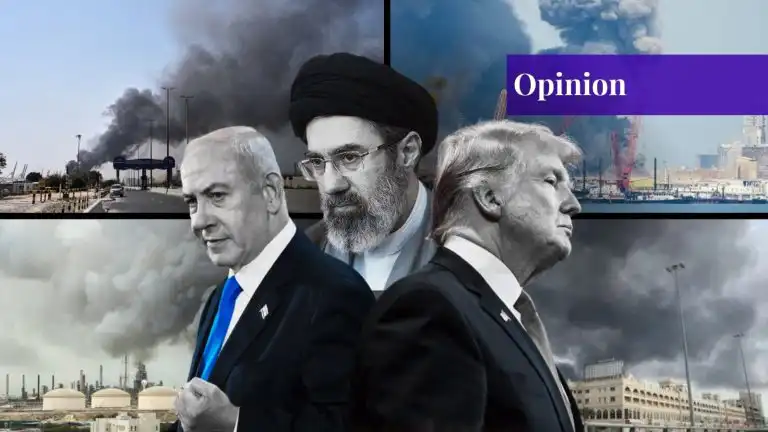
With the launch of Operation Epic Fury by the United States and Operation Roaring Lion by Israel, the era of strategic ambiguity has ended. By launching precision strikes against Tehran targeting leadership compounds and nuclear infrastructure, the US and Israel have bypassed the proxies to strike at the heart of Iranian sovereignty. Iran’s immediate retaliation, which it calls Operation True Promise IV, involved launching ballistic missiles from its own territory at the US military bases in Bahrain, Kuwait, the UAE, and Riyadh. We are no longer witnessing a proxy; we are in a direct state-on-state conflict.
The primary function of a proxy war is to provide a “buffer.” It allows great powers to exhaust resources without risking their own capitals or the survival of their regimes. For years, Iran’s “Forward Defense” strategy meant that if a battle was to be fought, it would be away from its own borders; however, by striking Iranian soil directly and reportedly causing the death of high-ranking officials, the US has signaled that it no longer views the “Axis of Resistance” as the primary target. For Tehran, this is not an escalation; it is a survival threat. In this new phase, there is no plausible deniability. Every missile launched from Iranian soil is an act of overt national defense, and every American strike on an Iranian command center is an attempt to dismantle a sovereign state.
Iran’s Perspective
The danger of this shift is compounded by a collapsing regional security architecture. In a proxy war, there is room for de-escalation; in a direct war, the off-ramps disappear. As explosions echo across Riyadh, Dubai, and Kuwait, the world is witnessing a chaotic “fog of war” where the truth itself is a casualty. The Gulf Cooperation Council (GCC) states find themselves in an impossible position. While the US and local authorities have accused Iran of hitting civilian sites, including the US Embassy in Riyadh and Saudi Aramco’s Ras Tanura refinery. Tehran has issued categorical and firm denials. Iranian Ambassador Alireza Enayati recently stated that “Iran has no role” in these attacks, suggesting instead that they are “false flag” operations by those who wish to drag the entire region into a suicidal conflict.
From Tehran’s perspective, the regime is being blamed for the chaos it did not start. Iran argues that its missiles are strictly aimed at targeting the aggressors, the US military assets that are using Gulf soil to launch strikes on Iranian families. By denying attacks on regional infrastructure, Iran is attempting to hold onto a “good neighbor” policy, even as it fights for its life against a superpower. It is a desperate attempt to show that while they will fight the US, they have no desire to burn down the house of their neighbors.
Regime Change
The most dangerous element of this new war is the political goal behind it. President Trump’s explicit call for the Iranian people to take back their country suggests that the ultimate goal of “Epic Fury” is total regime collapse. This is a gamble of historic proportions. History shows that foreign-imposed regime change rarely goes as planned. While many in Iran desire reform, an external military invasion often rallies a nationalist population around their flag. If the regime survives this onslaught, the US will have created a wounded, angry enemy with nothing left to lose. If the regime falls, the resulting vacuum in a country of 85 million people could destabilize the world.
The shadow war offered a dark kind of stability. It acted as a relief mechanism that allowed conflict without total catastrophe. That mechanism has been welded shut. As smoke rises from Tehran and sirens wail in Manama, the world must awaken to a new Middle East where the proxies have been benched, and the masters of the game are finally face-to-face. The US and Israel have crossed a red line by hitting Iranian soil; Iran has crossed its own by hitting US bases directly. In this new era, the distinction between “limited strikes” and “total war” is a line written in sand during a hurricane. We are in a hot war, and the only question is whether any of the participants truly know how to end it.
If you want to submit your articles and/or research papers, please visit the Submissions page.
To stay updated with the latest jobs, CSS news, internships, scholarships, and current affairs articles, join our Community Forum!
The views and opinions expressed in this article/paper are the author’s own and do not necessarily reflect the editorial position of Paradigm Shift.