

Rear Admiral (retd) Faisal Shah is an honorary research fellow at the Institute of Maritime Affairs, Islamabad, and can be reached via [email protected].
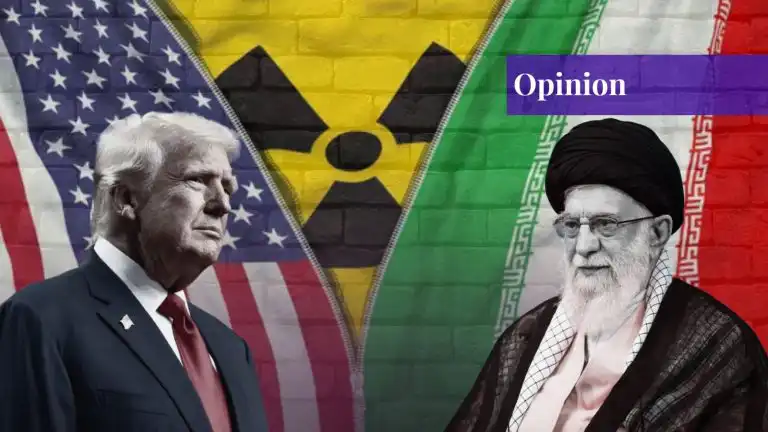
It was interesting to watch Mr. Steve Witkoff’s interview with Fox News on Feb 21, 2026, mentioning that President Trump was curious why Iran had not capitulated in the face of US military buildup against it. He further stated that President Trump wanted the Iranian leadership to come and say they did not want a nuclear bomb and that they were ready to do what the US wanted them to. There are numerous reflections emanating from such statements by Mr. Witkoff, which perhaps are not the norm in the prelude to any armed conflict between the countries. Is it just another straw in the pressure tactics that the US and its allies are employing against Iran, or is it, in fact, ignorance on the part of the Iranian leadership towards the gravity of the situation?
Iran, under decades of sanctions and isolation, is perhaps a closed society less understood by the people outside, whose knowledge is primarily based on the Iranians who had fled during the Islamic Revolution. Understandably, they are averse to the current regime and project it negatively. It is for this reason that every time there are protests inside Iran on whatever pretext, it is believed worldwide that these will result in regime change. It has not happened so far for several reasons. While dealing with Iran often, it is forgotten that Iran has a 5000-year-old history with a legacy of rule over the region. For the Iranians, Persian identity is a symbol of unity, and since the majority of them live inside Iran, the territorial integrity of this piece of land is sacrosanct. They may have grievances against the incumbent government, which is normal in other countries as well; yet, collectively, they do not allow any sort of aggression from any outside power, whether in the form of political or physical aggression. While the protestors have been asking for social and monetary relief, they don’t compel the government to make a truce with any outside power for such relief.
The current system of governance, though parallel in nature, has ideological drivers. Death is not the end of the world; it is the start of eternal life. The gone ones are certainly mourned, but they are also honoured for their contributions. Their families are therefore looked after well through an institutionalised system. Soon after the Revolution, Iran fought an Eight Year War with Iraq, which resulted in mostly Iranian casualties. It inculcated resilience in society. It was for this reason that during the Twelve-Day War with Israel in June 2025, there was no hue and cry on the part of the Iranians as much as there was by the Israelis. This time again, while the US has shown visible signs of aggression through amassing of forces around Iran, there is calm in the Iranian cities, and people seem to be ready. This puts the government in a relatively easy position to tackle the impending situation.
It is seldom remembered that the Iranians are quite adept in diplomacy, a cultural gift they are blessed with. They have been surviving in a tumultuous situation for more than the last 40 years with a political stature specific to their own identity. They have negotiated various issues on world fora, especially the Joint Comprehensive Plan of Action (JCPOA), which took two years before it was finally signed between Iran and P5+1. Even during the current situation with the US, they are buying time with diligence, which such matters merit before agreements are concluded. The US, on the other hand, wishes to secure a deal without many of the talks. It is coercive and is not interested in leaving room for discussion, indicative of harbouring apathy for the Iranian needs. The fact that President Trump is perturbed on Iranians’ behaviour in this situation is a clear manifestation of frustration on the part of the US. And this is dangerous as it may lead US to take an undesired step, not in the interest of anyone.
For the regional countries, this is a situation of much concern. The Arab neighbours of Iran are conscious of the devastation that any conflict might bring to the region, both militarily and economically. Their utmost priority is therefore diplomatic resolution. For Pakistan, also, this is a very intricate situation. It does not want to have war in its neighbourhood, especially when two out of four neighbours already show enmity towards it. Also, in case there is an attempt for regime change, which is not very likely, Pakistan does not wish to have a hostile regime on helm of affairs in Iran. In case of an armed conflict, if world trade via Strait of Hormuz is disturbed, Pakistan will suffer economically as its more than 90 percent trade while 100 percent oil is brought via sea. Pakistan, therefore, desires an amicable resolution of the conflict and is ready to offer whatever it can to resolve this brewing conflict.
If you want to submit your articles and/or research papers, please visit the Submissions page.
To stay updated with the latest jobs, CSS news, internships, scholarships, and current affairs articles, join our Community Forum!
The views and opinions expressed in this article/paper are the author’s own and do not necessarily reflect the editorial position of Paradigm Shift.