
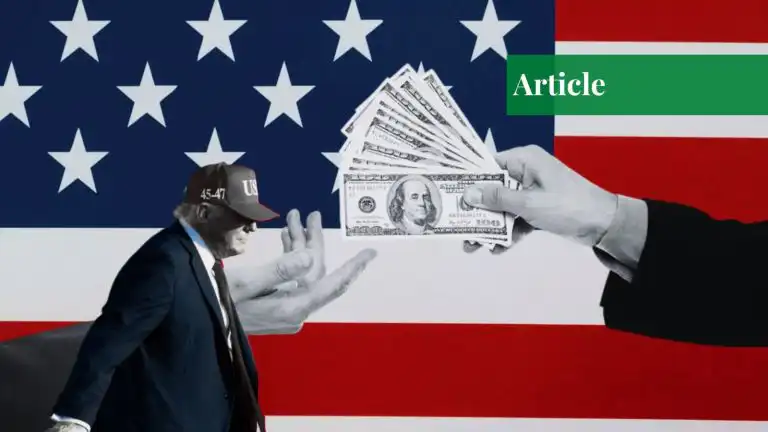

The fact that the United States has achieved its lowest score in the history of the Corruption Perceptions Index (CPI), compiled by Transparency International, is not just a statistical accident but a sign of the lack of trust in the integrity of American institutions. The CPI, comprised of professional ratings and business polls that determine corruption levels in the state sector, is one of the strongest pieces of evidence of world governance.
The United States was ranked 29th in the 2025 CPI out of 182 reporting entities with a score of 64 out of 100, a measurement that rates 100 as an exceptionally clean public sector. This rating and position are the lowest the United States has achieved since 2012, when Transparency International began using its current methodology. Besides, the fall is not an isolated or unique event; it is part of a series of events that have taken place over the course of a decade.
America – No Longer the Role Model
Despite the fact that the United States is still ranked relatively high in comparison with the global average of 42, it has undergone a significant decline in its position as an exemplar of anti-corruption values. During the decades, Washington promoted transparency reforms and the rule of law in foreign countries, usually linking conditional foreign aid and trade agreements to governance practices. The application of the laws on corporate bribery has been historically spearheaded by American prosecutors all over the world; US diplomats have been calling on the rest of the world to reinforce the institutional protections. The current fall, then, is symbolic: it subverts the ability of the United States to assume moral leadership in the war against corruption and poses disturbing questions about the stability of the domestic democracies.
Contributing Factors to the Decline
The decline that is observed can be attributed to a complex constellation of interrelated factors. To begin with, there is a sense of diminished institutional checks and balances. The CPI does not make corruption measurable by the number of prosecutions or convictions done; it simply sums up the professional opinions on whether the institution is effective and independent to avoid the abuse of power.
The presence of political polarization in the United States has increased to an unprecedented level in the last ten years, which, in turn, finds its reflection in the perceptions of international institutions as weak. A decline in trust in anti-corruption protections, despite the existence of formal laws addressing this, comes about because of public attacks on supervisory bodies, prosecutorial independence controversies, and frequent ethical scandals.
The second reason is the changing application of the Foreign Corrupt Practices Act (FCPA), the 1977 law that forbids the act of bribing foreign officials by American entities. The FCPA has traditionally been one of the pillars of US anti-corruption leadership. Major corporate bribery cases have been handled by the Department of Justice and the Securities and Exchange Commission. This is a signal to the US policymakers that American institutions are still keen on ensuring misconduct is not perpetuated in other countries. However, expert judgments can change with perceived lapses or declines in the intensity of enforcement, which could arise due to budgetary limits, a change in priorities, or a new definition of policies.
Transparency International has warned that the decline of anti-bribery enforcement can be a sign of the world becoming more tolerant of corrupt practices, which can undermine international anti-corruption efforts.
Campaign Financing and Political Funding
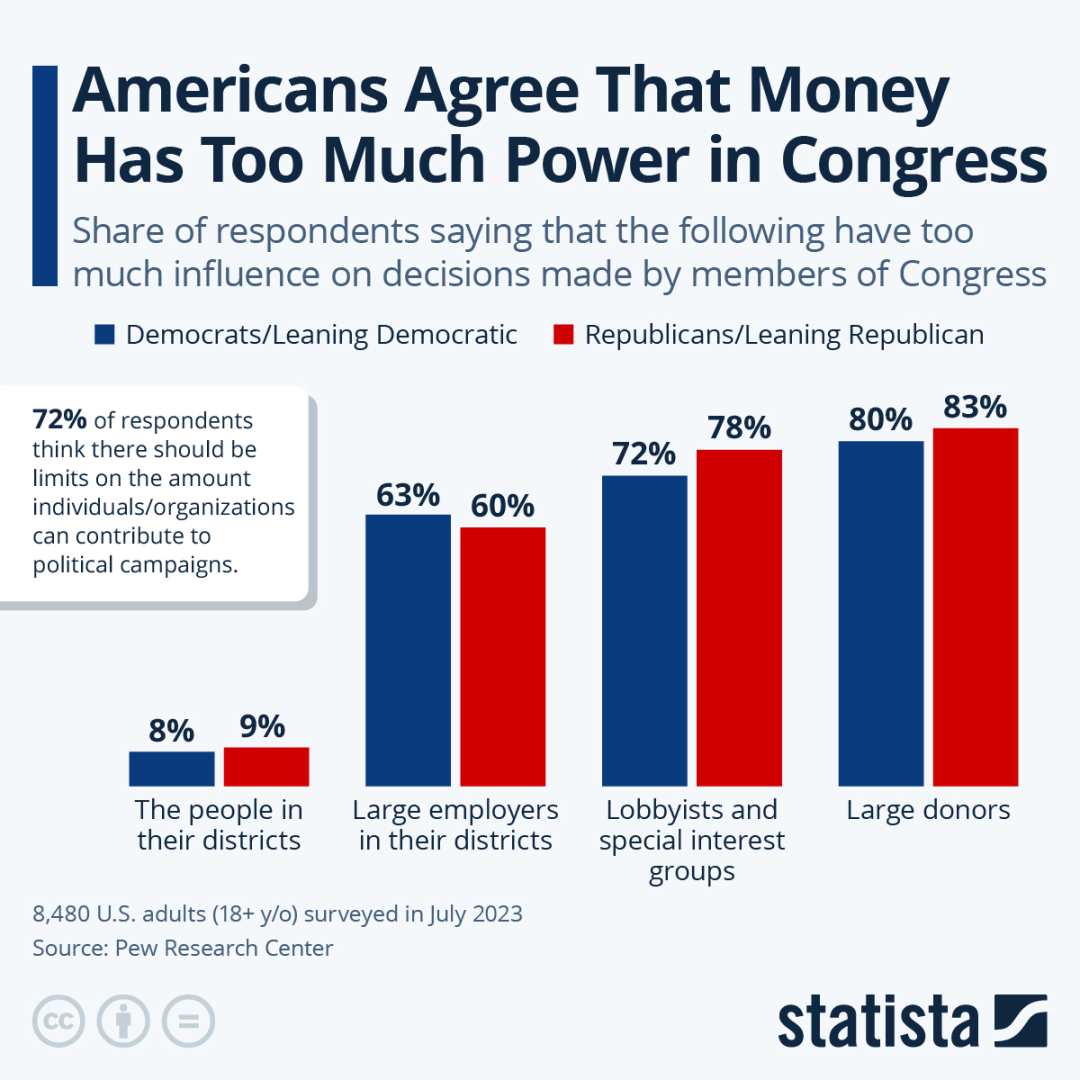
Political finance and campaign funding practices also determine perceptions. In the United States, comparatively high amounts of individual and company money are held in elections as compared to most sophisticated democracies. Governance scholars have been keen on the emergence of what are termed dark money organizations; these are groups that are capable of spending during elections without revealing the identity of the donors. It has been reported by the Brookings Institution that obscure financial systems impede transparency and allow undue influence. These practices, though still legal, can be construed to strengthen the view that the policymaking process is skewed towards wealthy donors and special interest groups.
Revolving Doors and Conflict-of-Interest Rules
Corruption is also assessed based on the conflict of interest and the revolving door between industry and government. The Organisation for Economic Co-operation and Development (OECD) highlights that any corrupt situations cannot be avoided without proper controls in the conflict of interest, which is an important deterrence to developing trust in the government.
The US regulations of ethics also mandate disclosure of finances and place limits on employment after government service. However, the recent scandals of senior officials moving to the corporate arena or having financial connections have enhanced the sense of a gray line between serving the government and making a profit. Conversely, the countries having a high CPI score are likely to have centralized systems of ethics and strong watchdog institutions.
The Democratic Climate and Its Implications on Governance
A more inclusive democratic atmosphere is also pertinent. In its annual report, Freedom in the World, Freedom House records the gradual decline of various indicators of democracy in the United States over the last ten years, such as the increase in political polarization and loss of trust in institutions by the population. Though the United States is still categorized as a free democracy, the report reveals that there is a tendency toward tension in the electoral process and norms of governance. Gradual, but steady, democratic backsliding can also affect the perception of corruption, as corrupt activities are likely to flourish in conditions where the institutional responsibility seems to be diluted.
Corruption Perceptions on a Global Trend
It is worth noting that the recent fall of the United States is part of an overall international trend. According to the Corruption Perceptions Index (CPI) 2025, more than two-thirds of the surveyed nations recorded a score of below 50, which is an indication of widespread governance issues. The global average score has dropped to the lowest in over a decade, the first drop in that time, according to Transparency International, which termed it a widened loss of public sector integrity. Even developed democracies like the United Kingdom and Canada registered the same downward trends and other controversies about political ethics and shrinking trust in the populace. The United States is therefore not an exception; however, it is part of a broader democratic pattern of polarization, populism, and the shrinking of civic space, which puts strain on institutional stability.
The International Effect of the American Recession
The consequences of this downturn are enhanced by the fact that the United States is at the top of the international framework. The United States, as the largest economy in the world and one of the main participants in the formation of global governance systems, has great influence on the international regulatory regimes. It was instrumental in the creation of the OECD Anti-Bribery Convention, which requires signatory states to make bribery of foreign officials a criminal offense.
In addition, it has used the global Magnitsky Act sanctions to punish corrupt officials across the world. With the decline in the CPI ranking of the United States, its ability to promote reforms in other countries might be undermined. Governments, which are under pressure from the US to improve their transparency, would tend to use the controversies of governance in the US as a symbol of inconsistency.
Economic Impact and Trust of the Population
The economic implications of the worsening perceptions of corruption are not only manifold but also have consequences. The nexus between good governance, good fiscal management, and foreign direct investment is an issue that the World Bank has always highlighted. As long as the macroeconomic stability of the United States continues, reputational risks related to the perceived erosion of institutional protection are timely.
The metrics of governance are becoming more and more useful in investment decision-making, especially in environmental, social, and governance (ESG) systems. Though the long-term decline in corruption rating may not cause a direct economic shock, its long-term impact may have a long-term outcome that is reflected in decreased investor confidence and reduced sovereign rating.
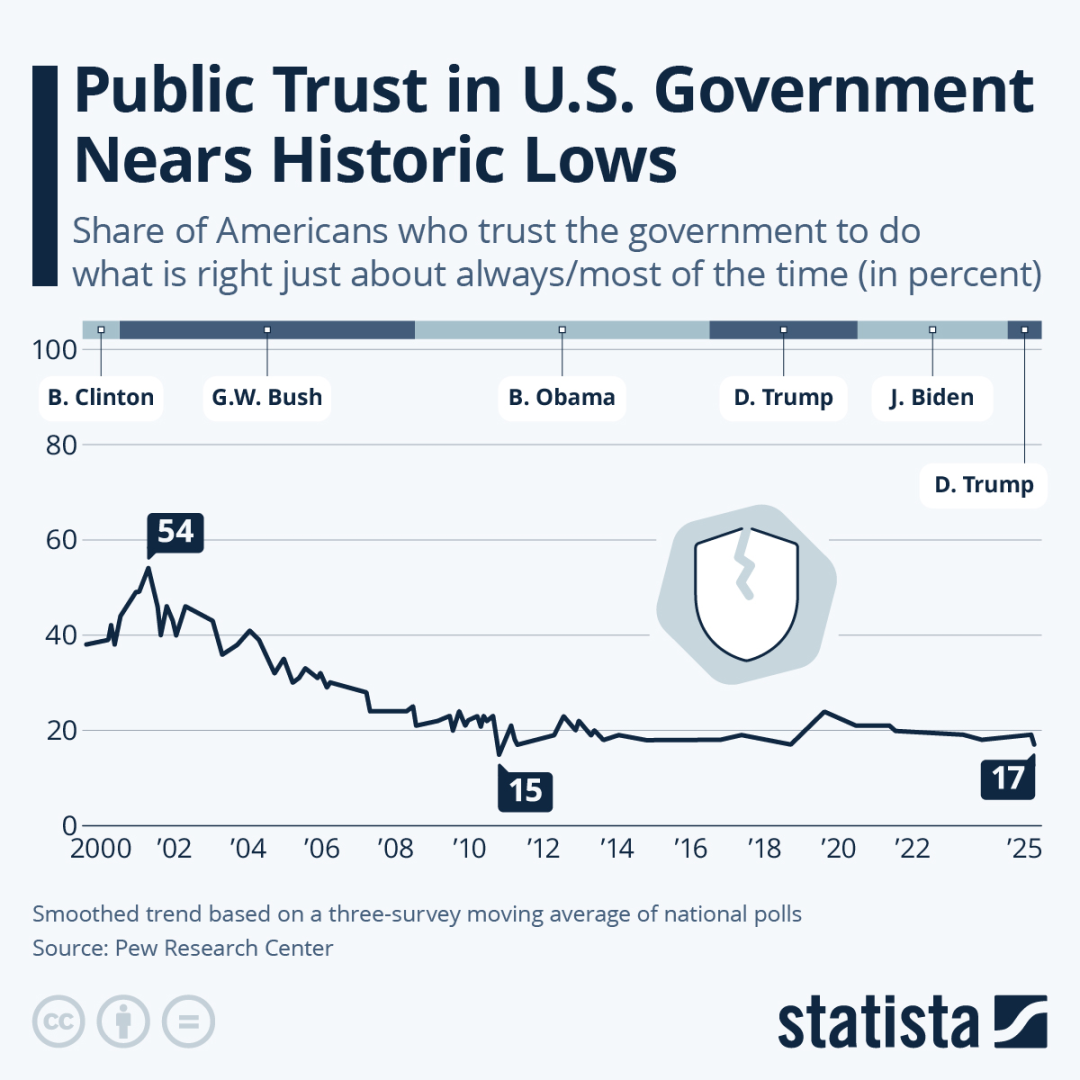
The other relevant dimension is the state of trust among the population. The surveys conducted by the Pew Research Center show that trust in the federal government has been relatively low over the last ten years. Lack of popular trust is not necessarily the same as high levels of corruption, but it will instill a normative notion of institutional distrust. Corruption appraisals tend to be based on professional judgments of the legitimacy of governance, which includes institutional transparency and public trust indicators.
Limitations in the Methodology of the CPI
It is pivotal to note that the CPI is limited in terms of methodology. Transparency International insists that the index is a gauge of the perceived corruption in the state sector, based on the expert and business survey data, but it does not include actual evidence of lawlessness. Based on this, the rankings are subjective views of the quality of governance at the international level as opposed to irrevocable bribery or embezzlement levels. Still, the perceptions themselves determine the international relations in themselves, because the reputational signals shape the investment choices, the diplomatic negotiations, and the political alliances.
The Path Forward
To curb this degrading tendency, it is vital to pay attention to the independence of the institution, the absence of political financing, and the strict implementation of the anti-corruption rules. Increasing protection of the whistle-blowers, reintegrating the functions of the inspector general, and maintaining the nonpartisan quality of the prosecutorial system would help to restore trust at home and abroad. Also, it is vital to fix the structural incentives that encourage the opaque funding of politics.
Conclusion
The United States remains an example of democratic leadership, having a strong institutional capability. Even its judiciary, civic agencies, and civil society organizations are resilient compared to most other countries. However, the fact that corruption ratings are steadily decreasing is a warning that we should not assume that the quality of governance is guaranteed. Perception is still a strong aspect, especially for a nation that has historically established itself as a model of responsible democracy. The United States needs to prove that it can reinforce its institutional integrity and moral authority within the country to maintain its position as an international leader in the promotion of transparency and the rule of law.
If you want to submit your articles and/or research papers, please visit the Submissions page.
To stay updated with the latest jobs, CSS news, internships, scholarships, and current affairs articles, join our Community Forum!
The views and opinions expressed in this article/paper are the author’s own and do not necessarily reflect the editorial position of Paradigm Shift.

Muhammad Sohail Hassan is a final-year student of BS Political Science at the University of Sargodha. He is a regular opinion writer for an English newspaper in Islamabad. He possesses a keen interest in national and international politics and approaches these subjects with analytical insight.