
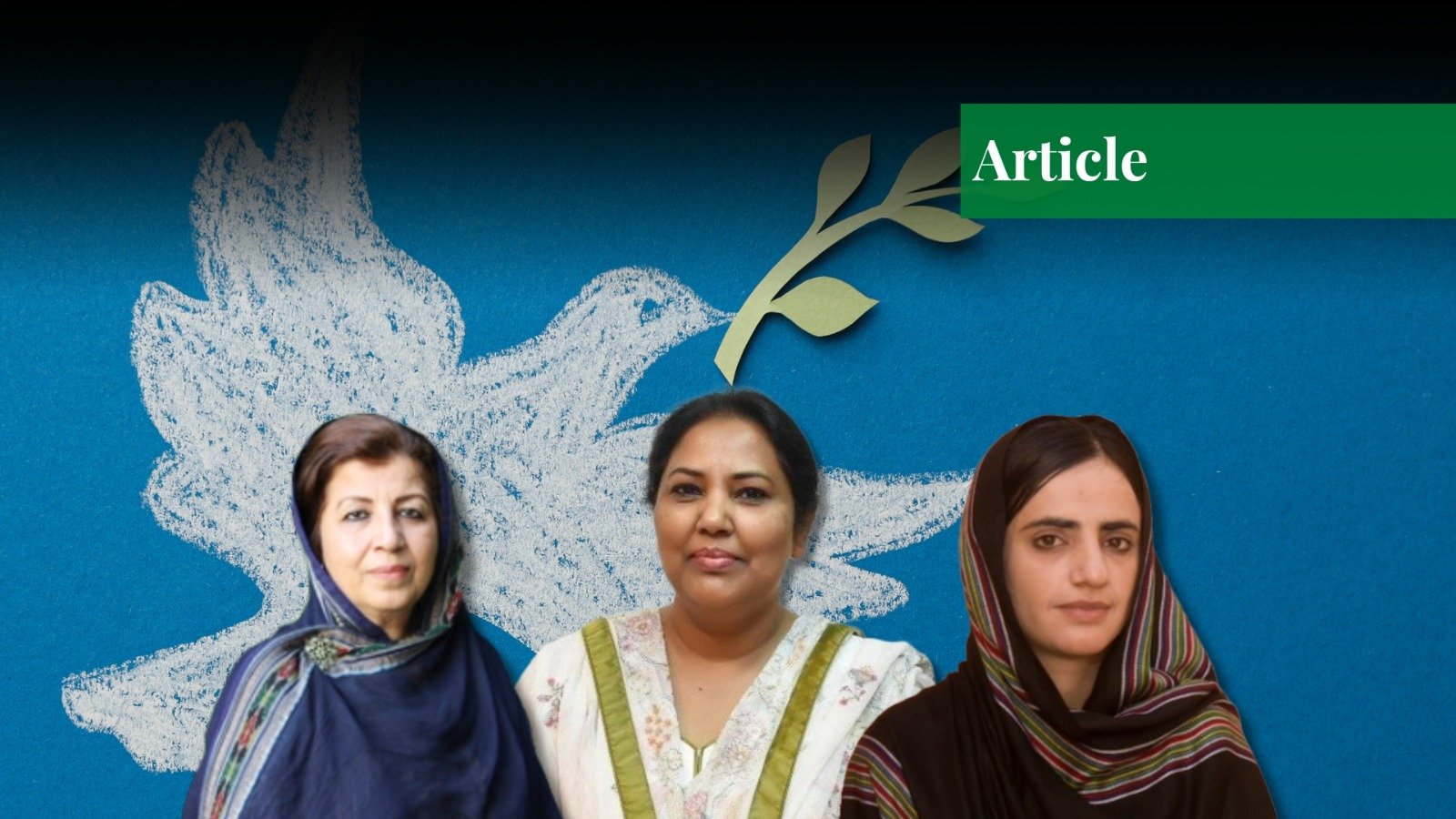

It is often said that women are more prone to emotions and can sometimes mishandle things due to their high emotionality. Due to this argument, women are often given a backseat in conflict and peacebuilding processes. Women have a greater tendency to understand a situation/ conflict from its grassroots and work on its management and resolution. Apart from the emotionality factor, there are also instances of misogyny where male peacebuilders find it offensive to have a female counterpart. All these restrictions limit the role of women when it comes to peacebuilding.
Research on Women in Peacebuilding
Between 1989 and 2011, research was conducted by the International Peace Institute. The study found out about women’s inclusion and its success rate with the peacebuilding agreement. According to it, the inclusion of women in the peacebuilding process creates 35% incremental chances in the success rate of a peace agreement to 15 years. It is always the women that face the consequences and brunt of conflict in the face of sexual assault, rape, abortions, hygiene issues, abduction, or sex slavery at a greater level comparatively to their counterparts; thus, their participation in the conflict management and peacebuilding process makes it easier for the stakeholders to understand what women go through after a conflict ends. The significance of the role of women in the peace processes can be highlighted by a very famous Kofi Annan quote that states that during war times, it was always the women who kept the society going. Therefore, we need to make sure that their participation in post-war events is there, especially in negotiations and mediation.
In this regard, the UN Resolution on Women, Peace, and Security, also known as the famous 1325 United Nations Security Council Resolution, passed in 2000, has played an instrumental role in creating avenues for women in conflict management, peacebuilding, and their significant role in participation in post-conflict scenarios. Before this resolution, UN Women reviewed all 664 agreements regarding conflict management and peacebuilding that had been in place in the past. The review/survey found that only 11% of the time, women’s inclusion and their security have been discussed in these agreements. Apart from this, from the period of 1990-2000, there were only 4% women signatories in the peace processes and less than 10% women negotiators. These statistics show how the inclusion of women in peace processes has been severely neglected over the years.
In the last decade, major attention has been given to women’s inclusion in peace agreements. Recently, in 2017, the Women, Peace and Security Act was passed with bipartisan support. Senator Jeanne Shaheen supported the bill from the Democratic Party. The bill instructs the US government to make more comprehensive strategies to inculcate women in post-conflict resolution situations. It also highlights women’s important role in conflict management and peacebuilding. With women’s inclusion in peace negotiations, the agreement will also cover the issues women usually face during a conflict.
According to the research of Professor Valerie Hudson at Texas A&M University, the security and well-being of women in society are equivalent to the overall security of the society. When women gain confidence in their security, they can actively take part in leadership roles through which they constructively contribute to society. He has proved his argument by proclaiming that gender equality is a stronger indicator of measuring a country’s peacefulness than any other economic or political indicator. This research by Professor Hudson shows how important it is to include women in conflict management to strengthen the peace process.
There are numerous examples where women have shown their efforts in peacebuilding. In 2014, a Norwegian Major General named Kristin Lund was appointed as the first-ever female to serve in a UN peacekeeping mission in Cyprus as a Force Commander. A US diplomat, Stephanie Williams, was designated an Acting Special Representative of the UN Secretary-General in Libya. She assisted in the peace process and mediation talks. Myanmar has been a target of intense violence for decades. Despite all these challenges, Burmese women have actively taken part in armed conflicts along with their male counterparts. They have also actively taken part in multiple campaigns for the Myanmar peace processes. When the Nationwide Ceasefire Agreement was signed in 2015 between the Myanmar government and an ethnic rebellion group, out of 50 negotiators, only 2 were women, which showed a significant under-representation of women’s representation in formal peace processes.
First time in history, Miriam Coronel Ferrer signed a peace deal with an infamous militant group, Moro Islamic Liberation Front (MILF). The most astonishing characteristic of this peace process was women’s massive participation in it. Signatories from the government side were mostly female. A total of 27% of the signatories were female. Apart from the mediation talks, women aggressively participated in other peacebuilding activities. Many women-based civil society groups recommended the future implementation of women’s participation. They also requested the government to expand its agenda and include more women in it. All these efforts of women in conflict management and the peacebuilding process made the world realize how important it is for them to participate in post-conflict activities.
The conflict leadership style of women is also different from that of men. Since women are more prone to emotionality and have faced the greater consequences of a conflict, they usually have a subtler approach to conflict management. Many critics argue that since women rely more on their emotions, it is of no use to make them participate in peace processes. However, many argue that since they suffer the most from the conflict itself, which has long-lasting impacts on their lives, their inclusion is of utmost importance.
Importance of Women and Girls in Peacebuilding
Because of the growing need for women in such processes, multiple important resolutions like the UNSCR 1325 Resolution were passed so that future generations can easily partake in peace processes. Their inclusion will not only broaden and diversify the horizon of the process, but it will also help them to air out their grievances and let the world know what they go through during the war. Though many things still need to be done in this regard, a little step, like the UN resolutions, can make a huge and long-lasting impact on the role of women in peacebuilding and conflict management.
If you want to submit your articles and/or research papers, please visit the Submissions page.
To stay updated with the latest jobs, CSS news, internships, scholarships, and current affairs articles, join our Community Forum!
The views and opinions expressed in this article/paper are the author’s own and do not necessarily reflect the editorial position of Paradigm Shift.

Minahil Baig is currently pursuing her master's degree in Peace and Conflict Studies from NUST. Her areas of interest include conflict management, defence studies, artificial intelligence, and modern warfare.