

On Nov. 11, 1918, in Compiègne Forest, the railway carriage belonging to the supreme allied commander, Marshal Ferdinand Foch, served as the site where the German representatives signed the humiliating armistice agreement of 1918. The harsh terms outlined in the Treaty of Versailles motivated Adolf Hitler, a radical fascist, to rise within German politics, advocating for the abolition of the treaty, reminiscent of France’s restitution after the Battle of Waterloo.
The Allied powers agreed to establish a new world order at the Yalta Conference, which translated into the formal creation of the United Nations. Karl Marx famously stated, “History repeats itself first as tragedy, then as farce.”
The tragedy of World War II led to the founding of the United Nations. However, regrettably, the world is once again engulfed in conflict. While the United States withdraws from European affairs, the global landscape is experiencing a populist surge. Among these developments, Ukraine is under pressure to sign a humiliating armistice agreement, primarily driven by the United States itself, which previously assured Ukraine’s security in 1994 through the Budapest Memorandum.
The United States, once championed a rules-based world order, has withdrawn from 31 United Nations organizations, violated its own supported U.N. Security Council Resolution 138 by kidnapping President Nicolás Maduro, and threatened military action to acquire Greenland. This marks a definitive blow to the post-World War II world order.
As a fading order exhales its last breath, a new form of imperialism is rising. A period where the prosperity of one state is built on the destruction of others. Governments will be toppled, threats normalized, and human rights violations become a “new normal.” Unlike early 20th-century imperialism of territorial conquest and resource extraction, today’s major powers impose dominance through indirect means, forcing weaker states to boost defense spending and pursue self-reliance in the name of security.
In such an environment, the United Nations appears increasingly ineffectual, mirroring the League of Nations at some point in history. The historical parallels, however, go well beyond any set of policies or actions. Nations reliant on US security guarantees will be more inclined to develop nuclear deterrence capabilities. Similarly, aspiring hegemonic states will intensify exploitation and military force to attain dominance. Russia, China, and Rwanda are all vying to carve out their share within this new age of imperialism.
It would annihilate international governing bodies, usher in a new dawn of power politics, and prompt more centralized authoritarian regimes to take root. Compelling state policies through power will ultimately sow chaos in world order, leading to a period of anarchy in international politics until a new order is constructed. Or at worst-case scenario, imperialism might become the new world order. As ancient Greek historian Thucydides once said, “The strong do what they can, the weak suffer what they must.”
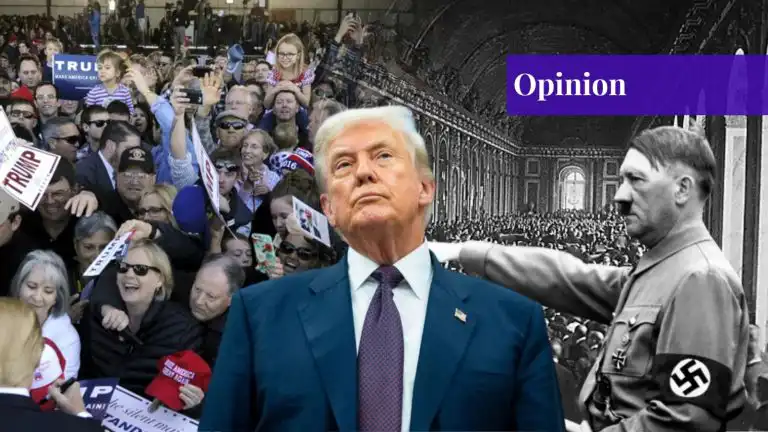
The current scenario did not emerge from coercion but from the erosion of international law and the retreat of US global commitments. Rising far-right politics reflect public frustration with governance failures and demands for greater domestic focus. Young voters, in particular, rally behind populist leaders offering radical short-term policies that undermine the international order. A clear example is Donald J. Trump’s so-called “Donroe Doctrine,” which echoes the Monroe Doctrine by seeking to curb Chinese and Russian influence in the Western Hemisphere, weaponizing tariffs, and scaling back US security commitments to Europe.
A sudden collapse of commitments will label the US as an unreliable security and economic partner. Under such a scenario, US allies will tend to broker better trade deals with states that were once off-limits to them. For states whose security was once guaranteed by the US, they will search for better security partners in tandem with increasing their defense spending, giving more flexibility to Russia, China, and competing powers to fill the vacuum left by the United States.
The United States’ previous efforts to establish a global order are not new but rather a blueprint for past foreign policy disasters that led to World War II. After World War I, President Woodrow Wilson proposed the famous 14 Points, which formed the basis of the League of Nations and international law. However, the US Senate, led by Republican Sen. Henry Lodge, blocked US participation, leaving the world without a security guarantor and vulnerable to conflict, culminating in World War II in 1939.
A year later, Adolf Hitler paid a visit to Paris not as a prisoner of war, but as a victor. He ordered the removal of Marshal Ferdinand Foch’s carriage from the French victory memorial to be used as an official site for important guests. The representatives of Paris would come in the carriage, but this time it was the French who signed the surrender documents. Later on, that carriage of victory was burned by Nazi SS forces.
If you want to submit your articles and/or research papers, please visit the Submissions page.
To stay updated with the latest jobs, CSS news, internships, scholarships, and current affairs articles, join our Community Forum!
The views and opinions expressed in this article/paper are the author’s own and do not necessarily reflect the editorial position of Paradigm Shift.

He is studying international relations at the University of Central Punjab,