
In today’s world, people spend most of their time in front of screens, scrolling endlessly through social media, binge-watching television, or consuming never-ending news. With every new invention in the history of communication, from the alphabet to print, from television to the internet, the previous mode of knowledge has not only been replaced but fundamentally reshaped. Screens no longer show us images; they shape our behaviour, our values, and our way of thinking. Whether a person reads a newspaper, watches TV, or scrolls through Instagram, they end up consuming millions of ads throughout their life.
As people grow older, their ideas and choices are shaped by the repeated visuals and slogans they have encountered. In this era of reels and instant notifications, our attention span is falling, and our intellectual habits are becoming extremely narrow. We have become addicted to quick fixes, whether the crisis is political or personal. Entertainment and cosmetics have taken the place of truth and reasoning. Television has made actual rational thinking almost irrelevant, and social media has pushed us into an age of post-truth, where reality is dissolved in a storm of images and emotionally charged fragments. Information is now so excessive and scattered that its meaning is destroyed.
Only written text still allows a rational and reflective experience, as it gives the reader a pause to think and question. Television talks endlessly but never leads us toward meaningful action. One piece of news is immediately replaced by another, without any connection or context. Information flashes, disappears, and is forgotten. The screen pushes facts in and out of our conscious mind, preventing any deeper evaluation. Even political choices, such as who to support or who to love, are now judged not by integrity or policy, but by how someone looks in a TikTok edit.
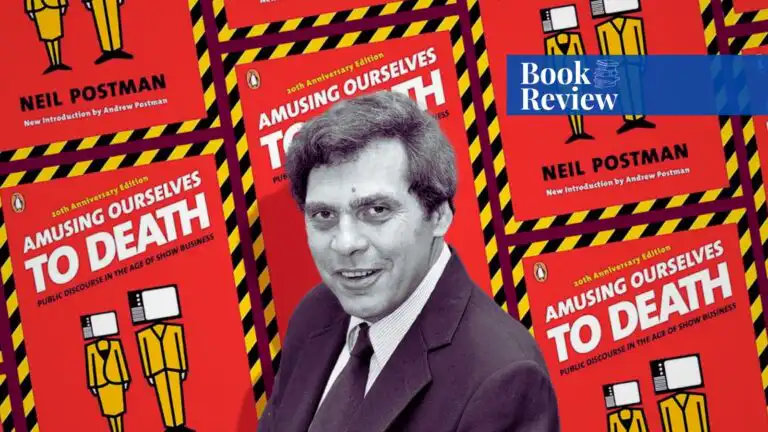
Today, if a person appears attractive on screen, society instantly favours them, regardless of competence. Ask an average supporter of a political figure in Pakistan why they admire him, and most responses revolve around appearance, presence, and charisma. Populist leaders everywhere use this media environment to gain power. Even in the United States, Nixon once said he lost an election because his makeup was poor. Candidates were told to lose weight and look good, because baldness and extra chins were seen as unfit for office. In modern politics, surface aesthetics have replaced intellect and experience. Journalists, who should be deeply grounded in philosophy and politics, now spend more time with hair dryers and makeup than on refining their analysis. Television rewards those who look better, not those who think better. The medium reduces words to slogans and tickers. It edits speech for us, frames it, colours it, and delivers it as visual seduction.
Culture is created by speech and renewed by each new form of communication. As cultures shift, all the ideas and values within them are dragged along the same current. We have now reached the point where television defines not just what we know about the world but how we are allowed to understand it. In earlier periods, especially in America, literacy was extraordinarily high, and citizens regularly read political pamphlets, attended lectures, and engaged in deep public debates. People could listen to seven-hour arguments because truth and political consciousness mattered to them. Compare that with our current era of reels and one-minute clips, long and reflective speech is rejected, and immediate answers are demanded.
Advertising began as small text blocks in newspapers, which demanded some level of rational evaluation. But over time, advertisements changed into images and then moving images, designed to bypass thinking entirely. Modern advertisements appeal not to reason but to psychology. They do not require the audience to evaluate facts; they need only a passive emotional reaction.
Television has now overtaken all other forms of information. It has turned information into a commodity, something traded regardless of its meaning or value. As Coleridge warned, it has become “water everywhere, but not a drop to drink.” Data are abundant, but very little of it is usable. Most news, therefore, does not guide us to action; it only gives us something momentarily exciting to talk about. The telegraph began this logic of rapid, context-free facts, which forever disturbed the balance between information and action. With each new message pushing the previous one away, there is no time for thought or judgment. We scroll through thousands of news posts without pausing to evaluate—our entire mental life has become a race to consume more.
Today’s news language has turned into headlines and slogans, fragmented, impersonal, sensational, and quickly forgotten. Each headline is disconnected from the others. Since television does not provide a meaningful context, viewers are forced to invent contexts themselves to make sense of what they see.
Television and the internet now dominate every field: education, politics, religion, sports, and science. They have become the command centre of knowledge itself, a “meta-medium” that does not simply present information but creates the criteria for knowing. Everything must appear as entertainment. Reports of violence are presented alongside dramatic music and eye-catching graphics. Serious debate is reduced to a few minutes, leaving no space for history, philosophy or reflection. The only aim is to hold the viewer’s attention, not to develop reasoning. Meaning itself begins to dissolve. Television separates facts from context. It transforms knowledge into isolated fragments that can be consumed but never connected. A viewer may hear about war, climate change, elections, and celebrity gossip in the same ten minutes, and everything is given the same emotional tone. We rush from one sensation to another, unable to remember, unable to evaluate, unable to act. The mind becomes full, but empty at the same time.
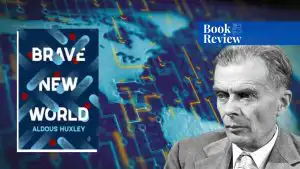
Television has become our “Soma,” the drug of the masses. In its logic, information and argument are irrelevant. What matters is mood, image, and emotional comfort. Politics on television is no longer about truth or excellence; it is about looking and sounding appealing. Advertising dominates not just commerce but political discourse, too. In classical capitalism, rationality and value drove the market. But modern advertising studies the weakness of the consumer, not the value of the product. It convinces us that all problems—political, personal, or moral- can be solved quickly and easily, usually by a product, a slogan, or a symbol. When a society is exposed to millions of commercials, it starts to believe that every complex problem requires a simple, fast solution and that complex thought is untrustworthy. Commercials teach us to seek theatrical expressions over serious ideas. It gives us a slogan, a face, or a symbol that makes us feel seen. And in this world of image politics, we no longer look for the most capable leader; we look for the most charming one. A president or governor is not chosen for their knowledge, but for their ability to make us feel good. As politics becomes a branch of show business, it loses not just its depth, but also its connection to history and ideology.
In the end, everything on television and social media is a performance. Stories are told through dramatic images and emotional music. The goal is to entertain, not to teach, not to heal, and not to awaken thought.
The screen does not control us with force; it controls us with pleasure. It gives us enough emotion to feel awake, but never enough truth to make us think deeply. It teaches us to distrust complicated ideas and to believe that simple slogans are wisdom. When people are constantly entertained like this, they become easier to control. They stop searching for justice or meaning and start searching only for excitement and stimulation.
Only in moments of quiet, when we read, think, and reflect, can we regain the ability to think for ourselves. When we slow down, we take back our inner life from the constant noise of the screen. We begin to understand that politics is not entertainment, that truth cannot be reduced to a short phrase, and that absolute freedom starts not in noise, but in silence.
If you want to submit your articles and/or research papers, please visit the Submissions page.
To stay updated with the latest jobs, CSS news, internships, scholarships, and current affairs articles, join our Community Forum!
The views and opinions expressed in this article/paper are the author’s own and do not necessarily reflect the editorial position of Paradigm Shift.

Mr Muhammad Shehryar is currently pursuing his Bachelor's in International Relations at the University of Peshawar.