From the late 1940s across Europe to the collapse of the Soviet Union in 1991, the Cold War transformed the global political, economic, and cultural landscape. These transformations reflected the essence of ideological conflict between capitalism (the United States) and communism (the Soviet Union). The Cold War left behind strong effects on the subsequent post-war period, particularly in three major areas: social-cultural, economic, and political. The 21st century has also witnessed some of the great transnational upheavals, new political challenges, and the threshold of globalization; these effects have been changing over time.
Socio-Cultural Consequences
The Cold War forged a military culture in both the United States and the Soviet Union; fear and threat of nuclear war influenced public opinion, the media, and educational policies in various parts of the world. The proliferation of nuclear weapons only sharpened the threat of universal annihilation, so countries had to prioritize their defense spending higher than local welfare projects.
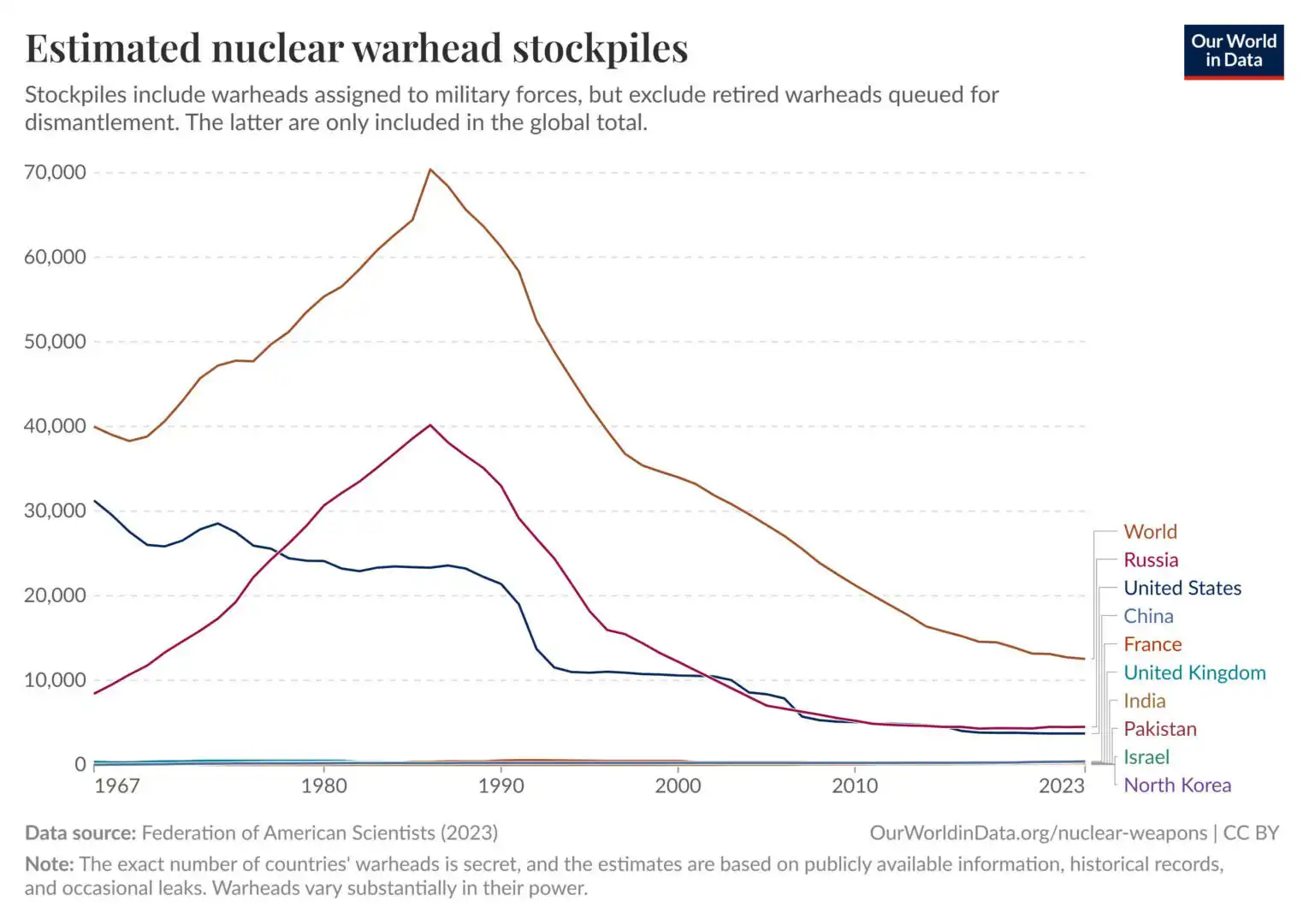
According to the Doomsday Clock, nuclear tensions have not disappeared completely in the post-Cold War era but have resurfaced in various manifestations. Some nations, like North Korea, continue their work on nuclear armament; upon the withdrawal from the nuclear non-proliferation treaty, the country executed missile tests between 2017 and 2018 and set off alarm bells globally, similar to those of the Cold War arms race.
Cultural Competitions and the Promotion of Ideology
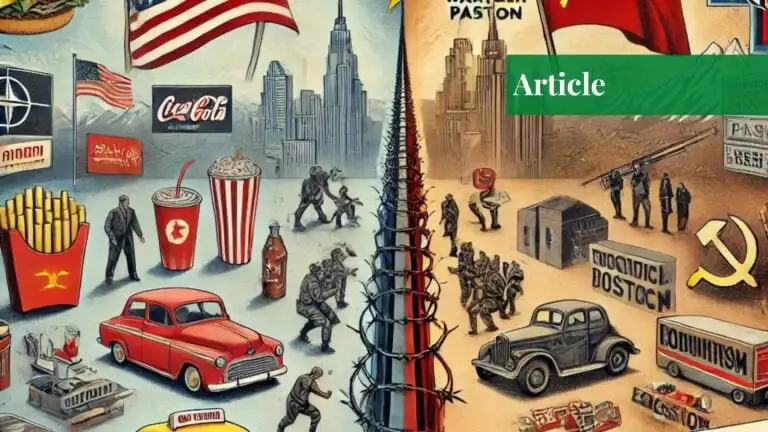
During the Cold War, both superpowers relied on cultural tools (soft power) to spread their ideas worldwide. The most important cultural instruments for the United States were Hollywood films (e.g., Rambo, released in the 1980s) and jazz music, which promoted democratic freedom and capitalism. The Soviet Union saw justification in industrial labor and socialist realism as something normal for the overall good of society. At the top of the 20th century’s decolonization, this rivalry extended equally across Eurasia and Africa.
In the post-Cold War era, nations like China have used soft power and cultural diplomacy to promote an alternative (socialism) to neoliberalism, usually advised by the United States. After China’s four modernizations (economic reform, 1978), the Belt and Road Initiative and Confucius Institutes are some of the current evidence of ideological penetration.
Humanitarian Emergencies and Displacements
The impacts of many proxies from Vietnam to Afghanistan contributed to humanitarian crises in many regions. Destroying thousands of civilians led to many refugees and internally displaced people. These proxy wars finished much of the connectivity, along with millions of Afghan refugees in Pakistan and Iran. The same thing occurred with the Soviet-Afghan conflict (1979-1989).
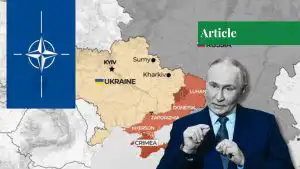
The post-Cold War era has witnessed humanitarian catastrophes; one perfect case study is Afghanistan. After the Taliban regained power in 2021, a new humanitarian catastrophe erupted as a result of the decades of intervention and rising instability brought on by the U.S.-led War on Terror. Similarly, Russia’s recent 2022 invasion of Ukraine points to how the Cold War created long-lasting fault lines, as this invasion has its history embedded in the expansion of the North Atlantic Treaty Organization (NATO).
Political Consequences
The Creation of Military Partnerships
Military pacts, such as NATO (1949) and the Warsaw Pact (1955), were established during the Cold War. These partnerships worsened the ideological divide and caused devastation on the worldwide political stage. NATO expansion is among the most contentious discussions, one that emerged in the aftermath of the Cold War, running parallel to the war. Russia, under President Putin, views the eastward enlargement of NATO as an aggressive action of NATO (facing a security dilemma) since the dissolution of the Warsaw Pact.
Fluctuations in the Developing Area
To understand the consequences, one should focus on some case studies, as the battlefields of the Cold War grew more and more in the Global South: countries in Africa, Asia, and Latin America. The U.S.-sponsored proxies and the USSR-decimated (opposition to) democracy led to instability. Additionally, in Latin America, US interventionist policies such as Operation Condor helped autocratic governments keep an eye on the spread of communism in North America. These events created unrest in countries and fueled widespread violence, political oppression, and economic inequalities.
Countries such as Chile and Nicaragua have all been exposed to US interference. The consequences of internal US interventions during the Cold War would disturb these countries in terms of their sociopolitical turbulence and instability today. On issues related to migration and economic instability, U.S.-Latin American ties still cast a shadow of division.
The emergence of a unipolar world order and the collapse of the Soviet Union blessed the end of the successful conquest of the U.S.-led version of the liberal capitalist model and heralded a unipolar world order, as mentioned in “The End of History,” refers to the fact that Western democratic capitalism had come to dominate the forms of government in a unipolar world. Those people who went into Afghanistan and Iraq and onto the US’s war against terrorism saw the supremacy that was presumed to be within reach of Washington in peril.
Today marks a growing multipolarity as each of these countries, China, Russia, and emerging regional actors, such as India, carve their own space of influence. China’s increasing economic clout in Africa and Latin America is a challenge to the traditional American hegemony, akin to competition during the Cold War, observed in regions out of alliances.
Economic Consequences
Defense and the Military-Industrial Complex
The military-industrial complex stands under the most outstanding Cold War legacy. Defense expenditure during the Cold War in the USA enhanced technological advancement, but it hardened a perspective toward military investment. In 1989, defense spending in the United States was around 5.9% of the GDP. With the Cold War over, huge military expenditures have continued to afflict the United States of America. The defense budget for 2023 went above $801 billion, implying still ongoing tensions with China and Russia.
Economic Inequalities and Structural Adjustment
At the end of the Cold War, international financial organizations like the International Monetary Fund (IMF) promoted structural adjustment programs (SAPs), a set of economic reforms that a country must adhere to secure a loan from the International Monetary Fund or the World Bank, in financially troubled countries, especially post-socialist countries transitioning into market systems.
The effect of SAPs can be seen in the case study of Russia during the 1990s. Immediately after the collapse of the Soviet Union, rapid privatization and market reforms (Glasnost and Perestroika reforms of Mikhail Gorbachev in the 1980s) were accompanied by general poverty, the oligarchic market, inflation, and high rates of poverty. Under Vladimir Putin, this economic chaos led to political authoritarianism.
Case Studies in the Post-Cold War Era
The Cold War’s geopolitical consequences are illustrated in Ukraine. Ukraine became entangled after 1991 in spheres of Western and Russian influence. Russia’s 2014 annexation of Crimea, followed by the 2022 invasion, shows how Cold War-era territorial disputes and ideological divides are still fueling wars. Recently, Donald Trump highlighted that Ukraine is not the US’s headache that will negatively impact Ukraine’s defense.
China’s ties with the Soviet Union came apart in the 1960s as the Cold War went on, driving it to seek its communist system. Following the Cold War, China’s opening of market reforms under Deng Xiaoping allowed for unparalleled economic expansion. By 2020, China had risen to be the second-biggest economy ($18.08 trillion), indirectly challenging the United States. China’s rise as a global superpower marks a shift from the bipolar order to a complex multipolar competition.
Conflicts in the modern Middle East have their roots back in the Cold War. Interventions in nations such as Iraq, Iran, and Afghanistan by the United States and the Soviet Union agitated the area. The outcomes of the American-led invasion of Iraq in 2003 showcase the long-term impact of Cold War policies. The emergence of ISIS and ongoing religious tensions, particularly in Syria, highlight the unintended consequences of interfering authorities (Russia and Iran support Bashar Al-Assad, and the US and Israel support the militia.)
Conclusion
The global effects of the Cold War are still felt in society, in politics, and commerce. Unsettled geopolitical competition and militarism all reflect the consequences of the Cold War once the United States and the USSR separated. The post-Cold War era is still quite affected by its Cold War origins—from the humanitarian crises of Afghanistan and Ukraine to China’s economic growth and the 2008 financial meltdown.
The Cold War, where fragile balance, different ideologies, and advanced interdependence defined the world. Knowledge of these consequences demonstrates present global problems and demonstrates that cooperative responses are called for just to avoid the devastation worldwide in a multipolar order.
If you want to submit your articles, research papers, and book reviews, please check the Submissions page.
The views and opinions expressed in this article/paper are the author’s own and do not necessarily reflect the editorial position of Paradigm Shift.

He is a student of international relations at NUML Islamabad and a research intern at the Islamabad Policy Research Institute (IPRI), Islamabad. His areas of interest are Asian geopolitics, the South China Sea, territorial disputes, the rise of China, and U.S. foreign policy in Asia.
LinkedIn: //www.linkedin.com/in/muhammad-salman-1a77b8319?utm_source=share&utm_campaign=share_via&utm_content=profile&utm_medium=android_app