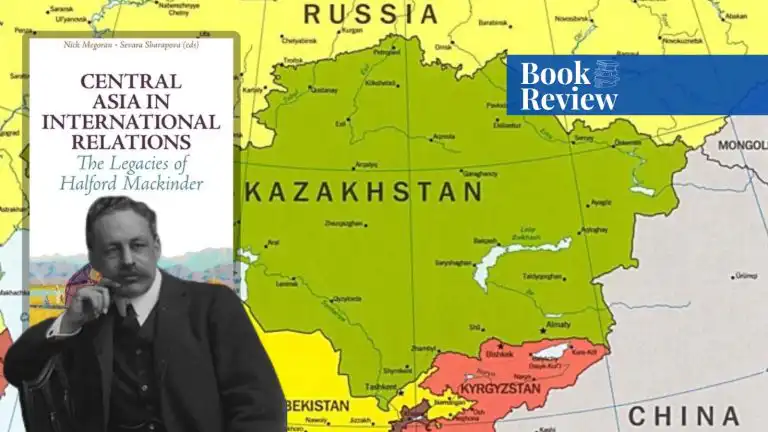

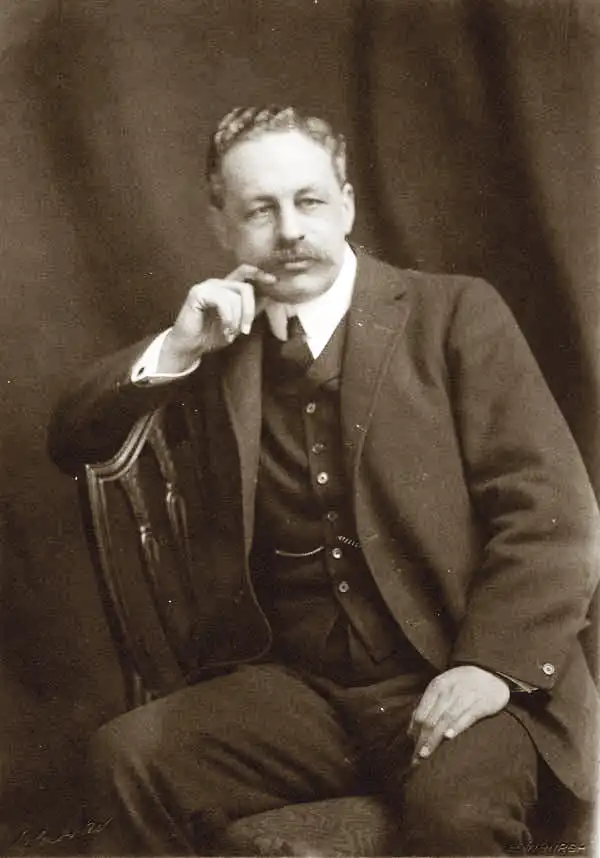
Central Asia in International Relations: The Legacies of Halford Mackinder is an edited academic book that was published in the United Kingdom in the year 2013 by C. Hurst and Co. (Publishers) Ltd., London. The book, which is 296 pages and comes in hardback (ISBN 978 1 84904 243 7), is edited by Nick Megoran and Sevara Sharapova. It offers the findings of historians, political geographers, and political scientists to examine how the geopolitical idea of Sir Halford Mackinder has been significant to the study and practice of international relations in Central Asia.
The book is divided into three key thematic sections that are preceded by an introduction and end with a conclusion, bibliography, and index. The first section returns to the direct involvement of Mackinder in Central Asia as part of the British imperial policy. The second section follows the geographical and intellectual dissemination of the ideas of Mackinder to the area, especially Russia, Tajikistan, and Uzbekistan. The third section evaluates the current applicability and shortcomings of the Heartland theory of international relations in Central Asia as further elucidated by Mackinder in the 21st century. Overall, the size includes ten substantive chapters, including the introduction and conclusion.
It is placed in the broader discussions about geopolitics and international relations theory. This book provides a critical analysis of how the ideas of Mackinder have been understood and modified over the years and have been argued upon. This review claims that the book has contributed to theory greatly because it no longer refers to the Central Asian region as a passive geopolitical object but as a region where the international positioning of the region is achieved along pre-conceptually contingent ideas, narratives, and scholarly practices.
Central Argument and Summary
The thesis statement of Central Asia in International Relations: The Legacies of Halford Mackinder is that the geopolitical role of Central Asia cannot be explained based on geographical determinism only, but should be interpreted through historical circulation, reinterpretation, and political appropriation of the Heartland theory by Halford Mackinder. The volume questions the idea that the thoughts of Mackinder provide an explanatory paradigm of international relations in Central Asia that remains unchanged through time. Rather, it shows that the power of Mackinder is carried on largely by discourse, intellectual legacy, and policy narratives and not by geography itself.
The introductory chapter by Sevara Sharapova and Nick Megoran places Mackinder in his imperial context and also in the current debates on geopolitics. The editors believe that the work of Mackinder was based on certain British imperial anxieties, especially the concerns with the land power of Eurasians and the security of British India. Such historical grounding is necessary because the book aims to break out of abstract appeals to the Heartland and focus on the process of how the ideas of Mackinder were created, disseminated, and revised.
Part one rekindles the discussion of Mackinder’s interest in Central Asia and imperial geopolitics. The chapters of this section focus on his ties with the strategy of British imperialism, the conceptual development of the Heartland concept, and the shift to geo-economics. These chapters combined make it clear that the thinking of Mackinder was not static and universal but heavily influenced by the political and technological circumstances of his era.
Part two addresses the intellectual movement of the ideas of Mackinder into Central Asia itself. Using case studies of Russia, Tajikistan, and Uzbekistan, the contributors trace the process of translation, interpretation, and selective appropriation of the writings of Mackinder by scholars and policymakers of the region. It is this part that brings to the fore the agency of local intellectuals and the refutation of the fact that geopolitical thought merely travels into the peripheral areas without being filtered in any way by the centres of knowledge in the West.
Part three explores the modern use and criticism of the legacy of Mackinder. Some of the chapters are on whether Heartland logic remains relevant to the United States, Russian and regional strategies, and others are a direct challenge to its relevance in a globalised and economically interdependent world. In the concluding chapter, these arguments are summarized by holding that although Mackinder has been an effective geopolitical standpoint, his model should be viewed critically, and not as prescriptive. In general, the book contributes to the thesis that the location of Central Asia in the international processes is defined more by historically contingent ideas based on which geography is perceived.
Methodology and Theoretical Approach
Being an edited volume, Central Asia in International Relations: The Legacies of Halford Mackinder does not use the same homogeneous approach. Rather, it unites a diversity of qualitative and interpretive methodologies largely based on political geography, international relations, and historical analysis. The contributors base their arguments on the historically-based and theoretically-informed approaches to analysing the original works by Mackinder as well as the way the works were re-interpreted in various political and regional terms.
Methodologically, the work is defined by a close textual interpretation of the works of Mackinder, archival and historical research of the British imperial strategy, and by a qualitative analysis of the policy discourse in the post-Soviet Central Asia. A number of the chapters examine how the ideas of Mackinder were conveyed across time and space in terms of academic writing, translation, institutional context, and political discourse. This focus on the movement and reinterpretation of ideas reflects an implicit engagement with discourse analysis and the historical sociology of knowledge, even where these approaches are not explicitly labelled as such.
Theoretically, the book has been functioning at the crossroads of classical geopolitics and critical thinking on international relations. Although the Heartland theory by Mackinder serves as the main conceptual point of reference, a majority of contributors assume a critical attitude to geopolitical determinism. The volume agrees with constructivist and critical geopolitical views that regard geography as socially and politically mediated, as opposed to being a causal agent. It is in this amalgamation of historical inquiry and interpretive analysis that it is asserted by the book asserts not only how Central Asia has been placed in international relations but also how knowledge of geopolitics is actually produced, circulated, and contested.
Strengths and Weaknesses
The most significant asset of Central Asia in International Relations: The Legacies of Halford Mackinder is that it maintains a critique of geopolitical determinism. Through historicization of the work of Mackinder and tracking the selective application and reworking of his ideas, the volume moves beyond simplistic applications of the Heartland theory. By doing this, the contributors can indicate that the geopolitical relevance of Central Asia does not represent a fact that is objective and unchanging, but a result of historically contingent intellectual and political dynamics. By so doing, the book contributes positively to the critical geopolitics and constructivist international relations literature.
Another strength is the fact that the circulation of ideas is also paid attention to in the volume. The chapters of the second part of the book are especially successful as they demonstrate how the writings by Mackinder spread to Central Asia and how they were transformed into local academic and political systems. This emphasis refutes the general belief as to the directional flow of geopolitical knowledge from Western centres to the non-Western periphery. The book also restores a sense of agency to the Central Asian intellectuals by emphasizing the importance of the regional scholars and institutions, and does not present the region as a passive recipient of the great power politics.
The interdisciplinary nature of the volume is also further strengthening its analytical depth. The input of political geographers and political scientists allows the book to be interested in both the theoretical discussion and empirical case-studies, and thus the book is of interest to scholars of international relations, political geography, and regional studies. The inclusion of chapters specifically aimed at questioning the contemporary relevance of Mackinder’s framework further adds to the critical balance of the volume.
The book, however, has some limitations. Like most edited collections, there is a certain imbalance in the analytical focus and depth in the chapters. Even though some of the contributions deal directly with the theoretical discussions, some are more descriptive, which constrains their explanatory capabilities; moreover, despite the volume challenging the Western-centric geopolitical discourse. Finally, readers seeking a unified theoretical framework may find the diversity of approaches intellectually stimulating but structurally fragmented. Nevertheless, the volume is a solid and timely contribution to the discussion on geopolitics and international relations in Central Asia.
If you want to submit your articles and/or research papers, please visit the Submissions page.
To stay updated with the latest jobs, CSS news, internships, scholarships, and current affairs articles, join our Community Forum!
The views and opinions expressed in this article/paper are the author’s own and do not necessarily reflect the editorial position of Paradigm Shift.

Urooj Saif is a graduate in International Relations with a strong academic interest in geopolitics, security studies, and post-structural approaches to foreign policy analysis.