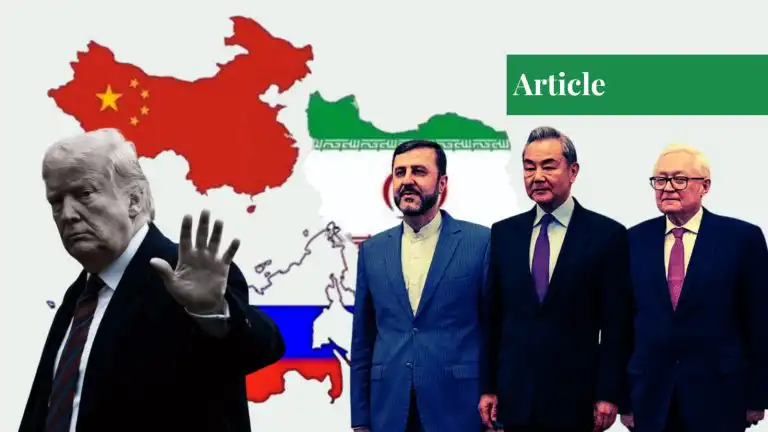

The trilogy of China, Russia, and Iran can be widely defined as one combined authoritarian bloc, but in the real sense, the partnership can be described as a web of pragmatic, mostly bilateral relationships and not a fully functioning bloc. This is clearly depicted by the recent events. Russia has been using Iranian Shahed drones to continue its war with Ukraine. Chinese and Iranian hackers have had their fair share of cyberattacks as well. Their association is not ideological but a mutual benefit, and they save themselves through balancing their interests. The counter force exerted by the U.S is the primary objective of them all, but their methods vary based on the national interests, economic strength, and the position of technology in any nation.
AI Collaboration and Surveillance Technologies
To a large extent, these countries have a coalition on various fronts. The artificial intelligence (AI) battlefield is one of the leading arenas. China is a significant contributor to the world in terms of offering various forms of surveillance technology, like face recognition and information control software. In the case of Russia, it is busy working out the capabilities of analyzing the data on battlefields and controlling online information during the war. Iran, on the other hand, is utilizing these technologies to constrain governmental control and spy on populations.
The unified effort of the three nations is thus moving in the same direction, i.e., to reduce the dependency on Western AI as well as to increase their powers. As an example, the Chinese AIs have been modified in Iran to monitor in urban areas. Similarly, such systems are being used to support the Russian military operations. This illuminates the technology transfer between the two nations that is geared at empowering them.
Cybersecurity Cooperation
Another sphere that is significant among the others is cybersecurity. Russia and Iran go hand in hand with the malware creation, the defense of valuable infrastructure, and the management of propaganda. China is giving a hand in the aspect of secure government communications, optical-fiber networks, and studies on encryption that can resist hacking. These combined actions of these countries open the road to digital sovereignty because they move the US-based internet regulation and retain control over their cyberspace.
It has been reported of simultaneous cyber-attacks on banks, government bodies, as well as key facilities in the Western world in the recent past. The fact that such attacks can happen attests to the fact that this collaboration is feasible in practice and not just in theory.
Military and Dual-Use Technology Transfers
Another significant problem is cooperation within the army and dual-use technology. The Shahed-136 drones case can be recognized as one of the most significant cases that have revealed the Russia-Iran relations. The drone is predominantly Iranian and has airframes constructed in Iran and loaded with Russian equipment and talent.
There are also such dual-use items supplied by China, such as microchips, sensors, and precision tools that are capable of serving either military or civilian applications, depending on the circumstances. This will help them evade sanctions, improve their military capabilities, and localize the technology to the local setting. This has not only been in the field of drones, but there has also been an inflow of expertise and provision of missile, UAV, and electronic warfare components between Russia and China.
Iran, however, is modernizing to the newest technology even as it continues to perform some of its tasks in and around the country. This is evidence of the fact that cooperation between these countries is really strategic and selective, where each party chooses what to share independently.
Space and Satellite Collaboration
Space and satellite systems are another sphere in which cooperation can be considered. China and Russia provide Iran with satellite and earth-observation data. This translates into reduced dependence on the systems under the control of the US, like GPS. It enhances safe communication, accuracy of missiles, and planning in the military. The joint satellite technologies enable Tehran to advance its spy technology, as Beijing and Moscow therefore get to learn more about the Earth via satellites.
The spheres of space cooperation are not limited to the military sphere. It also includes communication networks, scientific research, and commerce. This illustrates the manner in which their technological partnership has spread to different areas that are bound to cause strategic competition in the future.
Internal Limitations and Strategic Boundaries
Despite the high level of cooperation, there are some boundaries that exist. Every country places its interests at the forefront. A reduced number of technologies transferred to Iran allows Russia to make sure that the latter does not become too powerful. The emphasis of Iran is laid on the establishment of its products and self-sufficiency. To avoid international condemnation, China is not ready to share everything. These are the economic constraints, lack of trust, and various aspirations, among others, that cannot allow a complete bloc to be formed. Cooperation can be viable and subject to change, but not persistent. The conflict over the use of drones or satellites has led to the delay in certain projects. Such strains are a pointer that, though cooperation can bring about the growth of power, it will not eliminate the existing strategic differences involved.
A Flexible, Convenience-Based Partnership
Their collaboration is clearly strategic in nature and not founded on mutual ideologies. The three nations oppose U.S hegemony, yet they are willing to form an alliance owing to their convenience. Loose connections allow them to test emerging technologies, weather sanctions, and compete with the Americans on issues of AI, cyber, space, and military systems. Their selectivity makes it hard for the US to try to foresee their threesomes hard. They are not followers of one particular way of thinking; they are loose and adaptable in their partnership. Such a practice reflects the changes in world politics.
Today, we see that big nations are more inclined to have issue-oriented alliances that are not fixed but flexible. They will assist one another when it is in their interest, but diverge when it is not. The emerging technology of hypersonic weapons, advanced AI, and uncrewed planes can either draw the partners nearer together or reveal the differences between them. The cooperation in the future will probably occur in the spheres that can bring definite benefits, as well as be independent.
Conclusion
In short, China, Russia, and Iran are the ones that demonstrate that technology is used as a source of power and not as an attribute of a completely cohesive alliance. In a way, their cooperation is quite similar to that of an alliance system, which is founded, at least to a significant extent, on a shared platform of interests and contentious matters. To the US policy, this requires a more differentiated strategy that is more specific to individual partnerships as opposed to assuming a unitary, homogeneous threat. A close look at these relations shows how the states are currently utilizing technology. It also signifies the development of competition in the 21st century globally. To realize the potential and the traps of such partnerships, it is important to consider the promise of such partnerships and the pitfalls to know how conflicts can arise in the future, and make strategic decisions.
If you want to submit your articles and/or research papers, please visit the Submissions page.
To stay updated with the latest jobs, CSS news, internships, scholarships, and current affairs articles, join our Community Forum!
The views and opinions expressed in this article/paper are the author’s own and do not necessarily reflect the editorial position of Paradigm Shift.

Safia Rafique is a writer and student of International Relations at the International Islamic University Islamabad (IIUI).