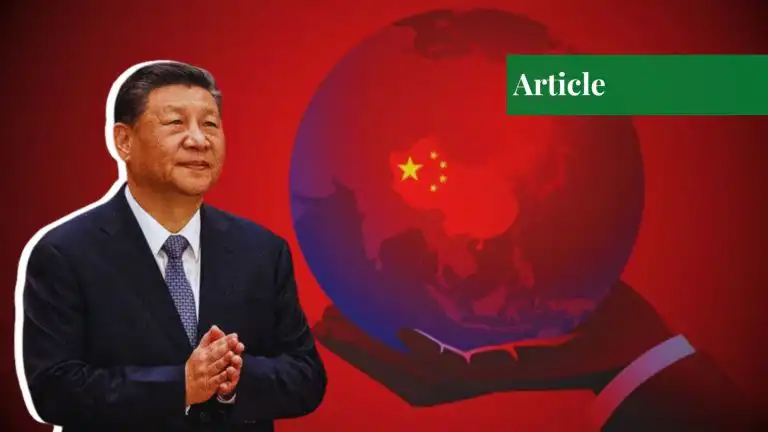

China was once growing at 10% GDP growth annually, but its growth has now slowed significantly. Investors and global powers are all closely watching Beijing’s economic engine slowly run out of gas. China has risen to become a major global power. Its economic strength has strengthened its global influence and what it provides to the world. It has also led the world in exports for nearly a decade (World Trade Organization Statistics), and it seems to remain there for good.
China accounts for around 20% of all exports globally of industrial goods. Furthermore, owing to frameworks such as the Belt and Road Initiative (BRI), China has developed solid partnerships with numerous countries. In addition to this, Beijing recorded a trade surplus of 1.2 trillion dollars in 2025, which was the highest ever in history. Exports of valuable and industrial goods once again pushed this forward. As of late, China’s economy has been slowing down, which could mean that its influence around the world is also going down. This is especially true because foreign investments have dropped sharply (UNCTAD Investment Trends Monitor), trade has fallen, and strategic competition with other global powers has grown.
The Future of BRI and Declining Foreign Investment
The decline of China’s economy has resulted in a decline in foreign investment. For a long time, Beijing funded large projects internationally through infrastructure initiatives like the Belt and Road Initiative. The main goal of the BRI was to provide infrastructure to its investors; the target for this initiative was mainly developing, low- to middle-income nations. The BRI was doing very well in many countries, providing key infrastructure and helping these smaller nations become more developed.
However, increased local economic pressure and rising levels of debt have forced investors to become more cautious about funding overseas projects. The BRI, at its strongest, once had more than 140 countries (Green Finance & Development Center BRI Data) and billions of dollars in infrastructure funding. As local economic pressures increase, reduced investment from abroad could limit China’s influence on many developing regions that rely heavily on Chinese investment. The BRI has built substantial infrastructure around the world, such as ports in Pakistan, railroads in East Africa, and energy projects in Southeast Asia. This has made Beijing’s economic power known around the world and made its political ties with other countries stronger.
Slowing of Trade and Its Impact on the Chinese Economy
Another huge consequence of China’s economic slowdown is the deceleration of trade. Trade has played a massive role in China’s global influence. With trade slowing down, so does China’s global influence. For many years, China has relied on trade and other exports to push its economic growth and strengthen its influence on the world. It leads the world in manufacturing valuable goods (UNIDO Industrial Development Report), which has allowed it to rule over global markets and be able to keep strong trade partnerships globally.
China produces high-value goods locally, allowing it to export low-cost products easily and quickly, a key factor behind its global influence. In recent years, China has still been in control of global exports, but its own trade is falling due to economic pressure. Trade had pushed China very far, and now, with trade slowing down, so does the entire Chinese economy. Although in 2025, China saw a decline in trade, it still controlled 20% of the entire world’s exports, showcasing its previous economic dominance.
Global Competition and the Risk China Faces
Slower economic growth and smaller global influence also make the world less competitive towards China. Global powers are used to China dominating global markets, but that does not mean they enjoy it. If powers like the US, India, or the EU see China faltering in performing economically, they will seize the opportunity. The US and China have been long-lasting rivals in terms of technology and trade. The two countries have even competed over military presence in the Asia-Pacific region.
A slowing economy makes it difficult for Beijing to be able to influence nations around the world and also could lead to falling behind its rivals. For China, the economy slowing down is not acceptable. Currently, due to its stronger economy, China is able to produce military weapons and continue its initiatives in the world. A slowdown in the economy could limit defense spending and other military budgets, which will give powers like the US leeway in Chinese influence and power in the Asian region. China will also experience a dip in relations if it is unable to provide the infrastructure promised as part of its projects.
Developing nations around the world that benefit from Chinese investment will find it difficult to further develop their infrastructure. This could lead to a decline in the global economy as developing economies provide 60% of global growth. If they are unable to grow more, then it will reduce the expansion of the global market.
Global Impact of the Chinese Economic Slowdown
China’s economic slowdown is indicative that its challenges extend internationally, notably with a decline in foreign investment and trade. Given China’s significant role in global supply chains, manufacturing, and finance, its dominance is unlikely to wane in the near future. In the future, the global system will likely witness a diversification of trade partnerships. This is because rival powers and developing economies want to find other ways to reduce their reliance on Chinese investment. In the end, China’s economy will not only affect its own future, but it will also affect the speed of global development and the balance of power in a world that is becoming more competitive.
If you want to submit your articles and/or research papers, please visit the Submissions page.
To stay updated with the latest jobs, CSS news, internships, scholarships, and current affairs articles, join our Community Forum!
The views and opinions expressed in this article/paper are the author’s own and do not necessarily reflect the editorial position of Paradigm Shift.