

He is pursuing a BS in International Relations programme from International Islamic University, Islamabad and has a keen interest in research works, policy analysis, defence and strategic studies and conflict resolution.
The changing international security architecture, with the echoes and chants of the revival of the law of the jungle, states are now boosting their defenses, attaining strategic autonomy, and building mini-lateral partnerships in their respective regions. And Europe is at its epicenter. The revival of President Trump with his conservative internationalist approach and the long-perceived threat of Russian expansion, especially after the Ukrainian invasion, has transitioned Europe from a peacetime to a war-torn economy.
The idea of forced conscription is now once again on the European defense tables. Whether Europe is ready for the conscription or whether the social contract allows it or not, the European politicians are now trying to shape public opinion for a total territorial defense against the enemy. This article provides the basic concept of forced conscription, key models, a comparison of the Cold War mentality to modern realities, and imminent challenges to European conscription strategy.
What is Conscription?
Conscription refers to a mandatory duty of every young citizen to serve in the national armed forces. It may take different forms, including forced, voluntary, or semi-professional conscription. It also includes duration, eligibility, exemption, and alternative service options.
Historical Overview
Due to consistent wars and conflicts, Europe has utilized conscription as a total defense strategy throughout its historical discourse. The European conscriptions were seen in the 17th and 18th centuries when France, Switzerland, Germany, and even Russia were recruiting conscripts. In 1793, the French Revolution was a turning point when the levée en masse was introduced, which stated that every able-bodied citizen had a responsibility to protect the country. This novelty institutionalized the concept that the relationship between citizenship and military service could not be separated, and armies of such size were formed to support revolutionary France against several European powers.
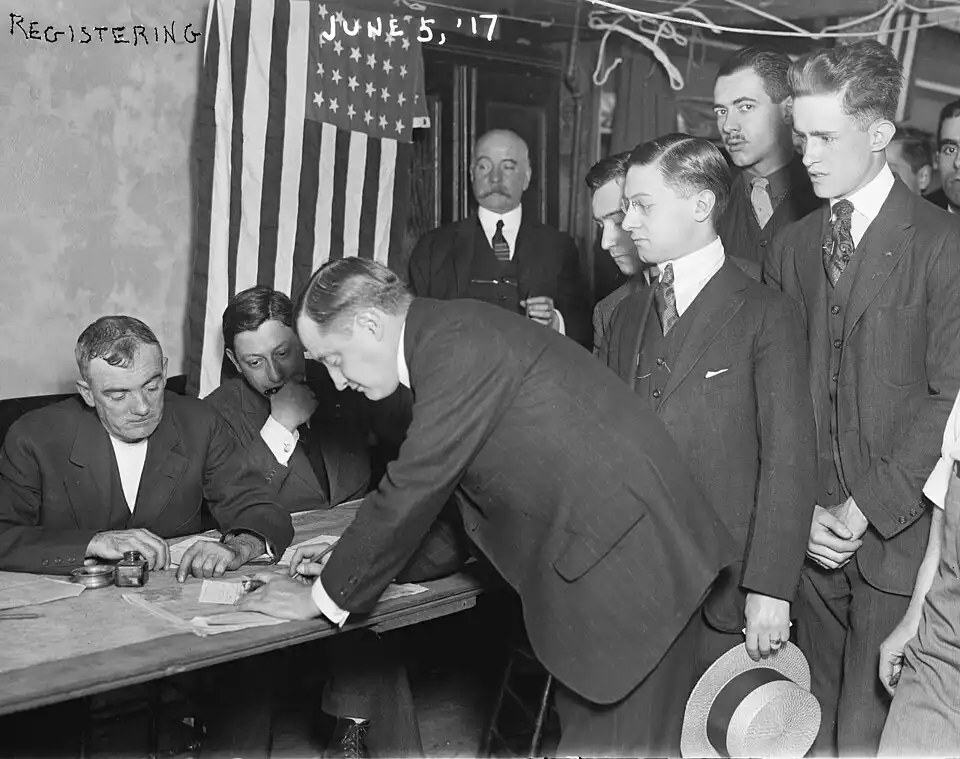
During the 19th century, the conscript system of recruiting troops became common throughout Europe. Likewise, Germany under Adolf Hitler introduced universal military service, under which every boy under 18 years old was to be included in the service, promoted from trainee to reserve, and then finally into active service. During the Cold War, conscription remained widespread in Europe, particularly in states aligned with NATO or the Warsaw Pact. Thus, conscription remained the bedrock of European defense until the end of the Cold War.
Peace Dividend
The post-Cold War period is known as the ‘peace dividend’ era. The USSR was broken up, which led to the destruction of the biggest and most imminent threat to Europe. This period is termed the golden era of the West, where the war-stricken economies in Europe were transformed into peacetime economies. The general forces, equipment, and ammunition were drastically decreased. Defense budgets were dropped. The termination of the Cold War and the advent of high-tech weapons frameworks were coupled to promote the professionalization of European armies.
Even France and Germany drifted towards non-conscription, without, however, abandoning their supposed social advantages. The peace dividend enabled the European governments to focus on socio-economic development, further dropping the conscription rates. However, despite the emergence of peace, various eastern and central European states still maintain conscription as a vital element of their national security.
Key Models of Conscription
- Mandatory Service
In a mandatory service system, all qualified males (and occasionally all men and women) of a specified age have to serve their nation for a specific time period, generally in a specified number of annual service terms. This model is followed by Austria, Cyprus, Estonia, Finland, and Greece.
- Lottery-Driven Conscription
Lottery-driven conscription is a type of partially selective conscription whereby eligible citizens are drafted into military service by means of random selection processes, commonly by means of lottery or number drawing. This model is in Denmark, Latvia, and Lithuania.
- Selective Compulsory Service.
According to this model, only some individuals, according to specific criteria, are chosen. Not all the eligible citizens are obliged to serve in the military as opposed to the mandatory service model. Sweden follows this model.
Revival of Conscription in Europe
The prolonged Russia-Ukraine war and the reduced American support to Ukraine have compelled the European leaders to pursue the policy of conscription. Major European states, including France, the UK, Germany, etc., have announced plans to revive conscription – initiating a shift from voluntary to mandatory conscription. All the former Soviet states in Eastern Europe have retained conscription in one form or another. As these states have direct borders with Russia, the civil-military contract is highly commendable, where the majority of the young people voluntarily serve in their national armed forces. However, the Western European countries and right-wing states, i.e., Hungary, Slovakia, etc., have completely abandoned their Cold War conscription strategy.
Recently, Germany, France, and the UK have announced their conscription plans, exemplifying some of the finest conscription models practiced by Finland and Sweden. As of November 2025, France’s President Macron announced the reintroduction of a limited form of military service in response to growing fears of a confrontation with Russia. He stated that the new national service will be implemented gradually, primarily among 18- and 19-year-olds who will now get at least EUR800 per month. Similarly, Belgium and the Netherlands are also experimenting with a voluntary military service, and Germany is also in the process of doing the same.
Variables Determining Conscription Revival
- The national security threat from Russia is the primary factor. Conscription is followed in many European states whose stakes are threatened by unresolved conflicts in their neighborhood.
- European states that do not join military alliances can decide to keep large armies by conscription since no other state is bound to help in case they are attacked.
- The ever-increasing unreliability of the US serves as a force multiplier. The Europeans are now clear that their survival requires additional efforts, including conscription.
- In spite of the evolving modern warfare, the ground troops (active or reserve) are still a vital military asset, especially in the case of attrition warfare.
Perils and Pitfalls
Politically, the idea of conscription seems very interesting and patriotic. But, in reality, the current European security architecture and social dynamics, especially of the Western European nations, are not in a viable condition to do so. Increasingly, youth in Europe and North America are no longer fit to fight, and mental health concerns and obesity challenges are the leading causes of denying eligibility. Gen Z is not ready for a war, as this generation has been brought up under liberal norms and traditions.
Additionally, whether armies require conscripts in the age of modern war is another significant challenge. There are several analysts who believe that the brief conscription service period might not prepare the soldiers to be ready to fight in a modern war. The growth of artificial intelligence and the creation of (lethal) autonomous weaponry should, on the contrary, become a part of the military.
Likewise, the financial cost of maintaining a large number of conscripts is ineffective. From training to dining, conscripts would put an extra burden on the already stressed European economies. Most economists consider conscription results in an ‘inefficient match between people and jobs’ and in ‘output losses’ that could have been avoided.
Conscientious Objection is another major concerning factor impeding conscription policies. A conscientious objector refers to a person who has asserted the right to avoid military service due to freedom of conscience or religion. The rights of conscientious objectors have been acknowledged by law in all EU Member States that have an active conscription system. But, due to immense rearmament, the very right of conscientious objection to military service is coming under threat.
Last but not least, public opinion matters the most. The decadence of nationalism and the diminution of readiness to serve in national forces are becoming dangerously high in Europe. One of the students in London remarked, “It is uncomfortable. I do not want to be contemplating fighting a war at the beginning of my adult life. The government should not take it casually.”
Conclusion
Europe needs a strategic reorientation with respect to its security and economy. An immediate peace in Ukraine and a reduction in the overall offensive military situation are the only situations for Europe to get strengthened. The shortage of high-readiness forces is a genuine issue for Europe. The Western European leaders must acknowledge the fact that forced conscription is not applicable, as the national emotion is not on a positive trajectory. Europe must first improve its economy vis-à-vis the changing geopolitical environment. The increase in defense budgets and acquisition of advanced conventional and autonomous technology should be the primary focus. If, in case, conscription becomes necessary, then the model of selective compulsory service could be the last option.
If you want to submit your articles and/or research papers, please visit the Submissions page.
To stay updated with the latest jobs, CSS news, internships, scholarships, and current affairs articles, join our Community Forum!
The views and opinions expressed in this article/paper are the author’s own and do not necessarily reflect the editorial position of Paradigm Shift.