

Syeda Farani Fatima is an undergraduate student of International Relations at the International Islamic University of Islamabad, with a strong interest in anti-corruption, counter-terrorism and geopolitics. Strongly committed to fighting corruption, terrorism, and supporting national reform through research and public service.
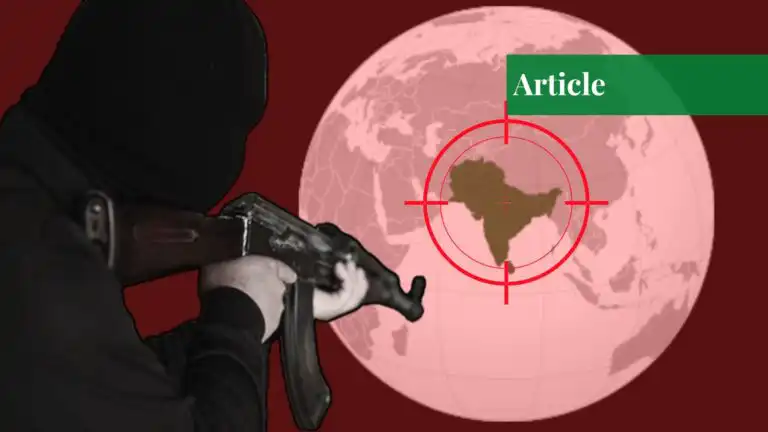
Terrorism is an act of violence, particularly against civilians, to instill terror in the pursuit of political, religious, or ideological gains. Pakistan, India, and Afghanistan are not an exception, as the region of terrorism is South Asia. The level of violence and conflicts is high in these countries. As stated in the Global Terrorism Index 2024, terrorist attacks claimed the lives of 23 per cent of the population of South Asia in 2023, which is roughly a 1/4th of the population. The main findings of the report are that Pakistan is one of the ten nations that deal with terrorism as its central part, and that the Tehrik e Taliban groups are functioning successfully, and subsequently the Baloch insurgent groups have emerged. Afghanistan is suffering from the influence of ISIS-K, and India is combating terrorism mainly in Jammu and Kashmir.
As pointed out by Hassan Abbas in a report by the Combating Terrorism Centre at West Point in 2021, “the changing dynamics of extremism in Pakistan reveal an alarming trend of institutional weakness and corruption within counterterrorism agencies”. This node of corruption and counter-terrorism is an engine of extremism, and this enables those official networks to thrive on illicit grounds.
Corruption is the abuse of power by the government to the benefit of individuals. Corruption takes various forms, such as corruption by the public servant, where he/she requests the other party to provide him/her with bribes, or even corruption by the politicians, where they embezzle the funds of the people. It can occur in any place, any department, and it deprives you of freedom. Poor salaries, lack of accountability, and a well-rooted patronage system, which encourages favoritism over merit in a democracy, are the main factors that lead to corruption.
Corruption in counter-terrorism (CT) organizations presents a serious threat to national security due to inefficient use of resources and loss of credibility with the public. When counterterrorism institution engages with illicit activities, they compromise with law enforcement, and these activities provide a loophole for extremist to carry out their activities.
Case Studies
The following are the case studies of Pakistan, India, and Afghanistan, countries deeply affected by corruption in CT departments.
Pakistan
In Pakistan, it is claimed that some of the politicians have provided support to extremist and terrorist organizations, knowing that they are de facto proxies and will damage the country’s global image. This shows the nexus between political parties and de facto groups, which further fuels violent extremism in the country. For instance, it is claimed that politicians have allowed Lashkar e Taiba (LeT) and Jamaat ud dawa (JuD) militants to operate from Pakistan until and unless they don’t harm civilians or military installations of Pakistan, efficiently shielding them from legal investigations.
This selective implementation of counterterrorism laws perpetuates an informal and imbalanced power structure, leading to erosion of public trust in government institutions. When politicians shield non-state actors, CT institutions lose legitimacy and radicalization narratives gain strength. Dr Shakil Afridi quoted in Fox News that, “Pakistan’s fight against militancy is bogus. It’s only to extract money from America.” Financial Action Task Force (FATF) compliance in Pakistan has been frequently damaged by corruption, especially in institutions responsible for law enforcement. While legislative reforms were introduced to exit the grey list, it is hindered by political influence and loopholes in institutions.
India
In 2006, the Malegaon bomb blast in India led to the erosion of India’s central authorities, such as ATS, NIA, and CBI. These investigating agencies faced court and public criticism for being biased in law enforcement. Initially, ATS arrested 9 Muslim men claiming that they were a part of SIMI, but after the reinvestigation carried out by NIA, it was exposed that they did not support any illicit organization. This raised concerns about institutional integrity and highlighted the investigative lapses due to a lack of coordination among them.
Politicization in counterterrorism investigations in India has allowed right-wing extremist groups such as Hindutva to flourish. The Malegaon blast in 2006, investigated by ATS officer Hemant Karkare, claimed some citizens to be part of a Hindutva organization. However, these allegations were repelled by the NIA investigation, leading to a rupture in India’s central authorities. Senior officers of ATS were suspended as they were accused of being under political pressure.
Kashmir and Assam are already troubled areas in India, and fake encounters in these volatile territories perpetuate the ideological radicalism among minorities. The increase in extremism and radicalization that has given rise to this violence has been nourished by such confrontations in Kashmir. Such killings have resulted in the radicalization of the minor population in Assam, thereby giving strength to separatist and radical discourses. Some analysts think that such encounters will undermine the rule of law.
Bangladesh
Bangladesh’s widely recognized counter-terrorism force, the Rapid Action Battalion (RAB), has faced serious accusations of corruption and human rights abuse. It was formed in 2004 to reduce political violence and eliminate terrorist groups from Bangladesh, but now it is equated with extrajudicial killings and forced abductions. As per a 2006 report by Human Rights Watch, some unlawful operations of RAB show that it is a pro-government military outfit, as it has killed hundreds of civilians in the name of crossfire incidents. This indicates that RAB is backed by the government, which is why it remains outside the scope of judicial investigations. If the institutions designated for counterterrorism indulge in corruption, then on whom will civilians trust, who will protect their dignity and themselves? This erosion of trust among citizens due to corruption in counterterrorism departments encourages extremists to launch their illicit operations because they take advantage of the country’s weakness.
In Bangladesh, CT institutions are often deployed as a weapon against opposition, and they defend their actions by saying that these protocols are taken for national security purposes. Such institutions are usually the BNP and Jamaat-e-Islami, as perceived extremist organizations. This abuse of power debases the spirit of anti-terrorism laws and obscures the distinction between opposition and militancy. Bangladesh’s corruption is still embedded in its judiciary. Many times, the ruling party has pressured judicial authorities to delay trials or not to file any harsh punishment for CT officials because they abuse and torture civilians at the command of these politicians or the elite class. Security agencies in the disguise of black sheep are tarnishing the reputation of Bangladesh worldwide.
Rohingya and Chittagong, the marginalized regions of Bangladesh, have been visible in youth extremism due to fake encounters. Misuse of power and ineffective justice have created an environment for radical movements. These areas lack access to quality education, employment, and other basic facilities; extremists take advantage of this backwardness and exploit the minds of youth, which motivates them to shout against the government and other institutions. This is a grave failure that will eradicate sustainable peace in Bangladesh’s most at-risk communities.
How Corruption Fuels Extremism in Counter-Terrorism Departments?
Corruption weakens counterterrorism by compromising its integrity. For example, in Pakistan and Bangladesh, corruption in sensitive institutions leads to intelligence leaks and calculated negligence. These flaws in the system allow terrorist networks to empower and attack different regions of a country. Sometimes, CT officials are loyal, but due to political pressure, they are compelled to investigate terror financing networks. Weak prosecution and bribery create loopholes in anti-terror enforcement. In a 2023 VOA interview, Imran Khan said, “The security forces’ negligence allowed the Pakistani Taliban to resume its activities.”
Inspector General Tariq Parvez (Ex-IG Punjab Police) said that “the biggest problem in Pakistan is not the lack of laws or institutions, but the lack of implementation and coordination among them.”
Whenever it is exposed that a recognized law enforcement institution is corrupt, it erodes public trust and legitimacy. Fake encounters are firm evidence of their corruption. In Bangladesh, citizens view the state as a weapon of repression rather than protection. Due to these activities, extremist ideologies thrive, and youth radicalization occurs.
Extremist networks such as Jamaat-ul-Mujahideen Bangladesh (JMB) and Tehrik-i-Taliban Pakistan (TTP) offer a clean alternative to the corrupt secular state in the name of reform. These activities ignite the blind passion of youth, weakening the government and rapturing the state’s image on global platforms. Hamid Gul, former ISI chief, said that, “The Taliban are the product of the environment, and they brought peace and tranquility to Afghanistan. They imposed Islamic law and eliminated poppy cultivation. What else do you want?”
The jails in Pakistan have been perceived as a haven for facilitating extremist recruiting. Weak surveillance and corruption over undue privileges created a lax environment, which enabled the extremist leaders to indoctrinate the state over the weak inmates. The jail authorities also avert their eyes to take bribes. Former IG Prisons Sindh, Nusrat Mangan, once acknowledged in a Dawn interview that “lack of internal accountability has made jails ‘breeding grounds’ for radical ideas, especially in underfunded provincial lockups”.
Despite being unregulated, the hawala and hundi system is deeply entrenched in Pakistan’s financial landscape. Created for legal remittances and informal transaction needs, these shadow economies are now also used by terrorists. These informal networks encourage covert movements of finance without triggering alert threats in the formal banking system. Regulatory weaknesses and poor coordination between local and federal financial watchdogs make things worse. Hawala brokers are frequently well guarded in the communities they serve as illicit lenders, and it is equally hard for officials to penetrate their ranks. Addressing hawala-financing would necessitate integrated legal reforms, digital surveillance elevation, and community-based financial literacy programs to transition public dependence from informal banking structures. For cryptocurrency, however, the Australians’ ability to expand their network is presented as a new possibility due to being able to avoid detection. This shift is a serious threat to Pakistan. Cryptocurrency is a blind spot in Pakistan’s counter-terror financing architecture.
Policy Recommendations
Addressing corruption is essential for maintaining counterterrorism strategies. The following are some policy recommendations.
Institutional Reforms: To effectively combat corruption and extremism, a centralized reform of counter-terrorism institutions is necessary. CT departments must develop accountability frameworks for effective coordination. Merit-based recruitment is to be provided without political interference. It should enhance transparency in a bid to regain citizens’ trust in the law enforcement agents.
Enhance Rule of Law: Corruption in the CT departments compromises the rule of law. To regain its reputation and to frustrate extremists, the judicial reforms should focus on expediting the cases of terrorism.
Regional Cooperation: Terrorism and corruption have no boundaries. To monitor the money laundering networks, South Asian nations, particularly Pakistan, India, and Bangladesh, should form a coalition with the FATF.
Civic Participation and Public Trust: The Government should create civic policing models that motivate citizens to participate and be alert regarding their security. The government should run programs like “Countering Violent Extremism”, which will eradicate extremism and extremist ideologies from youth.
Conclusion
In South Asia, violent extremism destabilizes societies, and corruption within counterterrorism institutions acts as an invisible enabler, fueling extremist networks to thrive. This crisis is not only affecting policing, but it is also harming legitimacy. To counter violent extremism, South Asian states must consider it a security threat. Due to increasing corruption in CT institutions, the public is losing confidence in them, and youth radicalization is emerging, rapturing not only the country’s image but also affecting the whole of South Asia. If it is not taken seriously, then corruption will continue to undermine counterterrorism efforts, making each terrorist incident not just a security failure but a failure of government.
If you want to submit your articles and/or research papers, please visit the Submissions page.
To stay updated with the latest jobs, CSS news, internships, scholarships, and current affairs articles, join our Community Forum!
The views and opinions expressed in this article/paper are the author’s own and do not necessarily reflect the editorial position of Paradigm Shift.