

Introduction
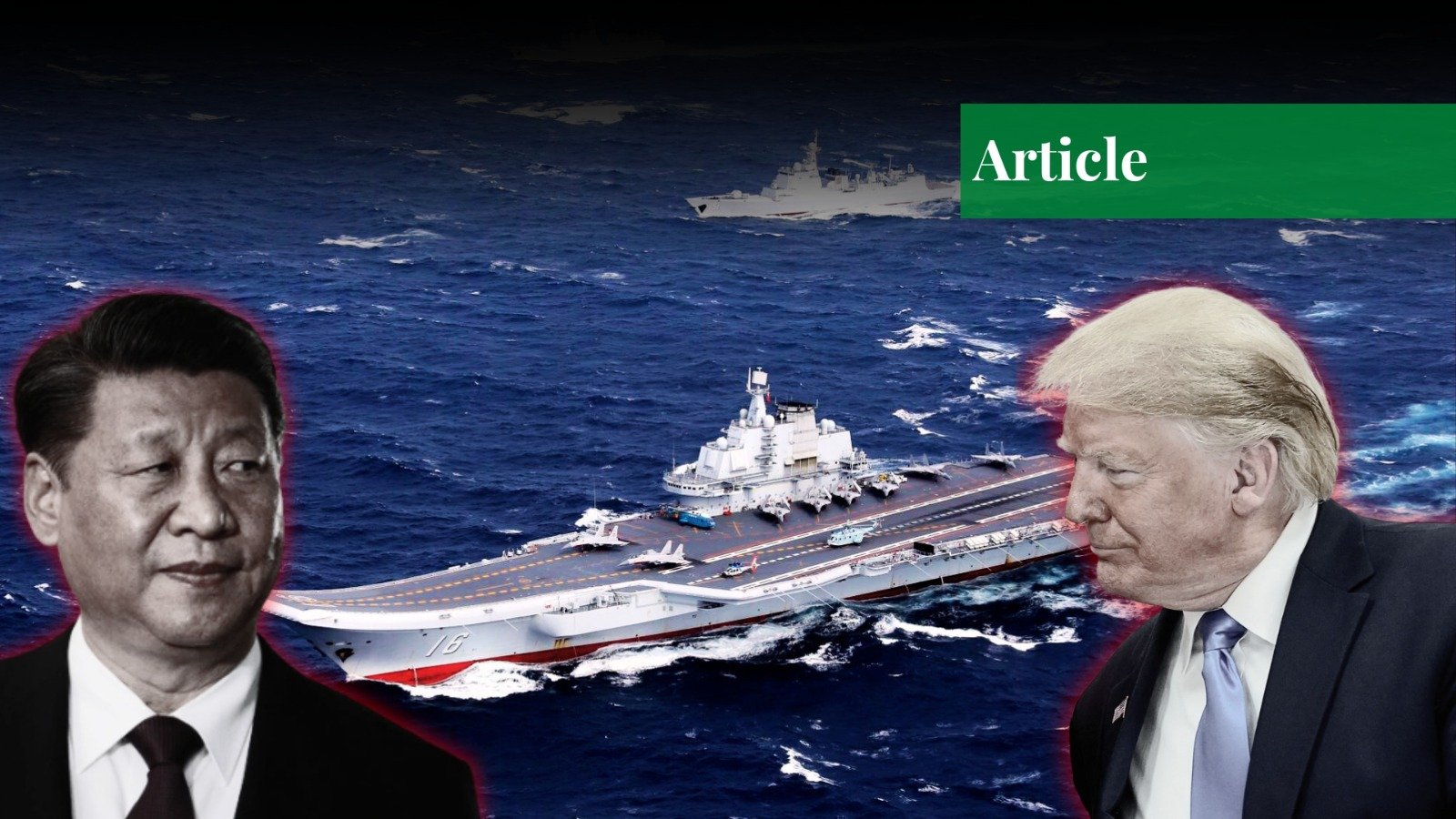
The waters of the South China Sea and East China Sea have become silent backgrounds in the unfolding power struggle between the United States and China, symbolizing a new phase of Cold War 2.0. These maritime zones are rich in natural resources and fishing stocks, forming key routes of global trade and energy flow. Both countries consider the region essential to their strategic and economic involvement. China bases its maritime claims on historical maps and has increased its presence through artificial island development, naval patrols, and infrastructure expansion. While the US maintains that international waters must remain open for navigation, and has strengthened ties with regional partners to counter growing Chinese influence.
Strategic Importance of the South China Sea and East China Sea
The South China Sea and East China Sea hold immense strategic importance, as they serve as some of the busiest global maritime routes in the world, with one-third of shipping passing through annually. Over 80% of China’s and Japan’s oil and trade imports rely on these routes. In addition to this, the region is rich in untapped natural resources and reserves of oil, gas, and extensive fishing grounds. The Strait of Malacca, which connects the Indian and Pacific Oceans through the South China Sea, acts as a narrow chokepoint, and its vulnerability gives rise to the Malacca dilemma.
Maritime Territorial Disputes
China is a party to multiple maritime territorial disputes in the South China Sea and East China Sea, including the following:
- Conflict over the Paracel Islands in the SCS, which are claimed by China and Vietnam & currently controlled by China.
- Conflict over the Spratly Islands in the SCS, which are claimed entirely by China, Taiwan, and Vietnam, while parts are also claimed by the Philippines, Malaysia, and Brunei, and which are occupied in part by all these countries except Brunei.
- lash over Scarborough Shoal in the SCS, which is claimed by China, Taiwan, and the Philippines, and has been controlled by China since 2012.
- Dispute over the Senkaku Islands in the ECS, which are claimed by China, Taiwan, and Japan, and administered by Japan.
Strategic Objectives Underpinning China’s Maritime Objectives and Policy Instruments
China views the South China Sea and East China Sea as central to its national security, economic future, and rise as a global power. Its maritime claim relies on the historic 9-Dash Line. This self-declared boundary covers most of the South China Sea despite overlapping disputes with countries like the Philippines, Vietnam, and Malaysia. China’s key interests in the region are protecting maritime routes, accessing oil and gas reserves, securing its trade routes, reducing dependence on the Strait of Malacca, and strengthening its naval power.
Establishment of Regional Infrastructure Under the “String of Pearls Strategy”
China is expanding its maritime reach through the String of Pearls strategy, which involves building ports and naval-related infrastructure. These projects are positioned in strategic locations like Sri Lanka, Myanmar, Bangladesh, the Maldives, Pakistan, and Cambodia. However, after the Belt and Road Initiative (BRI), Beijing’s strategic culture is more focused on its defense preparedness, as the “String of Pearls” is aimed at establishing the maritime Silk Road along the Indian Ocean Region (IOR) and seeks to encircle India and weaken its influence in the Indian Ocean region to dominate important maritime routes.
Deployment of Maritime Militias and Implementation of A2/AD Strategy
China uses maritime militias—civilian fishing boats backed by the military to assert control over disputed waters, especially in the South China Sea. These vessels help conduct surveillance, block rival fishing or patrol ships, and assist the coast guard in grey zone operations. It also follows the Anti-access/Anti-denial (A2/AD) strategy by installing long-range missile systems, radar networks, and air defense systems on critical islands.
Use of Soft Power and Economic Diplomacy With ASEAN States
China uses trade, investments, and cultural outreach to increase its influence over Southeast Asian countries without using direct military force. At the same time, China uses sharp power, such as media control, academic exchanges, and political funding, to shape opinions in its favor. Through initiatives such as Confucius Institutes and scholarship programs, China promotes cultural and educational exchanges, which not only expose ASEAN populations to Chinese culture, language, and values but also foster people-to-people connections.
“Salami Slicing” Strategy and Gray Zone Tactics
Analysts often describe China’s tactics in the SCS and ECS as a “salami-slicing” strategy, where a series of small, incremental moves, none individually provoking open conflict, are used to shift the regional balance in its favor. Some experts label this as a part of gray zone operations, which blur the lines between peace and war.
Others refer to it as creeping annexation or incremental territorial acquisition, likening it to gaining control through adverse possession or creeping invasion. Additionally, the strategy is sometimes termed as a “talk and take” strategy, where China is involved in diplomatic negotiations while simultaneously strengthening its hold on disputed waters.
Defense Policies and Strategic Motivations Guiding US Involvement in the Region
The US has significant economic interests in the South China Sea, primarily to check China’s regional influence and to maintain its long-term strategic dominance. The region is vital for global trade, with over $3.5 trillion in goods passing through these waters each year, including US imports. US key interests in the region are ensuring long-term US strategic dominance, countering China’s maritime expansion, safeguarding strategic trade routes, and protecting international maritime law.
Formation of Regional Alliance Network to Encircle China’s Influence
The US is building a network of regional alliances to limit China’s expanding influence in this region. It strengthens ties with democratic partners such as Japan, India, Australia, South Korea, and the Philippines through defense agreements, intelligence sharing, and joint exercises. AUKUS and the four-member QUAD, including Australia, India, Japan, and the US, have engaged in numerous dialogues to counter China’s military rise in the region.
For example, the Malabar exercises, which cover maritime interdiction and anti-submarine warfare, have been conducted annually in various seas such as the Philippine Sea, the Persian Gulf, the Arabian Sea, and the Bay of Bengal. The goal is to form a collective shield that ensures regional stability and counters unilateral actions by China.
US Naval Force and Maritime Exercises in Disputed Waters
The US regularly sends naval ships through disputed waters in the South China Sea and East China Sea to protect freedom of navigation and contain Chinese influence in that region. It has deployed advanced ships, fighter jets, and submarines in these areas to ensure it can act swiftly during any crisis. According to the US Indo-Pacific Command (2023), over 55,000 troops are based in Japan and South Korea, with access to 9 military bases in the Philippines under the Enhanced Defense Cooperation Agreement (EDCA).
Defense Commitments to Japan in the East China Sea
The US maintains a firm defense commitment to Japan, especially in the East China Sea, where tensions with China over the Senkaku Islands have increased. American forces in Japan support joint patrols, air surveillance, and military drills. These alliances are made to contain China’s influence and maintain the balance of power. B
ilateral efforts with the US, such as the 2015 upgraded Defense Guidelines, Security Consultative Committee (2+2) dialogues, and 2021 and 2022 submissions and dialogues on joint investments in the defense sector, have strengthened coordination against China. For instance, in the fiscal year 2021, the Japan Air Self-Defense Force established a dedicated drone handling unit and began deploying US Global Hawk UAVs for surveillance and detecting the enemy’s aircraft and missiles in the region.
Strategic and Regional Repercussions of US-China Maritime Confrontation in SCS and ECS
The South China Sea is a vital shipping lane for global trade, including a significant portion of India’s trade. Control over these routes could allow China to disrupt or obstruct international lines of communication and critical supply chains, impacting global trade and economic stability. It is also a flashpoint for potential conflict, and the ongoing tensions could lead to miscalculation and unintended escalation.
A minor clash of China in both SCS and ECS with other claimants could escalate into a larger conflict, potentially involving the US and its allies, destabilizing the region. Militarization could also trigger an arms race in the region as nations bolster their naval capabilities in response to China’s growing military presence. China’s maritime assertiveness has been criticized by many countries and legal experts for violating international law, particularly UNCLOS. A minor confrontation could further undermine the legitimacy of international law and international institutions in resolving maritime disputes and maintaining regional stability.
Conclusion
The rising weaponization of the South China Sea and East China reflects the deepening strategic rivalry between the US and China under emerging Cold War 2.0. The escalation of military deployment, surveillance operations, and close naval encounters has increased the risk of accidental conflict. Therefore, the way forward must be on strategic restraint of diplomatic channels, adherence to international maritime law, and confidence-building measures. Otherwise, the seas once known for connectivity may become waters of confrontation.
If you want to submit your articles and/or research papers, please visit the Submissions page.
To stay updated with the latest jobs, CSS news, internships, scholarships, and current affairs articles, join our Community Forum!
The views and opinions expressed in this article/paper are the author’s own and do not necessarily reflect the editorial position of Paradigm Shift.

Kanza Sohail is currently pursuing her bachelor's in international relations at Kinnaird College for Women University. She has completed a significant internship at the Research Society of International Law (RSIL). She has a keen interest in writing on topics related to regional studies, global environmental politics, conflict resolution, and international law.