
Imagine that another Covid-19-like situation once again emerges; would you be able to bear the pain once more? The world is soon going to witness a most severe lockdown, more vulnerable than its predecessor. During the 2019 pandemic, you had all the necessities, but you had to stay away from your loved ones. This time, the case will be opposite. You would be together with your family, but would strive to get them the necessary commodities of daily life.
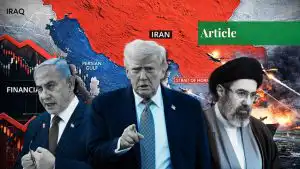
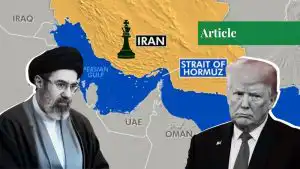
Today, the world is on the brink of an ‘Energy Lockdown’, which has begun as different states gradually announce strict austerity measures. This situation is the result of the US-Israel joint attacks on Iran, which began on 28th February 2026. The Middle East is burning, and its ashes are so heavy for the international community to handle. One of the biggest concerns among the economic and military experts in the international arena has been the closure of the Strait of Hormuz. The Strait is now closed, and global transport has become a sitting duck.
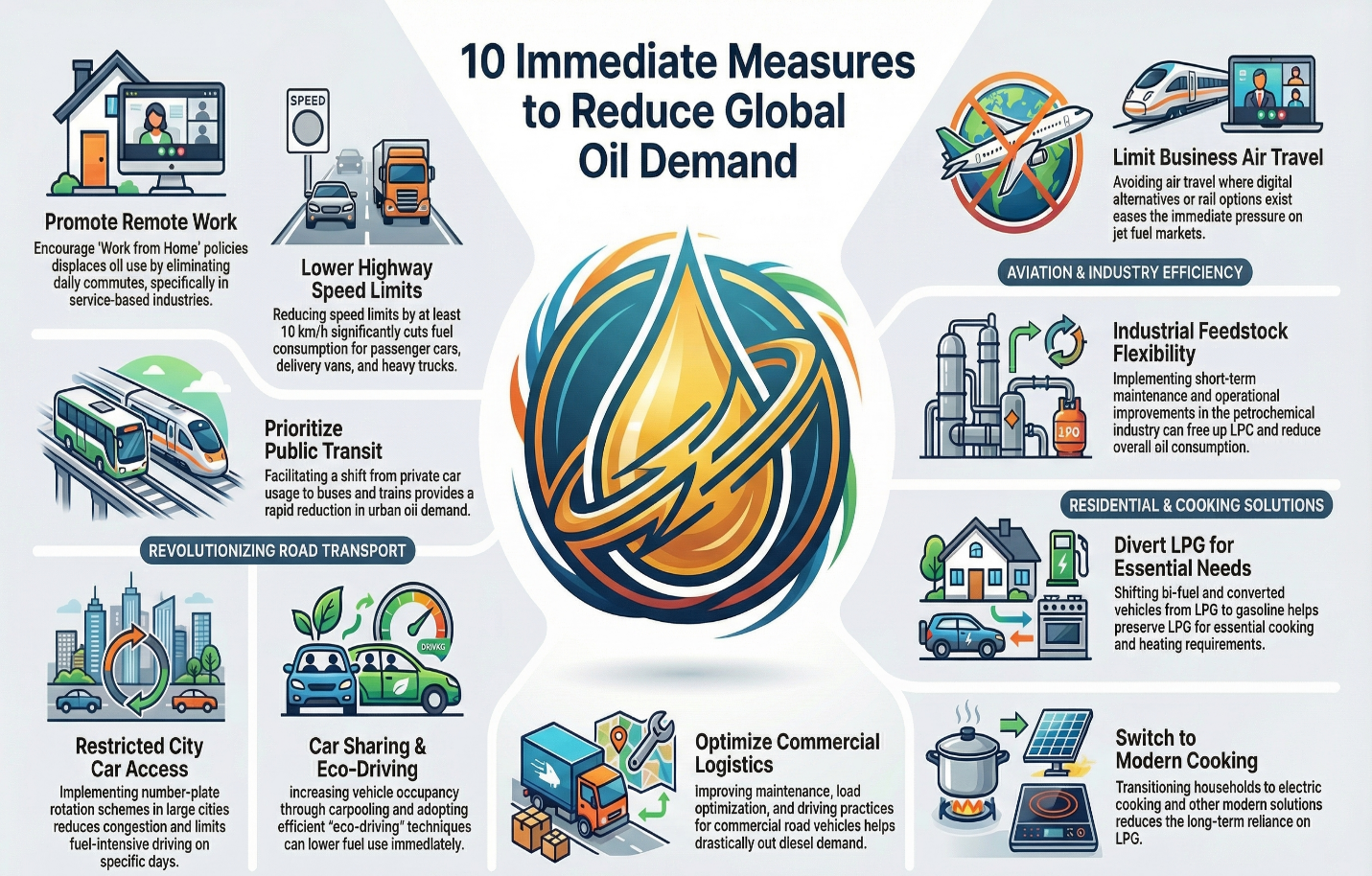
What is an Energy Lockdown?
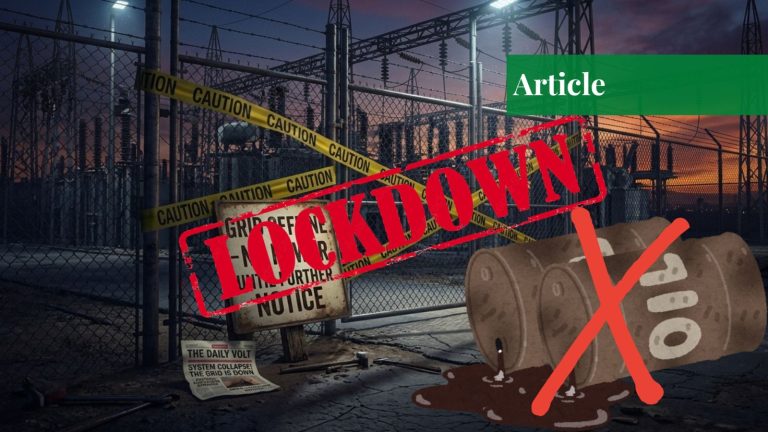
Since the inception of the war against Iran in the Middle East this year, the debate on energy lockdown – a term similar to the 2019 pandemic lockdown – is in the pipeline. With public anxiety mixing with the recent pandemic experience, the term has gained traction following the closure of the Strait of Hormuz due to the US-Iran conflict, which has cut off about 20% of global oil supplies.
An energy lockdown would not entail closing cities or borders. Instead, it places emphasis on demand-side management through priority allocation of essential resources. It alludes to the possibility that severe shortages and soaring oil and gas prices may compel communities to make radical changes in their energy production and consumption patterns.
Burning Middle East
As of now, the war in the Middle East has entered a prolonged state of warfare. The world has already witnessed the Russia-Ukraine war, whereby a small Ukrainian state hasn’t bowed down and is inflicting gradual damage to critical Russian infrastructure. The recent Ukrainian attacks on key Russian energy facilities, which halted its 40 percent gasoline exports, are its best manifestation.
Likewise, Iran is determined to engage in attrition warfare whereby the enemy is not defeated through a full-scale attack; rather, gradual tactical strikes would finally compel the rival state to bow down. Both the US and Israel have been continuously targeting key oil and gas facilities in Iran to create a domestic blackout and political turmoil in the country. In response, under its Mosaic Defense strategy, Iran has been striking key energy facilities in the Gulf states, owned by Americans. Three major events have led to the implementation of energy lockdowns throughout the world.
- South Pars Attack
With the backing of the US, Israel attacked Iran’s South Pars gas field on March 18, 2026. The North Dome is the name of the portion shared by Iran and Qatar. It is thought that there are around 1,800 trillion cubic feet of usable gas in the facility, which is sufficient to meet the needs of the planet for 13 years. About 12% of gas production, a crucial energy supply for the United States, Europe, and the globe, was interrupted by the strikes.
- Ras Laffan Attack
As payback for the South Pars assault, Iran retaliated by attacking Qatar’s Ras Laffan Industrial City, causing widespread destruction. Due to extensive damage to the plant, Ras Laffan has been largely closed since the beginning of March. The interruption has had a significant impact on the price and availability of LNG because Qatar provides about a fifth of the world’s LNG supply, the majority of which originates from Ras Laffan.
- Closure of the Strait of Hormuz
Iran is using the Strait of Hormuz as leverage and has halted the 20 percent global oil supply. The US has also accused Iran of using sea mines to close the strait. Recently, many states, including Pakistan, China, India, and France, have been allowed to safely transit through the strait.
States are bilaterally dealing with the Iranian regime, assuring them of their non-assistance to the US in the war. Still, due to continuous volatility, private shipments are reluctant to pass through, which has resulted in the largest energy disruption in history.
| COUNTRIES | AUSTERITY MEASURES |
| France | Targeted subsidies only |
| Italy | Extended fuel tax cuts |
| South Korea | Limited government vehicle use, restriction on private transport |
| Thailand | Remote work, office travel ban, and electricity restriction |
| Australia | Gas price caps, several export controls |
| Pakistan | Four-day work week, work from home, subsidized metro services |
| India | Increase fuel taxes, boost coal usage, and enforce power-saving measures |
Prospects of Energy Lockdown
The debate today is not whether the energy lockdown will be implemented or not. Rather, whether the international community would be able to sustain it or not is the real query. With the ever-increasing hostilities in the Middle East, it is quite imminent that a world energy red alert could be issued, and the lockdowns could be implemented. This has nothing to do with cessation of hostilities. According to Qatar’s energy minister Saad Sherida al-Kaabi,“ the restoration process would take five years, and the nation’s export capacity would decline by 17%.” This clarifies the fact that the world, which hasn’t yet fully recovered from the 2008 Great Recession and the 2019 pandemic effects, is now once again at its rupture. Moreover, if Israeli aggression remains intact, Iran could also use the undersea internet cables as a last resort, cutting off the world’s internet connection.
Up till now, only the Strait of Hormuz has been closed. What if the adjacent Bab al-Mandeb Strait meets the same fate? Recently, Houthis in Yemen have also entered the Iran-Israel war, targeting key Israeli military sites. Any kind of further escalation could halt 12-15 percent of global maritime trade transiting through the strait. In the case of Hormuz, the world is deprived of energy supplies. However, in the case of the Red Sea, there would be a sharp decline in electronics and food supplies. Therefore, states are now taking precautionary austerity measures before any significant development. If not a complete COVID-19-like shutdown, then at least a hybrid lockdown is imminent. Italy’s defense minister Guido Crosetto noted, “I am compelled to know things that no longer allow me to sleep. For what might occur in the next weeks, and how it will affect our lives and the economy.”
Perils and Pitfalls
If an energy lockdown is implemented in its full form, it would have serious repercussions from the systemic to the state to the individual level. On a global level, energy would become scarce and expensive. For import-driven economies, the cost of living would rise. The world could face another major stagflation. Energy and food shortages have resulted in chaos and unrest. Political instability could be observed worldwide. Another major impact would be the power transition, whereby energy-rich countries would gain significant leverage.
On a state level, national GDP and productivity would fall. States could face food shortages. States with already volatile political situations would be threatened via protests and strikes. Due to high import costs, the currencies, in particular those of the developing and underdeveloped countries, would be weakened. States would have to realign themselves, siding with energy-rich countries. Rising deficits and IMF bailouts could be imminent.
On an individual level, households would struggle to meet basic energy needs. Due to oil price hikes, freedom of movement would decline. Financial insecurity would increase. The work-from-home measures would be a setback for the low-income workforce, i.e., drivers, laborers, peasants, peons, etc. For the lower class, daily life would become survival-focused. Famines and chances of malnutrition could surge, especially in rural areas. There would be an increase in the crime rate due to the declining financial situation, further undermining societal stability.
Conclusion
The third Gulf War has once again plunged the entire international community into crisis. The missiles are being shot in the Middle East, but the shocks are being felt throughout the globe. The US-Israeli aggression has made international trade vulnerable. The developed nations could sustain the energy shocks, but what about developing or underdeveloped states? They would once again be left in turmoil. The current geopolitical condition is marked by anarchy, where any single step would either halt the ongoing hostilities or push the entire international community into a new world war. The upcoming energy lockdowns are just initial shocks. If the situation were not controlled, there would be no point of return.
If you want to submit your articles and/or research papers, please visit the Submissions page.
To stay updated with the latest jobs, CSS news, internships, scholarships, and current affairs articles, join our Community Forum!
The views and opinions expressed in this article/paper are the author’s own and do not necessarily reflect the editorial position of Paradigm Shift.

He is pursuing a BS in International Relations programme from International Islamic University, Islamabad and has a keen interest in research works, policy analysis, defence and strategic studies and conflict resolution.