
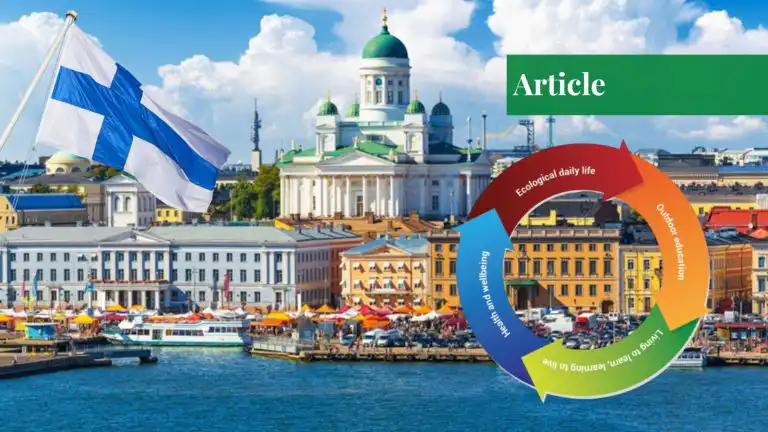

Finland, also known as the happiest country in the world, had accomplished the most “ecstatic” ranking for the SDGs in 2025. Previously, the Finnish government had been finding ways to fully achieve its goals of becoming the most sustainable country in 2025, which it did, with flying colours. Moreover, it reached the target of accomplishing an approximate percentage of 89% worth of success in completing its targets. In 2019, the Finnish Government set up its vision to achieve the goal. To implement that, they enlisted various economic, political, and social changes to be made to make their vision a reality. They followed certain circumstances along with particular procedures strictly over the years to finally gain this position. Furthermore, recent research suggests that it was prosperous in certain SDGs only, including: SDG 1 (no poverty), SDG 2 (zero hunger), along with SDGs 3-7 with their respective purposes. Moreover, it still had to face certain failures in implementing certain SDGs, which included SDG 10, 13, and 16, with a 50% success rate, and SDGs 12 and 14 were unable to be mastered.
Essentially, over the past 10 years, Finland has shown a great, positive trend towards the fundamental development of SDG 4 (Quality Education). The overall difference between the schooling systems is traditionally quite less, which showcases the true prosperity towards equal gender-based education, along with rich and poor-based education. Overall, in the country, at least 88% of the population has completed primary and secondary education over the years, having a good impact on the literacy rate. Finland has also worked towards supporting education around the world, with major contributions towards expanding education networks in several Asian and African countries. Furthermore, the Finnish government suggests that in order to promote quality education amongst the children, it’s important that all educators must be qualified enough to deliver good education.
Adding to that, Finland must ensure that the required education is given to every child to get good outcomes for future higher education. Solutions towards this SDG are that Finland should work towards the concept of equal education for all, which accompanies its drastic improvement in quality education. Moreover, resources for the teachers should be provided according to the required needs. Along with that, good civic skills should be promoted to get good outcomes.
Finland, as mentioned before, is also the “happiest” country on the World Happiness Index, which is also another influential factor towards the prosperity of the country, and being fully committed to achieving its goals. Finland’s government formally recognized the framework for the overall progress of the goals that were successful, portraying Especially for SDG 4, putting it into effect is needed for the prosperous future of the country. Hence, the country has designed platforms for easier collaborations with countries around the world, along with collaborations within the country as well.
The Finnish government is also trying its best to improve some features. Firstly, it improved the provision of STEM education, which leads to more innovative developments. Moreover, it’s also improving the education of women, as it’s not a desire; it’s an essential requirement. Inclusion of immigrant children into the education community is also being overlooked, for it is as essential as educating others. The government has also restricted the use of smartphones in schools, as without them, the students’ curiosity and creativity spark more, being an essential factor for overall cognitive development and less distractions.
Amongst the world population, the Finnish population was the only population to be extremely good at numeracy and problem-solving, which accounts for its prosperity. Career guidance towards this SDG is also important for further prosperity in combating unemployment and poverty. Higher-order thinking questions should also be part of the students’ daily lives. Sustainability as a topic should also be part of the students’ curriculum, as it will allow them to think out of the box to find solutions for the betterment of the country. When the learners think about their country, they will allow themselves to be significant representatives of their country, taking the credit for the prosperity.
In conclusion, quality education can only be promoted if all organizations in Finland work together to make a difference. In accordance with that, all education-equipped organisations are working towards delivering quality education not only in Finland but also to every corner of the world.
If you want to submit your articles and/or research papers, please visit the Submissions page.
To stay updated with the latest jobs, CSS news, internships, scholarships, and current affairs articles, join our Community Forum!
The views and opinions expressed in this article/paper are the author’s own and do not necessarily reflect the editorial position of Paradigm Shift.