

The Power of Labels
The individual or even a group may be called a terrorist in one state and a hero in another. It demonstrates that these labels are dependent on the person and the state’s history to shape the narrative. Examples of both colonial and contemporary demonstrate that legitimacy is not in-built to an act of violence but is created through the mechanisms of political demonstrations and international acceptance. In many cases, the powerful countries will impose an interpretation of terrorism that will be favorable to their own strategic needs, and the violence of weaker actors will be delegitimized in most cases.
Case Studies
British India: Bhagat Singh and Chandrashekhar Azad

The historical context and political power determine the meaning of terrorism and freedom fighters; Bhagat Singh and Chandrashekhar Azad are examples of what is labeled as terrorism and heroism. The colonial British government referred to these revolutionaries as the terrorists. The central legislative assembly bombing in 1929 by Bhagat Singh purposely avoided any kind of civilian killing, unlike the September 11, 2001, attacks in the US. The reaction of British authorities towards this was that they threatened the law and order of colonial rule. But, after independence, India named Bhagat Singh and Chandrashekhar Azad as martyrs and heroes of the nation. Violence against oppression, where the minimal harm is done to the civilians, when it comes to the political success of the opposition group, can be morally glorified when the opposition group succeeds politically.
Irish Republican Army
The Irish Republican Army (IRA) is an example of how the category of a terrorist may be relative. In the eyes of the British state, the IRA represented a terrorist group that engaged in bombings, assassinations, and other types of violence against the British government in Northern Ireland. On the other hand, the supporters and the Irish nationalists used the IRA as an armed rebellion against what they viewed as an illegal occupation. Strategically, the transformation of the IRA into a political entity (though through violence) that led to the signing of the Good Friday Agreement in 1998 shows that what was initially called a terror group could turn into a political entity. The IRA has demonstrated that sometimes sustainable conflict management involves incorporating previously violent parties in the formal political platforms that will transform perceived legitimacy into legitimate power.
Post 9/11 Era
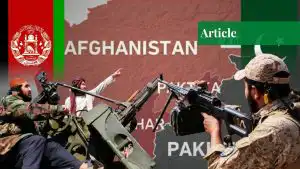
The case of the Taliban in Afghanistan is a good example of how the concept of terrorists is used contradictorily in the post-9/11 world. The targeted violence, suicide attacks, and attacks on the military and civilian population have led Western governments and the media to continue to label the Taliban as a terror group. As seen through the eyes of the Taliban, what they are doing is seen as a just retaliation and the enforcement of Sharia Law, according to them. With the US departure in 2021, the Taliban have assumed a de facto rule in Afghanistan: they are both now leaders of the country and accused of human rights violations. This analysis is not defending the violence of the Taliban; rather, it is highlighting the complexity of the term ‘Terrorism’.
How To Judge Violence?
The following are the three main points through which we can judge violence:
- Targets: When military or state symbols are targeted, the group is typically considered to be involved in resistance, and intentional attacks on civilians often undermine the claims of legitimacy.
- Political representation: the movements that can demonstrate support tend to become recognized as legitimate actors, and the groups that offer violence in the absence of a social appeal will be classified as insurgents or terrorists only.
- Goals: those that seek to bring liberation are far different from those that seek to bring destabilization.
Conclusion
Historical and present-day examples suggest that labelling a resistance movement as such may be perceived as a coup. As it leads to the radicalization of the oppressed and the cycle of violence. Intimidating violence, in turn, or cherry-picking its successful cases, may serve to legitimize civilian casualties. Successful counterterrorism, then, belongs to a contextual analysis, which will decide an actor by targets, political representation, and objectives other than political convenience. Compliance with legal and ethical norms (including the international humanitarian law) is vital to realize the legitimacy and strategic effectiveness.
If you want to submit your articles and/or research papers, please visit the Submissions page.
To stay updated with the latest jobs, CSS news, internships, scholarships, and current affairs articles, join our Community Forum!
The views and opinions expressed in this article/paper are the author’s own and do not necessarily reflect the editorial position of Paradigm Shift.

Syeda Farani Fatima is an undergraduate student of International Relations at the International Islamic University of Islamabad, with a strong interest in anti-corruption, counter-terrorism and geopolitics. Strongly committed to fighting corruption, terrorism, and supporting national reform through research and public service.