

Introduction
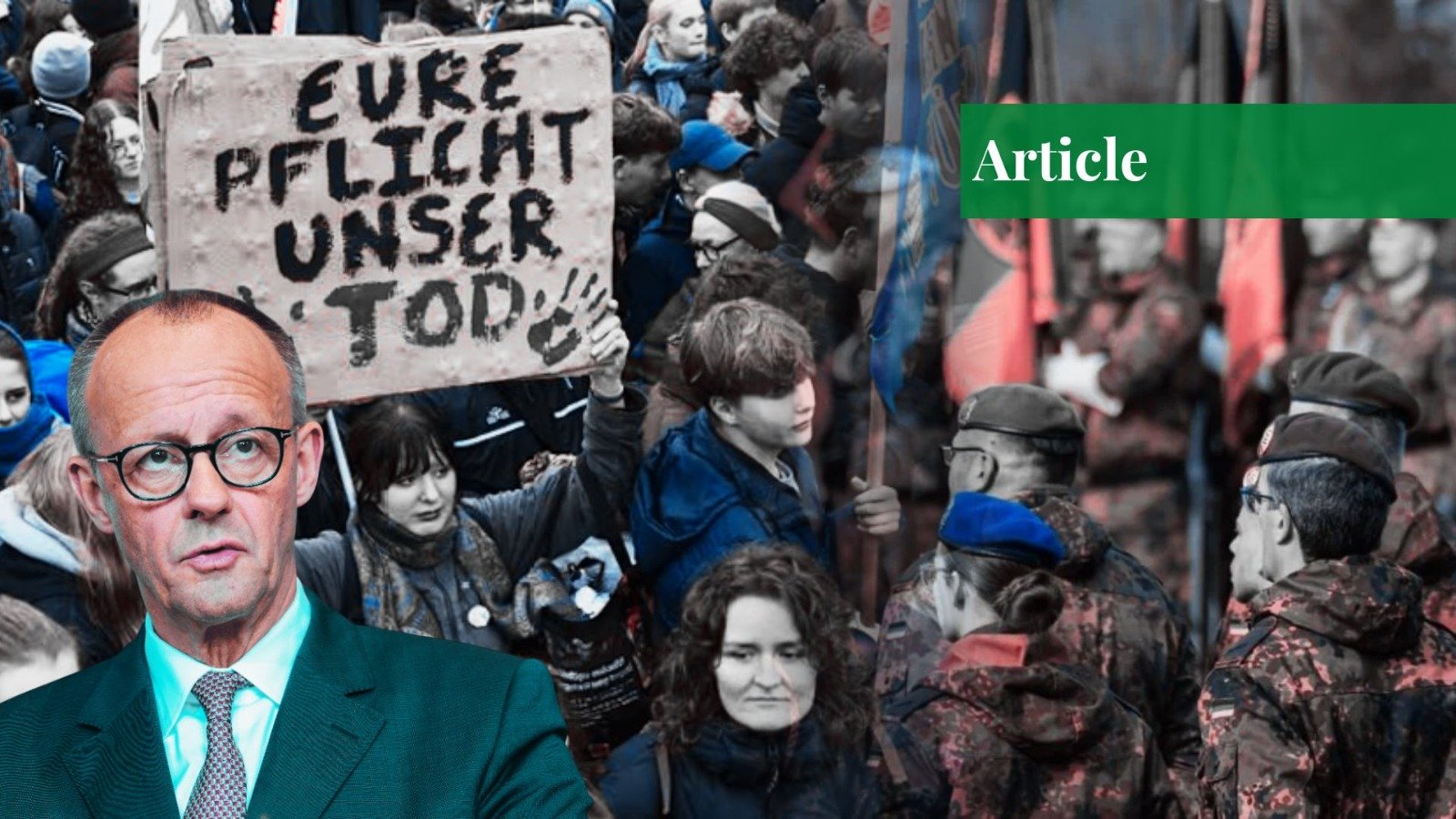
The recent German military service reform has sparked a slew of controversies regarding the issue of conscription and generated a young wave of protests across Germany. The Bundestag decision to reinstate compulsory questionnaires and medical checkups on young men has been contested by the students and activists, and even the civil society organizations. This article will discuss the history of German conscription, the specifics of the reform, why the government is pushing it, and the driving power behind the backlash by the youth. It also explores its wider effect on the German democracy, the European security, and the principles of a generation.
Historical Context of Conscription in Germany
The German military policy has been characterized by conscription. Following World War II, the Bundeswehr was actually formed in the year 1955, and compulsory service was a staple of national defense. Young men would have to serve several decades, but alternative service as civilians could also be used. In 2011, the conscription was suspended, which was a big move indicating the focus of the post-Cold War on the professionalization and voluntary army service given by Germany.
The recent reinstatement of conscription-type measures is a mark in the opposite direction. Although the government maintains that the reform is not a complete reinstatement of conscription, the critics claim that questionnaires and stringent medical requirements being mandatory are steps towards the implementation of compulsory conscription. It is this historical background that has contributed to the intense response given to the reform by the youth of Germany. The history of conscription in Germany makes a very important background to why younger generations view the current reform to be a retrogressive move.
Details of the German Military Service Reform
The reform to the Bundestag involves all men who reach the age of 18, beginning with those born in 2008, who must complete a questionnaire, which determines their fitness and readiness to serve. Women can take part voluntarily. Furthermore, forced medical check-ups will also return among the male population, and this is seen to revive the conscription practices. Under the law, there is the introduction of Bedarfswehrpflicht (needs-based conscription), whereby parliament may seek to mobilize compulsory service in case of the absence of voluntary recruitment goals.
This conscription integrates the principles of voluntary service alongside the procedures of compulsory mobilization and exhibits the intentions of the government to grow the Bundeswehr to contain 255,000 active-duty soldiers by 2035. The form of the reform eased the distinction between voluntary service and conscription, and it is creating anxieties among the young German generation that mandatory military service is at the doorstep.
Government Motivations Behind the Reform
The German government claims that the change is needed to solve the shortages in recruitment and enhance the defense of the country in the conditions of increasing geopolitical tension. The war in Ukraine by Russia has intensified fears towards security in Europe, and several states are re-examining conscription. As the largest economy in Europe, Germany is under pressure to fulfill its obligations to NATO and enhance its armed strength.
The government argues that the change is realistic, as there is a ready supply of new talent, but no one would be forcibly enlisted directly. Defense Minister Boris Pistorius stressed that the Bundeswehr should be ready to face new challenges in the future, and voluntary recruitment is ineffective. What drives governments to act: Security needs are the reason why a government should act in a certain way; however, such reasons have not proved to have a major impact on a new generation of people who place more emphasis on independence and peace.
Youth Opposition and Protest Dynamics
The resistance of the youth to the reform has been rapid and universal. Knowing that on December 5, 2025, thousands of students were to skip classes to protest in Berlin, Hamburg, Munich, and other cities. Student unions and non-governmental movements organized demonstrations, which were a denial of militarization in a generational way. The opponents claim that conscription is a violation of the right to choose and interferes with education and career paths. In the opinion of many, the reform can be seen as coercive to undermine democratic values.
One of the 17-year-old protesters in Berlin stated, “The problem I have with it is that it shouldn’t be forced on anyone.” The demonstrations bring out a generational conflict between the state security interests and the youth’s need to be free, educated, and peaceful.
Generational Values and Resistance to Militarization
The values influencing the youth in Germany are not like those of past generations. As they have been brought up in the post-conscription period, they underline education, career advancement, and civic rights. Most people distrust military institutions, believing they are synonymous with dictatorships and war. Other wider generational concerns, such as climate change, social justice, and digital freedoms, hold informational influence on this resistance.
Compulsory military service for the German youth is an indication of the allocation of resources away from the major social concerns. The outcry of their protests shows not merely the protest against conscription but also the call for reorientation of national priorities. Youth opposition to militarization indicates a change in focus to the generation gap in values, whereby security is indicated in terms of social resilience rather than military might.
Civil Society and Political Reactions
Non-governmental organizations have taken a position in favor of the youth demonstrations, threatening that the reform will weaken democratic rights. Human rights organizations complain that mandatory service interferes with individual sovereignty, whereas educators fear that it hinders progress in studies. The reactions of political parties have been split, with the opposition parties denouncing it as retrogressive and government officials watering it down as a national security necessity.
The discussion has also been applied to refugee groups, especially Ukrainians in Germany, who are not comfortable being indirectly involved in the mobilization of the military. This shows the wider social implications of the reform, not just for the German citizenry. Civil society and the political responses indicate profound divisions, which can be traced to underlying tensions between the security concern and the freedom of democracy.
European Security Context
The reform in Germany cannot be interpreted separately. Countries like Sweden, Lithuania, and Finland across Europe have also (or are planning to) reinstate compulsory military service in reaction to Russian aggression. The choice of Germany is clear to continue this trend of the continent, and this means that collective defense preparedness is imminent. The protests of the youths in Germany are, however, a different case in comparison to other nations.
Whereas conscription is a pragmatic need that has been welcomed in other countries, the German students view it as an act that undermines democracy. This deviation highlights the special historical and cultural background conditions that influenced the German resistance. The reform in Germany is based on the European demand for security status, yet the criticism expressed by the young people shows that there is a unique way of democracy and culture in Germany.
Implications for German Democracy
The demonstrations pose some essential questions concerning the connection between the authority of a state and personal freedom. When the government goes with needs-based conscription, it runs the risk of losing a generation of individuals who feel suspicious of political institutions. The protests indicate that young people are ready to mobilize to protect democratic values, which could help bring a revival of civic values.
Simultaneously, the fact that the government insists on reform is an indication of the priority that is given to security instead of liberty. This strain may reform German democracy, making it test its collective defense powers against individual rights. Both reform and protests are a severe challenge to German democracy, which is emerging as unable to balance security and freedom.
Conclusion
The reformation of the German military service has also led to a flood of youth demonstrations because of a profound opposition to forced service by the children of a different generation. With its historical and governmental incentives, and reinforced by civil society, the discussion highlights the tension between the security requirements and democracy. Germany will continue to rely on the voices of its young population in how it shapes the future of its national policy as it searches for its place in European defense.
If you want to submit your articles and/or research papers, please visit the Submissions page.
To stay updated with the latest jobs, CSS news, internships, scholarships, and current affairs articles, join our Community Forum!
The views and opinions expressed in this article/paper are the author’s own and do not necessarily reflect the editorial position of Paradigm Shift.

Manahil Tariq Manj is a student of defence and strategic studies at Quaid-i-Azam University, Islamabad. She has previously interned at the Ministry of Defence (MOD) and is currently interning at the Ministry of Foreign Affairs, Islamabad. Her research interests include conventional and hybrid warfare, strategic deterrence, military diplomacy, regional conflict dynamics, and evolving doctrines of modern warfare.