


Mohammad Zain is an International Relations student at NUML, Islamabad. With an associate degree in English Literature and Linguistics and a BS in International Relations, he brings a unique blend of analytical and literary skills to his writing.
The strike has been called off, we are told. The immediate tension, it seems to have eased. Iran has reopened its airspace. But is this a resolution, or merely a new kind of tension, a quieter, more deliberate one? We leave it to the future. However, we should look at the evidence, not just the announcements.
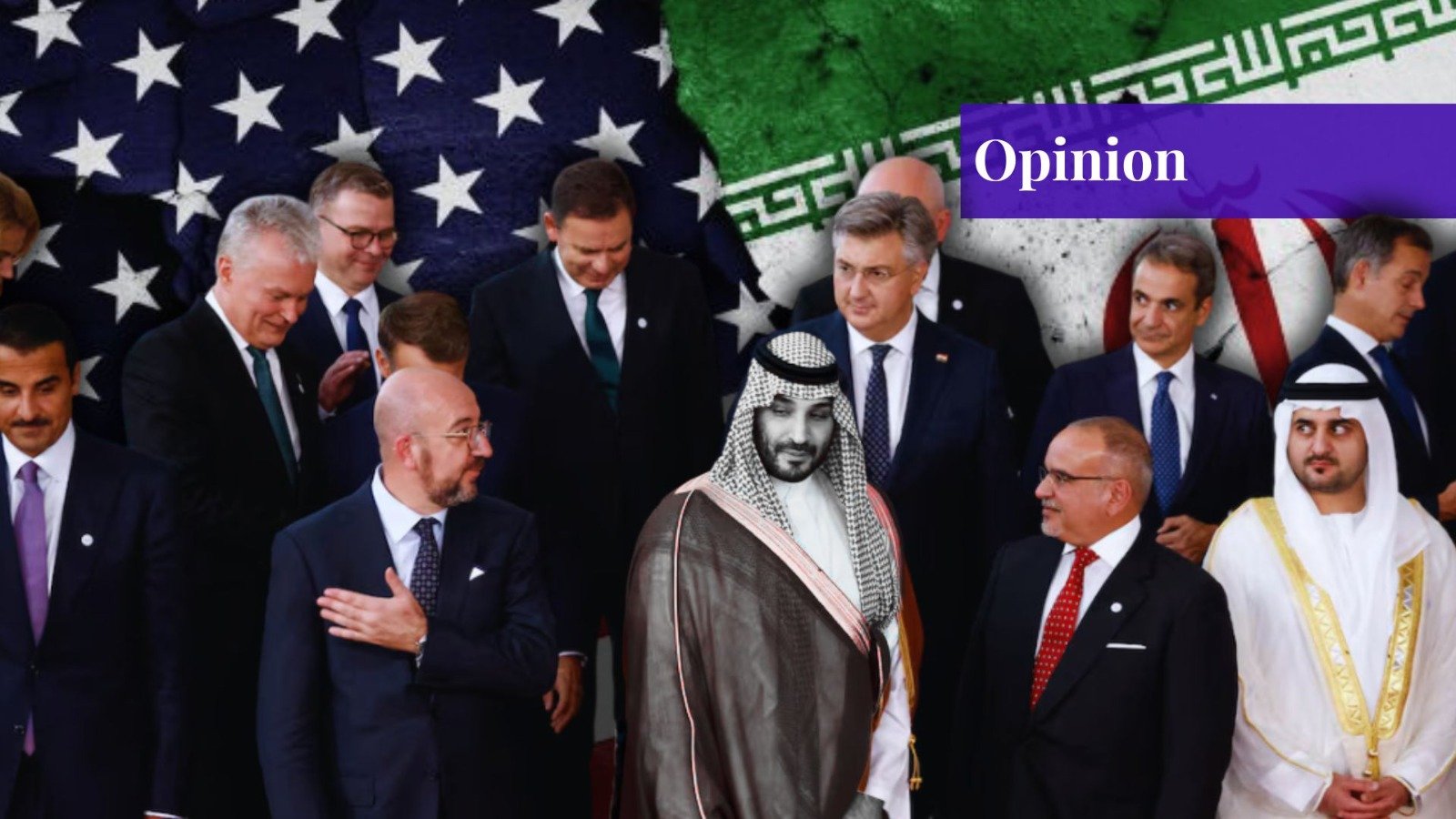
There is the fact of the lobbying, the urgent whispers from allies who are meant to be part of the spear, they said, as The New York Times read, Trump’s Gulf Allies Do Not Want Him to Bomb Iran. Saudi Arabia, Qatar, Turkey, Oman—they warned of a major conflict. They feared an intractable war; they were right.
It is not that they are issuing statements simply and solely; incongruent to that, they look quite serious about the unfolding events. Saudi Arabia denied the use of its airspace. This is a tangible piece of evidence. It is not just disagreement, but more of a physical impediment. What does this tell us? It tells us that the calculus of regional powers has fundamentally diverged from Washington’s. Their fear of chaos (which awaits the fall of Tehran) outweighs their animosity toward Tehran. This is a significant fact.
And then, there is the other side, Iran’s own movements. While under threat, its foreign minister is working to present them as the lesser risk compared to, say, an Israel that bombs Doha. This diplomatic activity is also evidence.
It is the groundwork for the very “axis of restraint” that stayed Washington’s hand. So we have two parallel campaigns: one of threat, and one of meticulous, personal diplomacy. Which is more potent in this moment?
This brings us to the philosophy of the pause, “Festina lente,” “Come slowly and attack.” The 2013 tweet by Trump. It is a tempting framework. Is this what we are seeing? A strategic slowing, so that the eventual attack, if it comes, is decisive? Perhaps. But we must also consider another possibility. What if the “slowness” is not a preparatory phase, but the new state itself? What if the objective is not to engineer a perfect battlefield, but to permanently alter the alliances and perceptions that make a battlefield possible?
The US withdrew personnel from Al Udeid airbase in Qatar. A precaution, of course. But it also underscores a vulnerability. The very bases that project power can become targets. This vulnerability is not just military; it is also political.
The reliance on these hosts gives them a veto, as we just saw. So, the period ahead, this pause, will it be used to restructure these alliances? To regain a free hand? The evidence suggests it must, if the old posture is to be restored.
But let us go back. Remember the reason often whispered for the ultimate confrontation: the Strait of Hormuz.
The choke point. It is always there, the geographical constant beneath the political noise. Any long-term strategy, slow or fast, must account for it. Iran’s power to disrupt it is its primary deterrent. America’s need to secure itself is its primary imperative. This is the deep current. The protests, the internal crackdowns, they are the surface waves. The current moves more slowly, and more powerfully.
So, what are we to conclude? The evidence shows a fractured alliance, a proactive Iran, and a tangible check on American action. The philosophy of “coming slowly” provides a possible lens. But is it a choice, or is it an imposition? The pause may be a strategic retooling, a gathering of strength, and a reshaping of the environment. Or it may be the revelation of a new, enduring limit. The airspace is open, the forces are on alert, the diplomats are on the phone. The next move is not clear. It is suspended in contemplation. The only certainty is that the previous pattern is broken. What forms in its place depends on what is learned in this quiet.
So we are left in this quiet, this pause that is not peace. A time for plans that must now become dark, impenetrable as night, while the world watches the surface for signs. When movement comes again, from any side, it will not be a probe; it will be the thunderbolt. This is the relentless lesson.
“Let your plans be dark and impenetrable as night, and when you move, fall like a thunderbolt.”
– Sun Tzu
If you want to submit your articles and/or research papers, please visit the Submissions page.
To stay updated with the latest jobs, CSS news, internships, scholarships, and current affairs articles, join our Community Forum!
The views and opinions expressed in this article/paper are the author’s own and do not necessarily reflect the editorial position of Paradigm Shift.