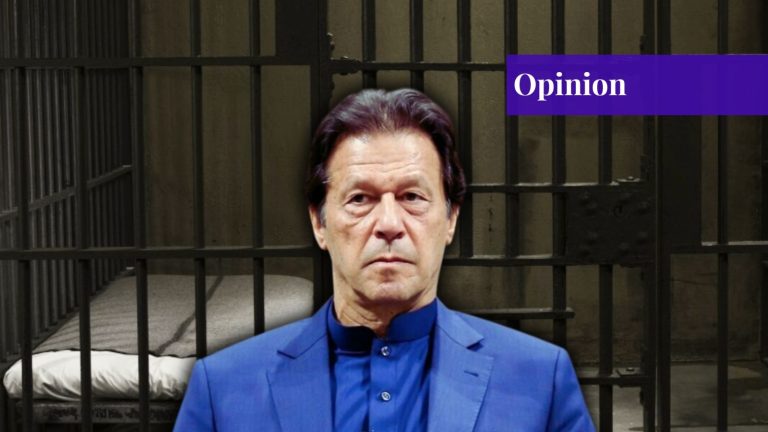

There are periods in a nation’s history when anxiety is hushed yet palpable. It is felt in editorial rooms where words are pondered upon, columns are redacted, anchors go mysteriously off air, and seminars that used to debate constitutional matters choose topics more mundane. A quiet culture of anticipatory caution prevails everywhere. This silence is not consent. At the center of this climate is an incarcerated Imran Khan facing hundreds of cases. His plight exposes the fragility of Pakistan’s democracy. It is also a litmus test for the rule of law, transparency, and the social contract that binds the nation. In essence, the internment of Imran Khan has put the system on trial.
The Architecture of Exclusion: Legal and Humanitarian Concerns
Court proceedings linked to Imran Khan have taken place within prison facilities. This is legally permissible under defined circumstances but demands greater and demonstrable transparency. Constitutional protections governing arrest, detention, and fair trial, more so for politicians, exist precisely for moments of political tension, when restraint is most difficult but equally necessary.
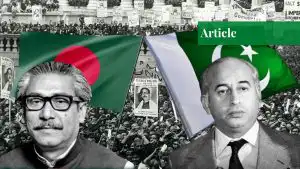
It is only when processing dissent that a democracy and its institutions reveal their true character. South Asia offers a cautionary illustration. In Bangladesh, years of suppression saw the imprisonment of political opponents. Some were even awarded capital punishment. In the 2014 elections, boycotted by the presently ruling BNP, 153 of a total 300 members in the Jatiya Sangsad returned unopposed without a single vote being cast. Hasina Wajid’s political demise was not due to political machinations. It was the fallout of this sham democracy that she had fostered.
Pakistan’s present moment echoes that warning. The sustained incapacitation of a major opposition leader affects more than electoral arithmetic; it shapes societal psychology. When a significant segment of the electorate perceives exclusion, polarization deepens, and resentment calcifies. This sees even legally defensible actions foster alienation and a gulf between state and citizen.
The symbolism surrounding Imran Khan’s imprisonment extends beyond legal technicalities. Not only a former prime minister, but he is also an international figure whose public stature long predates his political career. For many, concern about his incarceration is inseparable from broader questions about fairness, transparency, and institutional neutrality.
Imran Khan’s health and diminishing eyesight have become a particularly sensitive dimension of this debate. The state bears full responsibility for the welfare of those it detains. Medical transparency is not optional; it is a legal and moral obligation. Despite this mandatory obligation, Imran Khan’s family has not been taken into confidence over his eye condition and treatment. Diagnosed with retinal vein occlusion, at his age, he has a risk of underlying cardiovascular disease that necessitates independent medical oversight.
Imran Khan’s family and party claim that he has been in solitary confinement for many months now. This represents a grave breach of laid-down custodial standards. Despite specific IHC directives for biweekly visits, family members have been denied visitations. The recently allowed Sulaiman and Kasim phone call was not a granted privilege; it was the restoration of a fundamental right. By framing this basic right as a facilitated event, the government obscures the fact that the 10-month hiatus prior to their call last month and a nearly two-year physical separation represent a profound breach of constitutional and parental entitlements.
The information blackout and meeting blockade only strengthen the perception that executive discretion is being used for political purposes. With legal access also severed, Imran Khan is left to face a deluge of around 300 cases. This is an absolute gutting of the constitutional right to a fair trial. This concern has not remained confined to partisan circles. Amnesty International has called for adherence to fair trial standards and safeguards against what it terms the politically motivated prosecution of Imran Khan. The UN Working Group on Arbitrary Detention claims that Imran Khan’s imprisonment has no legal basis and is intended to debar him from political office.
Global Perception
Amnesty International has repeatedly called for his release, citing a pattern of weaponization of the legal system. The matter was also debated in Britain’s Parliament, with calls to tie Pakistan’s aid to adherence to the rule of law. Petitions have also been submitted in the US Congress and Canada’s House of Commons. Recently, 14 former international cricket captains addressed a letter to Shehbaz Sharif voicing concern over Imran Khan’s health and internment.
These calls and appeals shall not dictate Imran Khan’s legal outcomes. However, their symbolism cannot be ignored. When parliaments, human rights organizations, and respected sporting figures from across cricketing nations feel compelled to register concern, it places procedural mechanisms under a spotlight. This perception was cemented by the Supreme Court’s intervention. It was only after this that an amicus curiae met Imran Khan in custody. His report led to specialists examining and treating Imran Khan at a proper hospital.
National Stability and the Social Contract
Ironically, this easily avoidable and unwarrantable strain unfolds at a moment when the regional conflagration, economic stress, and internal security beseech national cohesion. Apart from kinetic power, effective counterterrorism necessitates a pivot toward the scrupulous restoration of the social contract.
When administrative energy is sapped by internal confrontation, institutional focus fragments. A nation’s security is rooted more in the depth of its solidarity than in the strength of its arms. The deeper fallout of a fractious polity is of precedence. Constitutional democracies function on an unwritten assurance that today’s incumbents will not engineer tomorrow’s incapacitations. If the latter is normalized as a political instrument, insecurity embeds itself into every future transition.
We are positioning ourselves as a perfect mediator to end the ever-increasing Iran-US-Israel conflict that has mushroomed into a dangerous regional one. Our own political house, remaining a theater of pernicious polarization, is a dichotomy. We offer a neutral and enabling bridge for international adversaries, yet are loath to work towards working on a consensus amongst our own, a dire need of Pakistan.
Political theorist Michael Ignatieff warns of a perversion of democracy in which politics ceases to be a contest and becomes war by other means. Institutions become instruments rather than arbiters. Compromise is recast as capitulation, and dialogue becomes suspect. A trajectory shaped by this logic sees victory demanding the neutralization of adversaries.
Yet, this architecture of exclusion overlooks its own fatal vulnerability: the people. When the state is viewed as an instrument of disenfranchisement, the social contract is not just strained; it is severed. In the final reckoning, the fate of a nation is not decided by the walls of a prison, the gavel of a court, or the decree of a potentate. The final arbiters are, and remain, the people of any land.
If you want to submit your articles and/or research papers, please visit the Submissions page.
To stay updated with the latest jobs, CSS news, internships, scholarships, and current affairs articles, join our Community Forum!
The views and opinions expressed in this article/paper are the author’s own and do not necessarily reflect the editorial position of Paradigm Shift.

Mir Adnan Aziz is a columnist whose writing explores the forces that shape power, belief, and society.