
Introduction
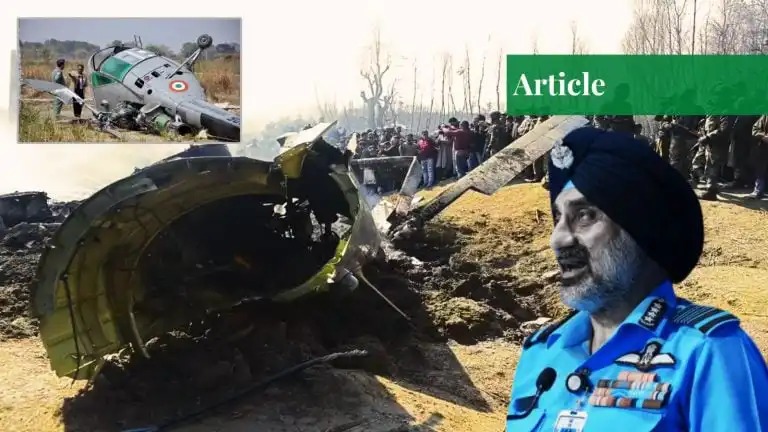
The Indian Air Force (IAF) has been struggling with a traditional problem: recurrent airplane accidents and crashes, causing a lot of panic in the Indian strategic community and posing the question of systemic flaws. The lasting effect of every new crash is the enlightenment of the citizenry and policymakers to the fact that an accident does not happen within a vacuum but is indicative of more instrumental, technical, and operational flaws within a system.
Parliamentary sources, statements of the Indian Ministry of Defence (MoD), and investigative journalism all show a tendency that must be analyzed carefully and based on facts. This article provides the statistical facts of the Indian Air Force crashes and the factors involved (human, maternal, organizational, and policy) that contribute to India having one of the most crash-prone air forces in the world.
Statistical Reality: More Than Isolated Incidents
To fully understand the issue of the crash, it is essential to discuss the numbers, which indicate a disturbing and ongoing trend. In 2024, the Standing Committee on Defence documented 34 IAF crashes between 2017 and 2022 and found that crashes are frequent enough to require more fundamental institutional change. Defense reporters and archival reviews have also uncovered a decades-long pattern. Other investigations, based on parliamentary documents and declassified information, show that there have been more than 2,000 lost aircraft and the deaths of over 1,300 pilots since India’s independence in 1947.
These statistics clarify that the issue of accidents in the IAF is not just an occasional one but rather institutional and cuts across generations of aircraft and pilots. The evidence supports the notion that aircraft casualties in the IAF are structural, not accidental, but necessitate only cosmetic remedies.
Human Error: The Most Identified Proximate Cause
The human factor is the greatest cause of the Indian Air Force (IAF) crashes, which highlights a lack of competence in the areas of flying, decision-making, coordination between the crew, and maintenance management. The Standing Committee report identified that 19/34 (more than 55%) accidents between 2017 and 2022 had a human factor involved, both pilot misjudgment and maintenance errors. High-profile cases such as the 2021 Mi-17 V5 crash have proven to demonstrate difficulties in situational awareness, procedural discipline, and training in pressured situations.
The results of the study are in line with aviation trends in the world; however, their prevalence in India is indicative of flaws in training standardization, cockpit resources, and procedures. In a nutshell, given the habitual nature of human error as the most explicit cause of failure, it is essential to enhance training, simulator hours, oversight of maintenance, and human factors guidelines to achieve the required change.
Maintenance Strains, Aging Platforms: An Old Problem
The second significant factor contributing to the crash rate of the IAF is that it has an old and uneven fleet that puts pressure on maintenance ecosystems and demands complicated supply chains. India continues to operate older Soviet platforms like the MiG-21 and older models of MiG-27 and Mi-17 helicopters, which require regular maintenance and may prove to be less reliable than the new platforms. The problem of spare shortages, maintenance delays, and equipment obsolescence, despite the MoD continuing to claim that improvements were being made, has, in fact, been recognized by parliamentary briefings on numerous occasions.
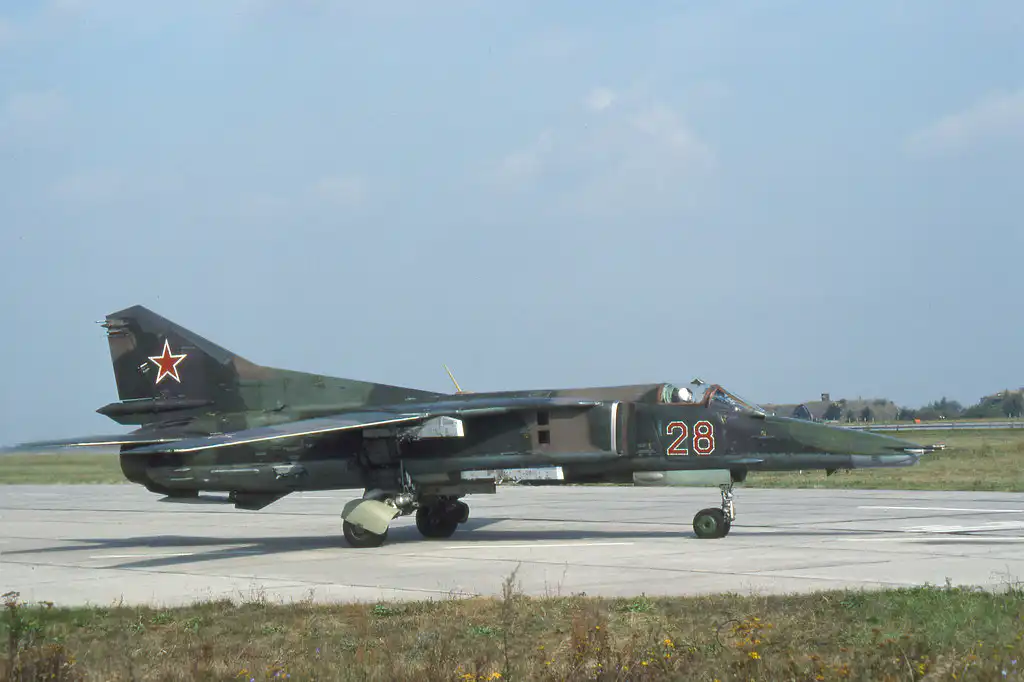
According to defense analysts, the patterns of crashes continue to impact older aircraft that are yet to be replaced or modernized. The lengthy and protracted acquisition of new fighters and helicopters (that, in turn, is paralleled by the slowness of the domestically produced products) leaves the situation in which the old planes must fly longer than they should. Thus, with the work on fleet modernization going on slowly unless it runs in parallel with the process of increasing the maintenance budgets, the older platforms of India will remain about, raising the chances of crashes.
Experience, Operational Tempo, and Training
The quality of training and the workload of operations influence aviation safety greatly, and the IAF is strained on both ends. The increment in operational pace in terms of sorties, border patrols, and multilateral exercises increases the strain on pilots and aircraft. Analysts have noted that in some cases, comparatively inexperienced pilots are transferred to new types of aircraft more rapidly than the optimum rate, based on minimizing the time available to them to receive proper conversion training.
The courts of inquiry also suggest the presence of high-risk training practices, night types of flying, and intricate maneuvers as some of the causes of accidents involving trainee pilots and trainee instructors. The IAF top management and the MoD have cited that there is an improvement in the basic and advanced training about flying, although reports of recurrent training crashes have exposed the fact that training is not uniform within the different squadrons. Therefore, the risks associated with training will be present until pilot training is standardized, in terms of resources and availability, and aligned with operational requirements.
Procurement, Logistics, and Indigenization Gaps
The Indian defense procurement system, which was usually accused of delays and bureaucracy, has also been a cause of aircraft crashes. In the circumstance that the spare parts do not arrive on time or upgrades are postponed, an aircraft will continue to fly in less than optimum and even hazardous conditions. Oversight bodies and investigative journalists have reported instances of a unit being compelled to cannibalize aircraft to get spares, increasing maintenance periods, and lowering fleet readiness.
While the MoD and IAF have made efforts towards greater indigenization, local production has frequently trailed behind demand, with components of crucial components being in short supply. The MoD has claimed that the rate of Indian Air Force accidents has been decreasing in association with enhanced maintenance and resourcing, yet analysts are not convinced, as crashes keep occurring despite these guarantees. Finally, logistics and procurement issues are directly converted into the problems of safety, so the supply-chain reform would be the key to the pilot and material security.
The Essence of Safety Culture, Inquiries, and Responsibility
An appropriate aviation-safety culture should be helpful to promote open reporting, excellent supervision, and implementation of inquiry recommendations. The MoD still upholds that the recommendations of Courts of Inquiry are binding in nature, but parliamentary committees have reported that some are still being partially implemented or awaiting implementation owing to bureaucratic red tape. Retired air marshals and investigative reporters have cautioned of an institutional culture where mistakes are not advanced into training doctrine.
What comes out is a vicious circle of the same errors recurring in several bases and aircraft. Recent accident coverage by the international community has shown that India has solid inquiry procedures on paper, but the challenge is in how they will be implemented and followed through. In that regard, additional improvement of a safety culture, one that encourages open reporting, data disclosure, and swift rectification, would be of vital importance to interrupt the recurrent accidental trends.
Declarations by the Authorities: Candor, Context, and Defense Story
IAF crashes have received mixed publicity in India, characterized by government and IAF officials who have chosen impartial and rational positions. The MoD has claimed in parliament several times that the accident rates per 10,000 flying hours have been continuously decreasing since the 1990s, indicating that the modern IAF is safer now than during the previous decades. Simultaneously, government representatives admit deficits in the aging of the fleet and resources to be maintained, which will be enhanced and modernized.
Following crashes, communication by governments focuses on the natural hazards of military aviation and how all accidents may not be a sign that there is a failure in the system. Even the Indian crashes featured by international media usually use these MoD briefings, which aim to balance between citizens being reassured and the organization being held accountable. Nevertheless, although official accounts are useful to put risks into perspective, they do not replace the reforms and clear performance indicators that may be proven.
Relative Contrast: Does the IAF Stand Out From the Crowd?
The crash history of India can only be well evaluated when compared to other major air forces. Critics have claimed that crude figures, including the total crash levels of more than 2,000, put India in the top place in the list of the most crash-prone air forces in the world. They are then responded to by the fact that India has a long history of operations, high sortie rates, and an older inventory, which creates distorting raw comparisons.
Normalized accident rates, calculated to 10,000 hours of flight, provide a more realistic point of reference, and MoD data points to gradual improvements in the rates over the three decades. However, even with the above positive changes, the IAF still has high-profile crashes that dominate publicity, casting doubt over the slow pace of modernization and safety culture. So, some of the alarm is blurred by normalized measures, but the humanitarian and strategic outsourcing costs of repeated accidents are too high to disregard.
Recommendations: Evidence-based Reforms
Proactive, evidence-based Indian Air Force changes should start with the fleet modernization through faster fighter and helicopter acquisition, the phase-out of old platforms, and increased focus on life-extension programs to avoid failures due to aging platforms, and at the same time the standardization and deepening of pilot training with better conversion courses, more simulator time, and more powerful crew-resource-management modules to minimize the failures associated with human factors.
Risks will also be reduced by enhancing logistics and maintenance pipelines by increasing spares indigenization, improving forecasting tools, and providing sufficient funding for maintenance, supplemented by institutionalization of safety-learning systems, requiring less-secret inquiry recommendations to be published publicly and measurement-based implementation metrics to enhance accountability. Lastly, independent aviation-safety audits with three- to five-year intervals will be done to justify inquiries internally and increase institutional credibility. Combined, these reforms will deal with the technical, human, and procedural causes of IAF crashes and provide the surest way to safer military aviation.
Conclusion
The high rate of Indian Air Force crashes is the product of a complex interaction of human factors, material factors, and organizational factors. Although the authorities point to the enhanced information regarding the accident rates and modernization, the accidents continue to happen with quite often tragic outcomes. The findings of parliamentary reports, statements of the MoD, as well as investigative journalism, all lead to one set of concerns: human-factor failures, obsolete platforms, unbalanced training, timescales in procurement, and insufficiently institutionalized safety culture. These issues demand continuing political will, sufficient resources, and open supervision, as well as a culture of aviation safety as a national security priority. The only way that the IAF can shake out of its history of a series of crashes is through thorough reform that will guarantee the security of its staff and equipment.
If you want to submit your articles and/or research papers, please visit the Submissions page.
To stay updated with the latest jobs, CSS news, internships, scholarships, and current affairs articles, join our Community Forum!
The views and opinions expressed in this article/paper are the author’s own and do not necessarily reflect the editorial position of Paradigm Shift.

Manahil Tariq Manj is a student of defence and strategic studies at Quaid-i-Azam University, Islamabad. She has previously interned at the Ministry of Defence (MOD) and is currently interning at the Ministry of Foreign Affairs, Islamabad. Her research interests include conventional and hybrid warfare, strategic deterrence, military diplomacy, regional conflict dynamics, and evolving doctrines of modern warfare.