

Historians infer that the the city of Lahore was founded by Lōh or Lava, son of Rama; a Hindu deity in the epic Ramayana, from which the city’s initial name Lōhawār was derived. This name is aligned with “Loh-Kot,” mentioned in the Rajput Chronicles, meaning “fort of Loh.” The pre-history of Lahore is a little misty, though it has been said to have been founded between the 1st and 7th centuries A.D.
Pakistan’s now second-largest city was first identified as the capital of the Ghaznavid Dynasty (1163 – 1186). The city was repeatedly invaded by the Mongols during the 14th century until eventually in 1398, it fell under the rule of Timur—a Turkic conqueror. The period of 1526 for Lahore is considered the golden age—when it was captured by the Mughal Emperor Babur’s troops. Soon after, the city became the royal residence under the Mughal dynasty which further expanded during the reign of Emperor Shah Jahan; the third son of Emperor Jahangir and Princess Manmati.
Shah Jahan’s reign (1628- 1658) witnessed the construction of several iconic monuments. Taj Mahal, Moti Masjid, Red Fort, and Sheesh Mahal (Palace of Mirrors), are some of the most notable features of this era. The reign of Shah Jahan is also marked by the victories against the Deccan states in southern India. However, Lōhawār’s glory began to wane during the reign of Shah Jahan’s successor, Aurangzeb.
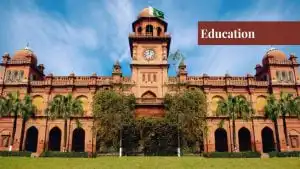
Following Aurangzeb’s death in 1707, Lahore faced multiple uprisings, eventually leading to British control in 1849. The British influence left a lasting mark on the city’s architecture, blending Gothic, Victorian, and Mughal styles. Many important buildings were also constructed under this reign, for instance; the High Court, the National College of Arts, the Government College, Tollinton Market, Montgomery Hall, the old campus of the Punjab University, the Provincial Assembly, and various museums.
When the Indo-Pak continent received its independence in 1947, Lahore became the capital of the newly created West Pakistan, which was later reconstituted as the Punjab province in 1970. Besides Lōhawār, Lahore has been known by various names throughout its history. Some of these notable names are Loh-pur, Labokla, Mahmood-pur, Samandpal Nagiri, Lava Puri (City of Lava), and more. Today, Lahore stands as a vibrant center of education, culture, and cuisine with an estimated population of 252,310,849, as of October 6, 2024.
Tourism and Architectural Splendor
Lahore’s rich history and heritage make it one of the top tourist destinations in Pakistan. The city is often associated with various titles and phrases, some of which include, the City of Gardens, Queen of Cities, City of Lights, and more. As the popular saying goes, “Lahore Lahore hai,” meaning Lahore is Lahore—implying that there’s nothing like it.
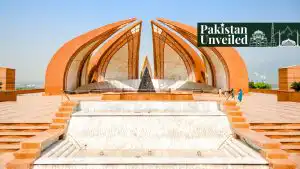
The architectural heritage of the old city is admired for its vivid colors, textures, and intricate designs, which reflect a diverse range of artistic influences. For an art lover, it is no less than heaven. Major tourist attractions include the Lahore Fort, Minar-e-Pakistan, Badshahi Masjid, Shalimar Gardens, the Nur Jahan Tomb, Emperor Jahangir’s Tomb, Wazir Khan Mosque, Data Darbar Shrine, Neevin Mosque, Anarkali Bazar, Hiran Minar, the Lahore Museum, and many more. The 21st-century Lahore also boasts modern landmarks like Emporium and Packages Mall, along with many restaurants, cafes, and entertainment spots.

In 2015, the Walled City of Lahore Authority (WCLA) launched the Rangeela Rickshaw and Tonga service, specifically for promoting tourism. The Speedo bus, introduced much later, serves another striking and affordable service that tourists and locals, can avail of. With fares ranging from just 30 to 50 PKR, one could travel to their destination with no hassle.
A City of Legends and Living Traditions
Lahore is famously known as the cultural and artistic heart of Pakistan. The city provides its citizens with some of the most iconic landmarks as here, one can easily find the co-existence of ancient Mughal architecture and bustling modernity. The Walled City, characterized by its narrow streets, is a vivid testament to this fact. The Walled City of Lahore is filled with centuries-old markets namely Anarkali Bazaar and Liberty Market, with local artisans crafting in diverse realms of creativity, intricate jewelry, textiles, and woodwork.

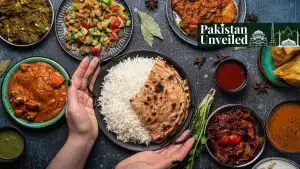
Another defining trait of the second largest city in Pakistan is its food culture. From malls to food streets, regional to ethnic cuisines, Lahore is famous for its rich, aromatic dishes like nihari, biryani, tender kebabs, matka pizzas, and much more. The bustling Food Street near Badshahi Mosque gives a full flavor of Lahore’s culinary legacy.
Lahore is also renowned for its festivals as well as its events that take place around a diverse range of subjects including arts, history, drama, poetry, music, qawali, etc.
The Lahore Museum, Alhamra Arts Council, and Ajoka Theatre are particularly known in these regards, showcasing rich collections of historical artifacts and hosting cultural events year-round.
Languages
As Lahore is such a diverse city, encapsulating people from all sorts of cultures and backgrounds, a variety of languages are generally spoken in this city of lights. Although English, Pashto, Siraiki, and other languages are frequently used here, Urdu and Punjabi are the most spoken languages of Lahore. English, too, is widely spoken as a secondary language. Many people are bilingual and trilingual. However, although Arabic isn’t that common in Lahore, a common greeting goes here in the Arabic language which is “Assalam o Alaikum” meaning “peace be unto you.”
The Industrial Heartbeat
Lahore plays a significant role in Pakistan’s industrial sector. With a diverse economy, the city has established itself as a hub for various industries including textiles, food processing, information technology, and manufacturing. From spinning and dyeing to garment manufacturing, Lahore’s textile industry is a key player in the country’s exports, contributing to international markets.
Because Lahore has easier access to agricultural regions, it is well-established in the industry of food processing. The city is known as the manufacturing hub of staple crops such as rice, wheat, fruits, and vegetables. Well-established food brands like Dawn Foods and Shezan produce frozen foods, canned products, and beverages that are manufactured in this city.
Information Technology (IT), is yet another sector that has become a new tech hub in Lahore. The city has a plethora of software houses, as well as IT companies to offer services for everything from software development to business process outsourcing (BPO). In recent years, this sector has started expanding significantly and is now providing a good portion of jobs to the nation. One such IT marvel is “Lahore Sky” which is the biggest IT and technology park in Lahore.
Talking about Lahore’s marvels, one cannot ignore some of the top universities in this city. Universities like LUMS, Punjab University, and UET are breeding grounds for research, innovation, and technological advancements. Educational services are a growing part of Lahore’s economy that fuels the IT, engineering, and manufacturing industries.
Lahore is loved by everyone as this city has so much to offer to locals as well as tourists with diverse cultures, backgrounds, and interests. With its rich timeline, Lahore captures everyone’s eye so one can state that the commonly used proverb “Lahore Lahore hai” (Lahore is Lahore) rings true.
If you want to submit your articles and/or research papers, please check the Submissions page.
The views and opinions expressed in this article/paper are the author’s own and do not necessarily reflect the editorial position of Paradigm Shift.

Saba Ikram is an English Literature graduate with a love for writing, learning, and exploration.