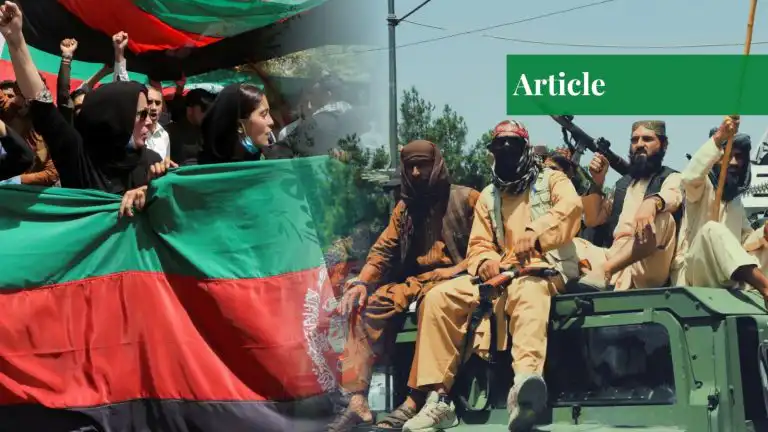

In August 2021, the Taliban came into power after the withdrawal of the US. They claimed to restore Islamic Laws (Sharia) and to create an Islamic Emirate. Mullah Hibatullah Akhundzada, in May 2021, on the occasion of Eid-ul-Fitr, gave a message, in which he stated that, “The Islamic Emirate assures all that none shall be harmed from the soil of Afghanistan, and likewise asks others not to interfere in the internal affairs of Afghanistan”. This statement caused anxiety in public, as in their first era, they imposed many restrictions, leading to humanitarian concerns.
Recently, on 4th January 2026, the Taliban announced a new penal code under their supreme leader, Hibatullah Akhundzada. Penal Code, named as Criminal Procedural Code for Courts (De Mahakumu Jazaai Osulnama), has 3 sections, 10 chapters, and 119 articles. This penal code has several laws that do not align with Islamic Sharia laws. For example, declaring the Hanafi School of thought as the original form of Islam, neglecting other schools such as the Shiites, dividing society into four sections, and implementing laws as per their hierarchy, etc.
Those who call themselves the protectors of Islam are implementing un-Islamic laws in their state. They are not the protector of Islam; rather, they are the enemies of Islam. They are the ones who have led Pakistan to be labelled as a terrorist state because these Taliban spread Islam through strict laws, which they call sharia, and through violence. But Islam is a religion of peace; in fact, Islam says to be at peace with infidels who are not in a fight with you. Islam gives the best framework for war and peace based on humanity.
Islam and Justice
The Taliban government claims that it rules in accordance with Islamic jurisprudence. Let’s see what the Islamic framework of justice is.
In the Holy Quran 4:135, it is written that, “O believers! Stand firm for justice as witnesses for Allah even if it is against yourselves, your parents, or close relatives. Be they rich or poor, Allah is best to ensure their interests. So do not let your desires cause you to deviate ˹from justice˺. If you distort the testimony or refuse to give it, then ˹know that˺ Allah is certainly All-Aware of what you do”.
In another verse, 49:13, Allah Almighty says, “O humanity! Indeed, we created you from a male and a female, and made you into peoples and tribes so that you may ˹get to˺ know one another. Surely the most noble of you in the sight of Allah is the most righteous among you. Allah is truly All-Knowing, All-Aware”.
These verses of the Holy Quran give a simple framework of justice. It says that justice is not based on hierarchy, whether rich or poor. Also, in the eyes of the law, everyone is equal. As human beings, we must stand with justice even if testimony is against our blood relations.
But if we see the Taliban 2026 penal code, in article 9, they have divided the population into 4 sections: scholars (ulemas), ashrafia (elites), mutawasit (middle class), and lower class. As per this article, punishments will be imposed based on this hierarchy. For example, if a crime is attempted by a scholar he will only be warned, if the same crime in same situation is done by an elite he will be summoned (no punishment only trials), if crime is conducted by middle class men, then he will be imprisoned and if this happened from a lower-class man then in addition to imprisonment he will suffer from corporal punishment. In Article 18, flogging (corporal punishment) has been prescribed very harshly without any limit (may cause death).
This social stratification has raised humanitarian concerns as these laws are not only against Islamic laws but also violate human rights. Islam says there is no difference between any human, be it rich, poor, white, or black; only righteousness matters. One must ask the Taliban what kind of Islamic laws they are following.
Absence of Fair Trial
In the 2026 penal code of the Taliban, clause six of article 4 states that every Muslim “whenever they witness sinners committing a sin, is permitted to proceed with their punishment”.
In contrast with this, the Holy Quran says that, “Why did they not produce four witnesses? Now, since they have failed to produce witnesses, they are ˹truly˺ liars in the sight of Allah”. (24:13)
In another verse, it says that, “O believers, if an evildoer brings you any news, verify ˹it˺ so you do not harm people unknowingly, becoming regretful for what you have done”. (49:6)
These verses of the Holy Quran have clarified that before giving punishment, there is a need for witnesses, their oaths, and further due process. Islam has provided a framework for fair trial, but these Taliban have enacted laws that violate humanity and security. Irony is that this penal code is named as Criminal Procedural Code for ‘Courts’, but according to its articles, anyone can punish on the spot without any court trials, if they witness any crime.
Women’s Rights in the Taliban Penal Code
According to this penal code, physical violence against women and children has been legalised with a limitation of no bruises or fractures. No other forms of physical, psychological, and sexual violence are neglected in this code of ‘justice’. If, in any case, the husband beats his wife and results in bruising or a wound, then the wife can prove it in court. But the punishment is only 15 days if the wife succeeds in proving the violence, as stated in Article 32.
In the case of women, our Holy Prophet Muhammad (P.B.U.H) said that, “Fear Allah in respect of women”, on another occasion he said, “Among my followers the best of men are those who are best to their wives, and the best of women are those who are best to their husbands”.
The Taliban, who call themselves true followers of Islam, are depicting a wrong image of Islam throughout the world. Islam treats women as a pearl in a shell. Before Prophet (PBUH), there were some illicit rituals which included treating women like objects, honour killing of women, and a ban on their education, but Prophet (PBUH) was sent by God as mercy to the world. He liberated women from oppression and abuse and warned all people about women.
Political Suppression
Clause two of Article 23 of the Penal Code says that “Those who insult the Taliban leaders will be sentenced to 20 lashes and six months’ imprisonment”. This is one of the dangerous and authoritative laws through which it has been necessitated to follow all the commands of the Taliban, and if one opposes any law or command of the Taliban, he/she will be called a rebel and will be punished according to their laws. The Taliban are using Sharia as a tool for their own political gains, and in Islam, this is a sin. Mixing sharia with politics violates the basic principles of Islam.
Also in his speech, Hibatullah said that no one is allowed to interfere in the internal matters of Afghanistan. This means that any protests, any march, or any conference from Pakistan or any other Muslim state can do nothing.
Impact on Pakistan
Any incident that happens in Afghanistan has a spillover effect on Pakistan. As Muhammad Rana said, ‘an unstable and violence-prone Afghanistan will certainly encourage violent radical and extremist narratives and movements in Pakistan, which will not be easy to deal with’. This can be proved by recent military operations conducted by the Pakistan military in Tirah Valley, KPK. For the past few days, it has been spread on social media platforms that the new centre of the Islamic State of Iraq and Syria (ISIS) has been opened in Tirah Valley under Hafiz Zubair Mohammad (note that this news is only available on Indian social media, yet not confirmed by the Pakistan army. Even if it is propaganda, then Lashkar-e-Jhangvi is present in Baluchistan and KPK, a strong alliance of the Islamic State in Khorasan Province ISKP). Afghanistan is the hub of ISIS operations, and its spillover effect is on Pakistan, especially the tribal belt.
Through this, we can analyse that laws launched by the Afghan Taliban could have a spillover effect in Pakistan, as many Taliban factions are operating in Pakistan, especially in Baluchistan and KPK. These groups are highly impressed by the Afghan Taliban. If this happens, then open prosecutions and corporal punishment rates will again rise in Pakistan, and it will also have a great impact on the female literacy rate in Pakistan, as the Taliban do not promote female education; their factions in Pakistan will also close female educational institutions.
Conclusion
The Taliban says that their legal system is in accordance with Islam, but in reality, it is in contrast with the Islamic principles and code of justice. This sudden launch of the penal code may be to suppress other issues happening in Afghanistan. This is a fact that Afghanistan is striving due to its rivalry with ISIS. So, to suppress this issue and to involve public and international committees on law in this penal code discussion, the Taliban have launched this criminal procedural code. Thus, this penal code is a clear example of the ‘might is right’ policy in contrast with Islamic principles, which say ‘right is might’
If you want to submit your articles and/or research papers, please visit the Submissions page.
To stay updated with the latest jobs, CSS news, internships, scholarships, and current affairs articles, join our Community Forum!
The views and opinions expressed in this article/paper are the author’s own and do not necessarily reflect the editorial position of Paradigm Shift.

Syeda Farani Fatima is an undergraduate student of International Relations at the International Islamic University of Islamabad, with a strong interest in anti-corruption, counter-terrorism and geopolitics. Strongly committed to fighting corruption, terrorism, and supporting national reform through research and public service.