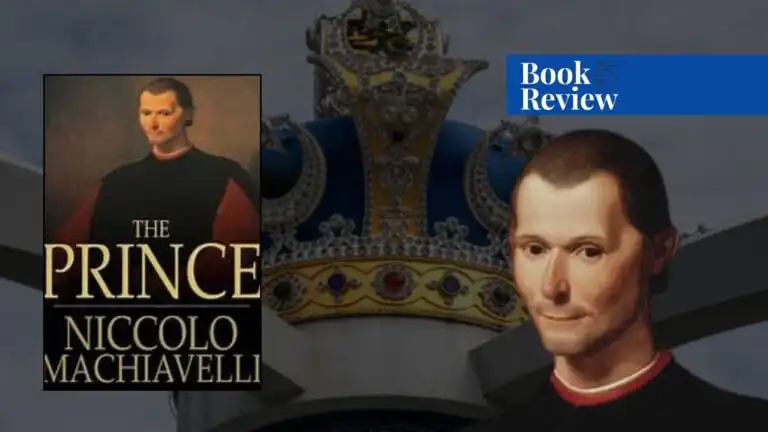

Niccolò Machiavelli’s “The Prince” is a book with remarkable cultural and academic influence. It continues to be widely referred to in the fields of business, psychology, and (the least surprising) politics and international relations. However, as it is popularized by the “self-help” genre and pop psychology gurus, the essence of the book itself has been lost on the common reader, who often approaches Machiavelli’s magnum opus with preconceived ideas that are often inaccurate. Similarly, the IR community, too, approaches the book with certain ideas in mind.
In this book essay, I aim to clarify a popular idea about it that is prevalent among many students of IR and political science. That is, they read “The Prince” as a precursor to the classical realist theory of IR that emerged during the interwar period. This framing obscures the book’s intended purpose.
So here is (another) look at “The Prince” by Niccolò Machiavelli, a Florentine diplomat, philosopher, and historian. I will explore its portrayal in the IR community, what the book is actually about, and how practically relevant it is in today’s international relations.
A “Realist” Literature?
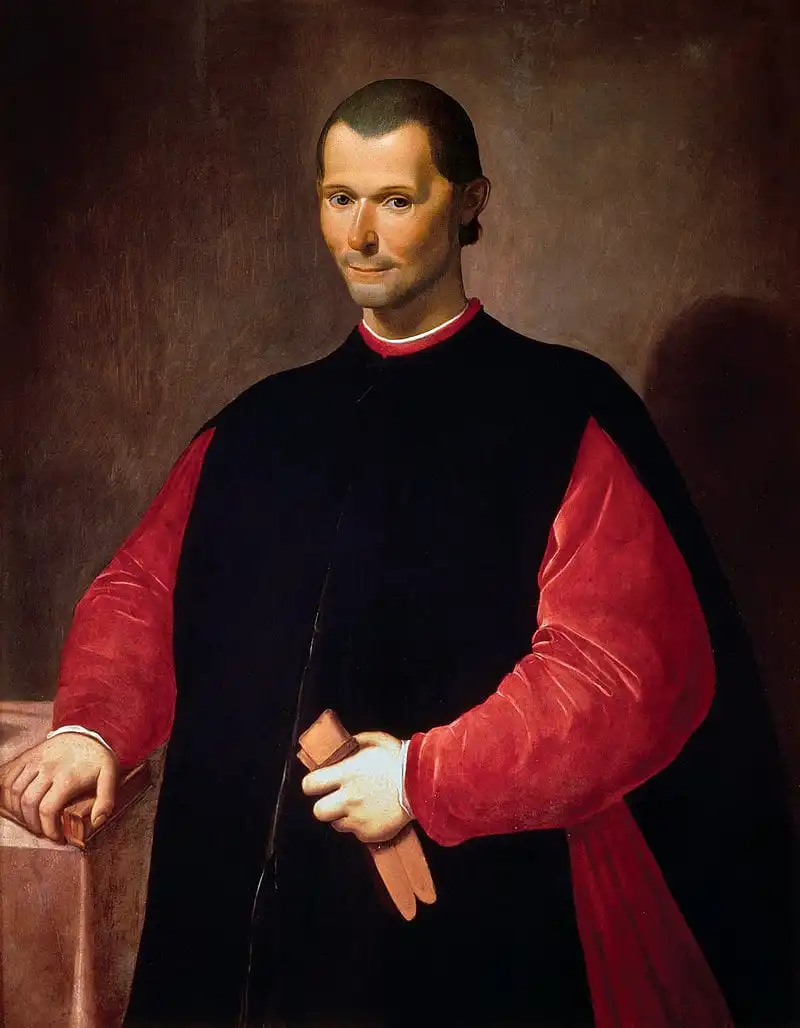
Pick any introductory IR primer. Go to the section on realism. You will unmistakably find a reference to Niccolò Machiavelli’s “the Prince.” The book is often portrayed as a precursor to the classical realist theory of international relations, and that’s how most students of IR get introduced to it.
Classical realists rest their theory on the assumption that power politics results from human nature, which is essentially unchanging; hence, the structure of international politics remains same. This basic tenet necessitates a line of argument that relies on demonstrating that similar ideas about politics have been prevalent throughout centuries of political and philosophical thought.
That’s why traditional realists have a tendency to invoke “The Prince,” along with other historical texts (such as, Hobbes’ “Leviathan,” and Sun Tzu’s “Art of War”) to connect their thought to a timeless wisdom tradition. By grounding the theory in an old tradition of political thought and practice, they attempt to lend authority and legitimacy to their principles and demonstrate their enduring relevance.
Still, classical realism is now largely considered outdated. The realist discourse in IR today is dominated by structural realism, espoused by scholars such as Kenneth Waltz and John Mearshimer, who don’t rely on human nature for explaining international politics. Despite this shift, the portrayal of Machiavelli’s “The Prince” as a classical realist text still persists in popular imagination, which is somewhat inaccurate.
So What Is “The Prince” Actually About?
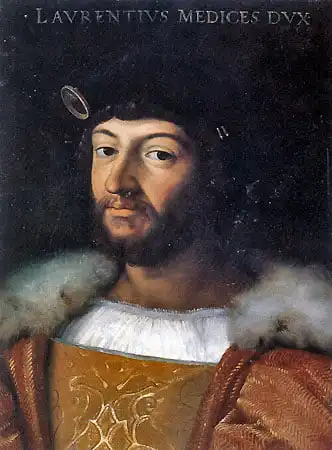
Machiavelli wrote “The Prince” as a playbook, a practical guide on how to rule a monarchy. He addressed the book to Lorenzo de’ Medici, the ruler of Florence. He wrote it for a specific audience: the rulers of the European princely states. Moreover, an important point to know here is that he wrote this guidebook for rulers of a certain type of state: a monarchy. Machiavelli declares on the outset, “I will leave out all discussion on republics…and will address myself only to principalities.”
The book can be divided into three major themes:
- How should a prince rule his principality, categorized by how it is acquired or established
- How should a prince conduct offense and defense
- The qualities a prince should cultivate
Machiavelli qualifies his practical advice for the rulers according to how they have acquired their rule, such as by hereditary inheritance, armed force, or public favor. He implies that the way a principality is established produces different conditions that require different measures for establishing and maintaining political authority.
The second theme addresses the military strategies and tactics a prince should employ to both defend his state and expand his political influence. Finally, Machiavelli devotes significant chapters to how a prince should conduct himself in political matters.
“The Prince” Is a Realist Text, But in Another Sense
It is intellectually misleading to label classical and ancient books with terms born out of recent developments. Machiavelli’s “The Prince” is a prime example of that. Still, when reading the book, we can’t help but think of the word “realist” when trying to describe its general tone and message. “Realism” in daily usage means having a practical approach to situations; dealing with things as they actually are and not how they should be.
And that’s exactly what Machiavelli argues for. He writes:
“It appears to me more appropriate to follow up the real truth of the matter than the imagination of it; for many have pictured republics and principalities which in fact have never been known or seen, because how one lives is so far distant from how one ought to live [emphasis mine], that he who neglects what is done for what ought to be done, sooner effects his ruin than his preservation.”
Niccolò Machiavelli takes a matter-of-fact view of the word, prioritizing pragmatic action over moral considerations. In this sense, it is actually a realist piece of literature.
The problem with the term “realism” is that it has varied meanings in different contexts. This leads to the fallacy of equivocation, which involves using the same or term in an argument but for different meanings, often unknowingly, misleading the reader. “Realism” means different things in art, politics, philosophy, and IR, even though it shares the same root idea. That’s why thinking of it as lending support to modern classical realism of IR remains far-fetched.
Is “The Prince” Still Relevant in Modern Global Politics?
All this is not to say that the book is totally irrelevant. But its applicability has been limited by the current global political context, which is generally based on institutional structures rather than personal kingdoms. As mentioned, the book deals with ruling monarchies. So if you are an emerging or established prince in an absolute monarchy, its core lessons would still be relevant to you in their original intent. Moreover, its practical insights can be used for understanding dictators and rulers of flawed democracies as well; in short, Machiavelli’s “The Prince” is useful wherever power rests on one man’s personal strengths.
There are currently only a handful of absolute monarchies in the world, mostly concentrated in the Arab world. Here you can observe the application of Machiavelli’s precepts, notably in the actions of Saudi Arabia’s Crown Prince Mohammad bin Salman and the UAE’s Mohammad bin Zayed. These princes are benevolent and brutal, progressive and authoritarian, cautious and reckless. They have one mask for content and obedient citizens, and another for the disgruntled and defiant.
Similarly, there are a lot more autocrats who rule on the basis of personal power instead of institutional structures. For instance, the internal policies of strongmen like Uganda’s Yoweri Museveni, Rwanda’s Paul Kagame, and Venezuela’s Nicolas Maduro could be analyzed through Machiavelli’s teachings.
Although practical insights from “The Prince” can be widely used to understand the actions and offer recommendations to various types of leaders today, deriving support for any broad theory of international politics from it would require significant intellectual gymnastics.
Conclusion: Reading “the Prince” as a Modern Reader
To sum up, though theories have been derived from it, the book is not even a bit theoretical. It is a practical guide with a practical purpose. Other than knowing this basic fact about the book, it’s best to drop any preconceptions you have about it.
Whether you’ve got a background in IR, psychology, business, philosophy, or other fields where “The Prince” has been popularized, you should approach it with open-mindedness. You won’t have a hard time, as Machiavelli facilitates this by expressing his ideas concisely and directly, without any flowery embellishments that are common in classical literature. This way, you will realize that most of the stuff you know about Machiavelli and his book is an oversimplification.
You may even find passages that resonate with you, pieces of wisdom that address your moral or philosophical qualms, and precepts that you could apply in your family or professional life—all the better for you. But discerning the book’s intended message from our subjective perspectives is essential to grasping its true worth and avoiding oversimplification and misrepresentation.
If you want to submit your articles and/or research papers, please check the Submissions page.
The views and opinions expressed in this article/paper are the author’s own and do not necessarily reflect the editorial position of Paradigm Shift.

Mr Hassan Ahmed has a degree in International Relations from the National University of Modern Languages, Islamabad. He won second prize in the ICYF writing competition 2021.