

Muhammad Asad was originally of Jewish Austrian descent and was born under the name Leopold Weiss. He was an Islamic scholar and a diplomat. He had a significant impact on society through his writings. The story of the extraordinary Muhammad Asad, the first passport holder of Pakistan, is the story of the birth of the country. Part of his legacy stems from his early interactions with Pakistan’s leaders and his work on Islamic studies.
Who was Muhammad Asad?
Leopold Weiss, born in the Austro-Hungarian Empire city of Lemberg (present-day Lviv/Ukraine), showed an early interest in education and journalism. He chose journalism and writing as his profession, and in 1922, during the days of the British mandate, he traveled to the Middle East for a job change. He saw the troubled state of the Muslim community in this period and was inspired by the essence that dominated the religion, Islam.
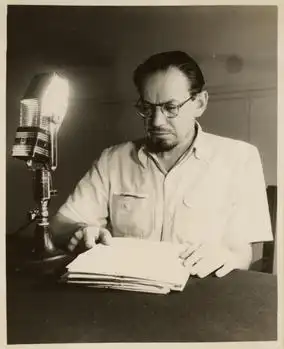
After interacting with the Islamic community and leaders, he officially converted to Islam in 1926. It further developed and enriched his knowledge and perception of the religion of Islam. This was a life-changing event for the great admirer of Islam and hadith. It set him on the path for more contributions in the fields of Islamic studies as well as in the communities of Muslims.
As soon as Pakistan gained independence on August 14, 1947, Muhammad Asad became involved in the inner matters of the newly formed state, including its politics and religious interpretations. Muhammad Asad was in Pakistan as an official of the state during Quaid-e-Azam Muhammad Ali Jinnah’s regime when he was assigned to head the Department of Islamic Reconstruction. His intention was to supervise those Pakistani laws, education, and even modes of governance that were created to be Islamic as per the Quran. Muhammad Asad, at the right time, played a decisive role in the formation of the newborn state of Pakistan.
Gaining Recognition as the First Passport of Pakistan
With these efforts, one of the important events in the history of Pakistan was the first passport of Pakistan, issued to Muhammad Asad. Although the year in which the passport was issued remains unknown, it has been generally affirmed that Asad possessed the first Pakistani passport in the early 1950s. Hence, making him the first citizen of Pakistan. This was a memorable event in Asad’s life through which he was admitted or assimilated into the process of political organization and history of the newly formed country of Pakistan.
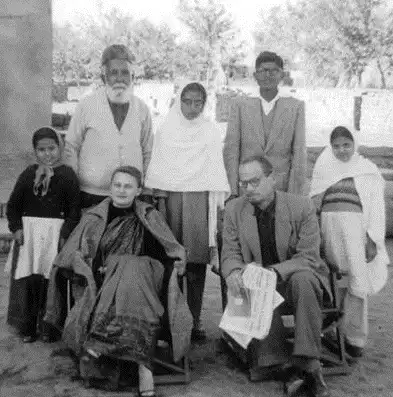
Muhammad Asad’s Pakistani passport also became a vital document for the preservation of historical and cultural significance. In this context, the Pakistani passport precisely captures the historical storyline of Pakistan in its early stage and Asad’s momentous part in the making of the nation. Presently, no specific information about the current status and whereabouts of the first Pakistani passport is available, but its historical background proves the need for preserving such artifacts for subsequent generations.
Muhammad Asad was not just the first passport holder of Pakistan, but his contributions did not remain limited to this. He played a very proactive role in cementing the broader initial base of diplomatic ties between Pakistan and Saudi Arabia for the future. An interpreter of Islamic beliefs, Asad was, indeed, well-versed with Islamic laws and keen on creating diplomatic relations between Pakistan and the rest of the world. He served as a diplomatic face of Pakistan and an advocate of Islamic principles, with which he followed the ideals of the founding father without apologies.
The figure of Muhammad Asad as the first holder of a passport of Pakistan speaks volumes about his personality and the impact of his contributions in the early years of state creation. His life story, from an Austrian Jewish journalist to the most renowned Islamic scholar and diplomat, reflects the pluralistic spirit of the emerging Pakistan. Hence, being the first Pakistani passport holder, Muhammad Asad’s story spans the spirit of the Pakistani nation and its points at every stage of its creation.
If you want to submit your articles and/or research papers, please check the Submissions page.
The views and opinions expressed in this article/paper are the author’s own and do not necessarily reflect the editorial position of Paradigm Shift.

Tayyaba Rehan is a student at the National Defence University. She is currently pursuing her degree in defense and strategic studies. She has worked with multiple governmental and non-governmental organizations. Her articles have been published in national as well as international publications.