
Introduction
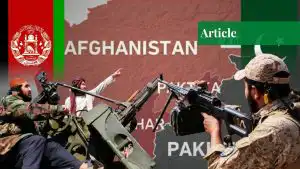
The re-establishment of the Taliban as the governing party in Afghanistan upon the departure of the United States in 2021 left a political void in which the various Pashtun and non-Pashtun groups that contend for gaining influence began to rebel against Taliban rule. The Afghanistan Liberation Movement (ALM), ISKP, the Afghanistan Freedom Front (AFF), and the National Resistance Front (NRF) are the major ones among the anti-Taliban groups. Shortly following the Taliban takeover, these groups and fronts learned that a transition of power in Afghanistan was also ineffective. Amongst these groups, the National Resistance Front (NRF) has recently emerged as the overt anti-Taliban resistance group, launching a direct offense against the Taliban.
Pakistan has continuously tried its best to reconcile with the current Taliban government, but all in vain. Now Pakistan faces a policy dilemma: should Pakistan support the NRF as it has done in the past decades with other anti-Taliban groupings, or should it remain neutral and take unilateral coercive measures against the Taliban? In order to critically assess this situation, this article examines the NRF’s current activities in Afghanistan and expert opinions on Pakistan’s realignment. It concludes with some tangible policy recommendations preserving the national interest of Pakistan.
Emergence of the NRF in Afghanistan
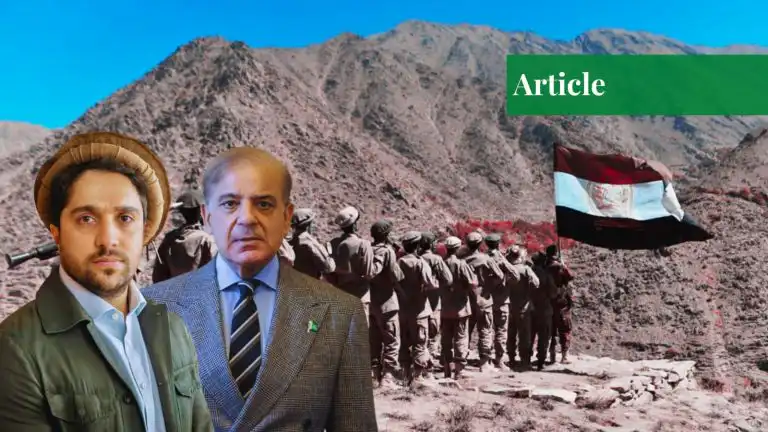
The NRF is an anti-Taliban resistance and guerrilla group that emerged during the first rule of the Taliban in Afghanistan during the 1990s. During that time, it was led by Ahmed Shah Massoud, who was publicly known as the “Lion of Panjshir.” He became the most significant enemy of the Afghan Taliban but was assassinated by Al-Qaeda just a day before 9/11. After his death, his son, Ahmed Massoud, is leading the NRF. The International Crisis Group (ICG) stated in its report that the NRF is the largest of the former Republic’s groups, primarily active in Panjshir province, northeast of Kabul, though many other groups have also declared themselves.
The conflict with the Taliban dates back to the 1990s, but after August 2021, the roles reversed—the NRF became the insurgents. The strategy of the NRF presents a dual policy where, on one side, there is a strong offense against the Taliban, and on the other side, diplomatic efforts are being made to gather international support against human rights violations by the Taliban government.
NRF Objectives
- To be at the forefront of coordinating the activities of the different anti-Taliban groups.
- To find greater involvement, and even mere acknowledgment, of the international community. It also desires the international community to get involved with it and initiate a dialogue concerning the situation in Afghanistan.
- To increase the area and dimension of its anti-Taliban efforts in the country in regard to security.
Resurgence of the NRF
The resistive movements and operations of the NRF have been growing in recent years. As of 2024-2025, the NRF has killed more than 600 Taliban fighters. In February 2025, Ahmad Massoud released news that their number one priority is to hold to check the tyrannical rule of the Afghan Taliban and create the future of Afghanistan. Most recently, in September 2025, the NRF struck Taliban members of the reconnaissance of Al-Farooq Corps in Herat. Three Taliban members were killed, and two weapons and a motorcycle were taken. The NRF denied any damage to their troops and civilians. This attack is one of the examples of targeted operations of the NRF against Taliban supplies and weapons.
Policy Dilemma for Pakistan
The Afghanistan policy of Pakistan is guided by multiple intersecting interests: preventing cross-border terrorism, a stable Western border, safeguarding the Pashtun and Uzbek trade/people flows, controlling impact in Kabul, securing economic corridors, and managing the management of relationships with major powers. Nonetheless, ever since 2021, Pakistan has been experiencing severe concerns regarding the above priorities. The Taliban government has utterly failed to stop the acts of terrorism within and outside Afghanistan, which have spilled over to Pakistan. This year is against witnessing a serious standoff between Pakistan and Afghanistan.
Last month, the Armed Forces of Pakistan launched attacks deep inside Afghanistan, targeting the command and control centers of various terrorist factions. The post-conflict diplomatic dialogues have also failed. Now, Pakistan is facing a serious issue concerning the measures to be taken to punish terrorist factions in Afghanistan. Below are given the optimistic and pessimistic points of view regarding Pakistan’s alignment with the NRF.
Aligning with the NRF: An Optimistic Approach
Supporting anti-Taliban factions, especially the NRF, in Afghanistan would allow Pakistan to take advantage of this internal division in dismantling the safe havens of TTP operatives under Taliban rule. This would also pressure the Afghan Taliban to halt TTP attacks on Pakistan. Moreover, as observed, the Taliban government is trying its best to build friendly relations with China, Iran, and several Central Asian countries; the alignment with NRF would provide a kind of backup to Pakistan in case Pakistan-Taliban relations worsen.
According to Jan Achakzai, supporting these factions would provide three-tiered benefits for Pakistan, including downgrading of Pashtun nationalist claims, recognition of the Durand Line as a legitimate border, and a non-threatening and brotherly posture towards Pakistan. Aligning with the NRF would also provide international recognition to Pakistan as a supporter of human rights in the region.
Non-Alignment with the NRF: A Pessimistic Approach
Antagonists are of the view that if Pakistan started to support the NRF overtly, there would be a greater risk of an increase in vicious TTP activities inside Pakistan. This would create instability and chaos in Pakistan, further terrorizing the local population. As the Taliban government is maintaining official relations with other regional actors, including China, Iran, etc., supporting the NRF openly would jeopardize Pakistan’s relations with these states.
Moreover, history is evident that whenever Pakistan has supported any faction in Afghanistan, it has stabbed Pakistan in the back. Thus, full-fledged support for the NRF could become a serious hurdle for Pakistan in the future if differences appear. Likewise, the NRF holds a very limited space inside Afghanistan. Empowering such a party, which cannot deliver governance, risks long-term entanglement for little strategic return. Moreover, such overt support to the NRF would further solidify the claims of rivals of Pakistan, i.e., India, declaring Pakistan a rogue state.
Policy Recommendations: A Moderate Approach
- Pakistan must not offer any open military assistance to the NRF, either by the supply of weapons or any of its fighters.
- Pakistan can have a low-profile political contact with the NRF leaders through silent diplomacy. This would serve the purpose of ensuring that Pakistan maintains the channels of communication without having to confront the Taliban openly.
- Pakistan must continue involving the regional partners and stakeholders to pressure the Afghan Taliban.
- It is time that Pakistan focuses on its own security through the reinforcement of border fencing, surveillance, intelligence, and counter-TTP activities along the Durand Line.
- Pakistan needs to implement a fusion of hard and soft power projection on the Taliban, such that both the national interest of Pakistan and the efforts to reconcile with the Taliban can be maintained.
Conclusion
History is repeating itself, and Pakistan is again facing hurdles in its policies towards Afghanistan. Preserving the national interest should be the sole and prime responsibility of the government of Pakistan and the Armed Forces. Learning from the historical experiences, Pakistan must not provide full-fledged support to foreign powers nor to the internal anti-Taliban factions. Instead, an independent sovereign foreign policy towards Afghanistan is a necessity of time for Pakistan. Otherwise, most probably, Pakistan would again be facing the same catastrophic consequences that it had in the past.
If you want to submit your articles and/or research papers, please visit the Submissions page!
To stay updated with the latest jobs, CSS news, internships, scholarships, and current affairs articles, join our Community Forum!
The views and opinions expressed in this article/paper are the author’s own and do not necessarily reflect the editorial position of Paradigm Shift.

He is pursuing a BS in International Relations programme from International Islamic University, Islamabad and has a keen interest in research works, policy analysis, defence and strategic studies and conflict resolution.