
With the two-week ceasefire, both the US and Iran are claiming victory in the war. The claim of victory of either side is debatable. However, the victory of a third country is irrefutable, and that is Pakistan. After years of global isolation, Pakistan has emerged as a strong diplomatic power on the global stage in recent years. The world has witnessed the pinnacle of Pakistan’s diplomatic influence in the recent ceasefire between the United States and Iran, as the country played a critical role in de-escalating regional tensions. However, Pakistan’s role as an international mediator is not new. For decades, Pakistan has been involved in quiet diplomacy among different nations.
However, some populist political leaders in the past damaged the country’s international standing through their populist moves. Such leaders turned statecraft into megaphone diplomacy, subordinating the country’s foreign policy to mere theatrics to enhance their populism. Indeed, such theatrics and moves help populist leaders win public popularity. However, this always comes at the expense of the nation’s international standing. Countries led by populist figures, as seen in India under Prime Minister Narendra Modi, often face the risk of diplomatic isolation driven by rhetoric and political theatrics. The same happened with Pakistan.
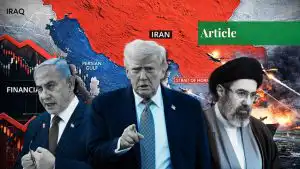
Nevertheless, Pakistan, just like a phoenix, has once again risen from the ashes. The country is now known around the world for its strong diplomatic influence. Since the start of the US-Israeli war on Iran, there has been widespread fear of a broader regional war in the Middle East, which could ultimately lead to World War 3. The US President Donald Trump’s self-imposed deadline and his threat to demolish “a whole civilization” further increased fear around the globe. Pakistan’s timely intervention led to peace negotiations, following a two-week ceasefire between Washington and Tehran. However, this is not the first time Pakistan has mediated between warring or conflicting states. In June 2025, Pakistan also mediated between the US and Iran to establish a temporary ceasefire, saving the region from a catastrophe. Pakistan’s history of international mediation dates back to the 1970s.
Diplomatic Mediation of Pakistan between the US and China during the Cold War
During the Cold War, the United States needed a strong regional power against the Soviet Union. By the late 1960s, relations between China and the Soviet Union started deteriorating. The United States saw an opportunity in this increasing split between the two sides. The US forces were also deeply stuck in the Vietnam War. China supported North Vietnam. Washington hoped that cordial relations with China might pressure North Vietnam to negotiate. Moreover, the US understood that building ties with China could improve its global position and weaken Soviet influence around the world.
For this purpose, Washington sought Pakistan’s help as the latter had cordial relations with China. Islamabad played a critical role in organizing backdoor diplomacy between the two sides. In 1971, Henry Kissinger visited China for diplomatic negotiations with the then-government. This visit was followed by a state-level visit to China by then-US President Richard Nixon, establishing cordial diplomatic relations between the two sides. Pakistan’s role in mediating between Washington and Beijing continues to stand as a hallmark of its diplomatic reach and influence.
Pakistan as a Diplomatic Bridge and Mediator in the Geneva Accords
During the Soviet-Afghan War, Pakistan acted as a frontline state by training Afghan Mujahedin and hosting millions of Afghan refugees. It was due to Pakistan’s role that the Soviet intervention and invasion of Afghanistan failed. Pakistan played a critical role in the defeat of the Soviet Union in Afghanistan. The Soviet-Afghan issue was resolved through negotiations under the United Nations. Pakistan represented interests and demands aligned with the Afghan resistance groups. Due to Pakistan’s role, a neutral government was installed in Afghanistan following the Soviet intervention in the country. The Soviet Union and the United States provided security guarantees to Afghanistan under the Geneva Accords.
Pakistan as a Mediator Between the Afghan Taliban and the United States
After almost two decades of continuous bombing in Afghanistan, the United States decided to leave the country, as it was impossible for the NATO alliance to defeat the Afghan Taliban. However, the US government needed a face-saving way to leave the country. The Afghan Taliban, due to deep-rooted distrust, were not interested in peace negotiations with the US government. Washington asked the Pakistani government for its assistance to bring the Afghan Taliban to the negotiation table. Pakistan played a pivotal role in the signing of the Doha Agreement between the Afghan Taliban and the US government in February 2020. This agreement marked an end to the 20-year-long US-led so-called “War on Terror”.
Pakistan’s Diplomatic Revival: The US-Iran Talks in Islamabad
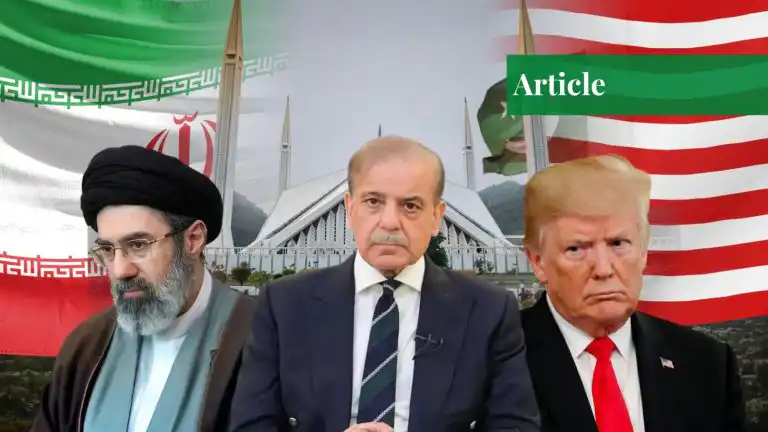
The US-Israeli unprovoked attack on Iran during the ongoing negotiation process between Tehran and Washington was a sheer violation of international rules and norms. This attack inculcated a deep-rooted sense of distrust among the Iranian government officials. Iran’s strong retaliation forced the United States to seek a face-saving. US President Donald Trump, in his desperation over humiliating losses in the US-Israel-Iran war, threatened to demolish the whole Iranian civilization. This threat sparked fear around the globe. However, through its astute diplomacy, Pakistan not only saved the Iranian civilization but also saved the world from a broader regional war. Pakistan, through its backdoor diplomacy, established a two-week ceasefire between the two sides. This ceasefire has been followed by peace negotiations. Delegates from Iran and the United States have arrived in Islamabad for peace negotiations to establish a long-term peace in the region.
If you want to submit your articles and/or research papers, please visit the Submissions page.
To stay updated with the latest jobs, CSS news, internships, scholarships, and current affairs articles, join our Community Forum!
The views and opinions expressed in this article/paper are the author’s own and do not necessarily reflect the editorial position of Paradigm Shift.

Muhammad Hamza Tanveer is a political analyst specialising in South Asian and Middle Eastern affairs. His work focuses on religious nationalism, regional security, and minority rights. He has been featured in Stratheia, Pakistan Today, Pakistan Observer, and the Asian Mirror. He is also working as a research analyst and political commentator for Paradigm Shift and contributes to the monthly magazine of Nearpeer.