
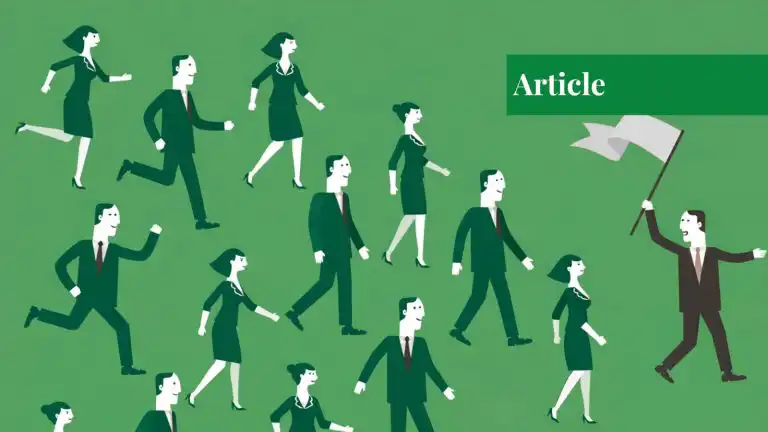

Personality cult has always played a role in the decline of political standards. Personality cult, a phenomenon in which leaders are followed based on their external appearance rather than their performance or policies, is illustrated in the PMC research article. Cult leaders require emotional support from followers; here, loyalty counts in blindly accepting the leader’s decisions. This emerging type of support has transformed the heart and soul of politics, shifting the focus to loyalty to the leader and replacing progressive ideas. Personality cults overlook the leader’s blunders and justify them in an illogical manner.
In Pakistan, popular support usually builds around strong figures rather than ideology, and it has, as a result, damaged public interest and governance. In this process, social media is used as a tool to make the message accessible to the masses. Despair and hopelessness are the ideal indicators that a personality cult is going to rule the political environment, because, based on despair and hopelessness, Open Knowledge Repository explains that populists make narratives and attract hopeless people, and people get attracted to apparently strong figures, as also highlighted by The Wall Street Journal. This article will shed light on how personality cults undermine governance by weakening the rule of law, institutions, and public unity, as well as destabilizing policymaking. The solution lies in upholding democratic values, supporting independent media, and raising awareness regarding civic education.
Rule of Law and Personality Politics
One of the harmful aspects of a personality cult is the destabilizing rule of law. Laws are sometimes implemented specifically against opponents, and close people are protected from the law—as a result, people lose trust in laws and justice. Internationally, countries with selective enforcement of law lose credibility and transparency. Subsequently, investors feel reluctant because selective enforcement reflects unstable governance.
In Pakistan, repeated political protests led by party loyalists show how devotion to leaders often overrides respect for law, with clashes causing damage to property and disruption of daily life. Unfortunately, ordinary supporters suffer more compared to leaders. Some frame such protests as political resistance, but the immediate outcome is unrest and declining public trust in institutions. So, suffering and disorder are the ultimate result of blind following.
Politicization of Institutions
Another negative side of personality following is the fragility of institutions. Courts, civil services, and watchdogs can face backlash if they hold popular leaders accountable for their actions. Due to this fear, institutions act reluctantly, which ultimately harms public interest, as demonstrated by Freedom House. Moreover, populist leaders try to control institutions by appointing people from their close circle. Due to this practice, meritocracy can be sidelined, and consequently, institutions become inefficient and unable to meet people’s needs.
Political needs are prioritized over the public. Human Rights Watch has highlighted the issue of politicization of institutions, where not only has governance been badly affected, but also makes institutions vulnerable to responding actively during floods or maintaining infrastructure. Institutions with the passage of time become less effective because of incompetent individuals; the result of ignoring meritocracy and favoring loyalists becomes apparent in difficult situations. Hence, personality following can harm the spirit and duties of institutions.
Polarization
Polarizations also come with personality following. Nowadays, in Pakistan, people are involved in identity battles rather than the policies of the party in various sectors like education and healthcare. This polarization will indeed elevate people’s suffering, because leaders will focus on what people are interested in, not on people’s needs. So needs will take a backseat, as debated by The Friday Times. Political divisions are not only observed in political parties, but also in families, workplaces, and communities, and even friendships are under the influence of intense personality following. What happens next is that social division deepens and unity almost fades away with the arrival of a discussion that has no base. In short, polarization in the form of weak public unity is the ultimate result of personality following.
Short-term Policies
Additionally, policy-making can also be negatively affected by personality cults. Usually, populist leaders make decisions based on the whims and wishes of people, which are mostly short-term. However, economic policies and health programs demand consistent efforts and policy-making. Subsequently, the health and economic sections are getting worse with the passage of time. The World Bank and the International Monetary Fund have endorsed the maximization of exports and broadening the tax base, but populist leaders in Pakistan avoid these long-term efforts; maybe they can lose support. In order to calm down people, they decrease petrol prices, but in the long term, these short-term steps would not be beneficial. Therefore, policy-making can be significantly disrupted by populist short-term goals.
Solutions
Every problem has solutions. So, upholding democratic values is the first step. In this regard, the party’s internal democratic system should be strong enough to avoid one-man rule in the party. This means appointing leaders should be based on rational party selection rules and policies, which will ensure strong leadership, not loyalists. Secondly, civic education is vital. It is observed that mostly youngsters fall under the influence of personality cults and empty speeches because of their limited exposure.
The students should be aware of how to judge leaders and the party. Educational institutions are the ideal place where students can learn about the basics of political knowledge. Civic education will help students to judge a party based on performance and ideology rather than emotions. Ultimately, students will be able to make informed choices about the leader and their policies, which will be beneficial for the country’s future.
Thirdly, the free press is one of the aspects of democratic values. With the help of the media, people will be able to critically view the leader if the media is independent. In conclusion, personality following can harm public interest through weak public institutions, selective enforcement of law, short-term policies, and polarization of people. A solution can be found in strong democratic values, independent media, and awareness of civic education. Personality following can also be utilized for the prosperity of society with the help of proper direction. Proper direction ensures a prosperous, fair, and developed society and country.
If you want to submit your articles and/or research papers, please visit the Submissions page.
To stay updated with the latest jobs, CSS news, internships, scholarships, and current affairs articles, join our Community Forum!
The views and opinions expressed in this article/paper are the author’s own and do not necessarily reflect the editorial position of Paradigm Shift.

Imtiaz Munir is currently pursuing a BS in English with a focus on linguistics and literature at Bahria University, Islamabad. He is an active reader with a strong grasp of political theories, having explored concepts like justice and forms of government. He enjoys analyzing political themes with a philosophical approach. At present, he is working on his research thesis to meet academic requirements and further his interest in critical analysis.