
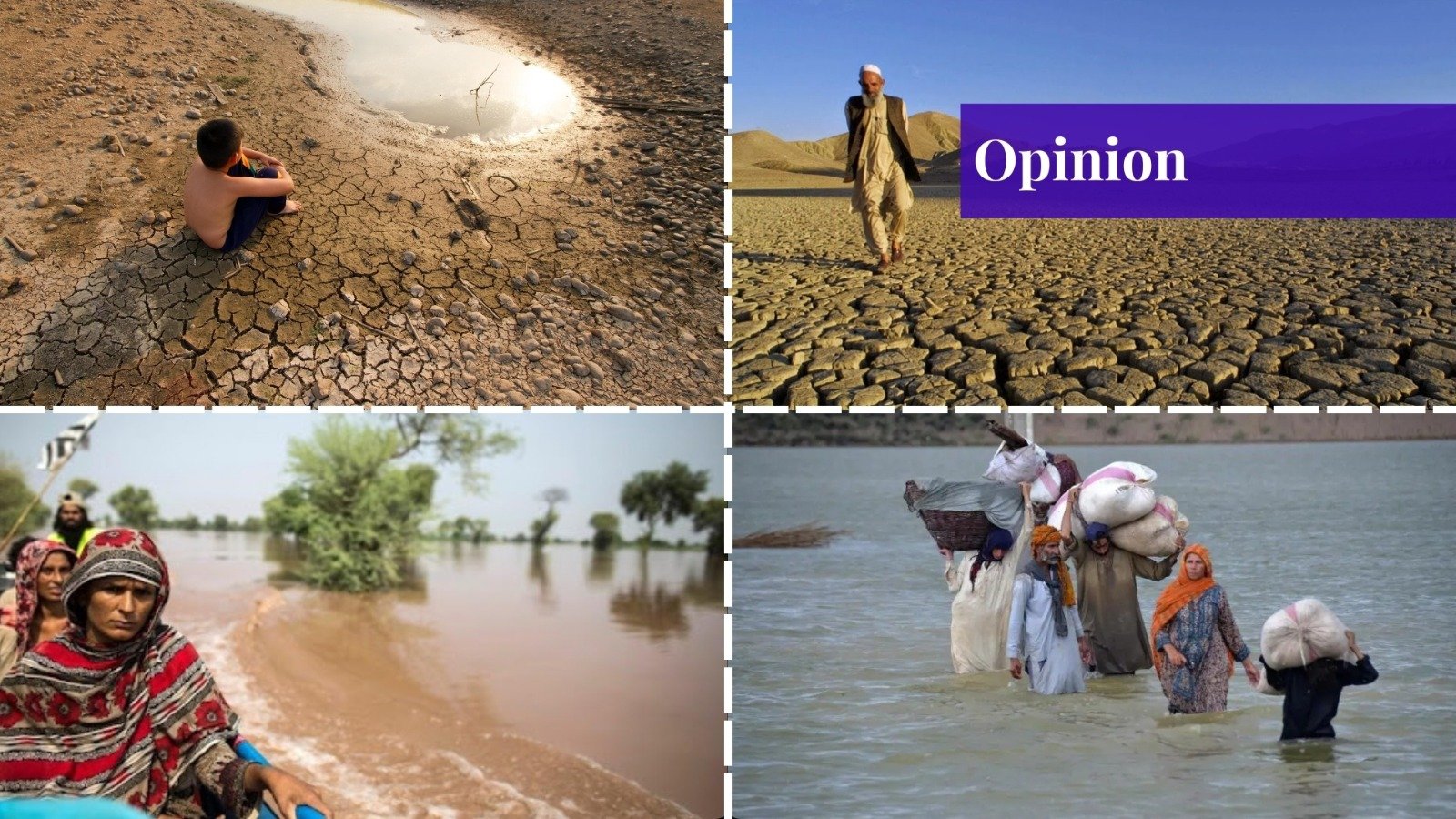

The 2022 floods, which displaced more than 30 million citizens from Pakistan, have starkly revealed the reality that climate change is the most pressing security challenge. For decades, Pakistan’s security framework has been dominated by terrorism and border conflicts; yet, these threats fail in comparison to the disaster-at-large that is yet to be shaped by a warming planet. Despite the urgency, policy responses by Pakistan remain fatally inadequate. Climate change is not a distant concern; it is the overriding existential threat to Pakistan’s existence.
Pakistan is ranked among the top-10 most climate-impacted countries in the world, even though its emissions are less than 1% of the overall greenhouse gases. The country faces catastrophic floods, overflowing rivers, melting glaciers in the Himalayan region, and ever-increasing high temperatures. These effects threaten Pakistan’s agriculture, increasing crop failures and growing food insecurity. Nearly a quarter of Pakistan’s GDP depends on agriculture supplied by the Indus Basin. The deficiency of water has gradually led to provincial strife and, by and large, has left India squabbling over the shared water resources of the river.
Additionally, displacement, climate-induced disasters have displaced millions, creating vast populations of climate refugees, further elevating instability and infrastructure strain in cities like Karachi. It makes climate change the singular imminent existential crisis Pakistan is facing.
On several accounts, climate change is indeed a significant national security threat to Pakistan. Economically, it loses billions each year due to such disasters as floods, heatwaves, and drought, weakening the capacity of the state and straining public finances.
Socially, millions of displaced people combined with growing food shortages and unemployment actuate unrest and extremist tendencies. From a geopolitical standpoint, resource scarcity, especially regarding water, is bound to exacerbate the tensions between India and Pakistan over the river water shared by the two countries. Furthermore, the military is overstretched due to disaster relief operations, thus diverting resources from traditional security roles. All these are essentially adding up to the entry of climate change as a critical challenge endangering Pakistan’s stability and security.
Pakistan’s National Security Policy (NSP 2022) considers climate change only in an indirect manner, treating it as secondary to terrorism and traditional security threats. While the NSP embraces a human security approach, it still does not possess the wherewithal of a climate security doctrine. Weak disaster preparedness policies have made the areas more vulnerable, where early warning systems are weakly maintained. Investment in green infrastructure and renewable energy ranks lowest, denying Pakistan these sustainable development priorities among the list of problems begging for attention. Furthermore, Pakistan’s security narrative is too heavily militarized and fails to address concerns related to climate change in sufficiently robust ways; these include economic vulnerability, social instability, and environmental degradation. This approach is disjointed and reactive, leaving the country unable to deal with mounting climate risks.
To transition its climate change strategy from an environmental model to viewing climate change as a fundamental issue of Pakistan’s national security, a wholesale change in its policy approach is required. Climate security must be folded into national security policies; otherwise, it cannot deliver the true magnitude of the threat. Disaster resilience must therefore be improved through flood management, early warning systems, and climate-smart agricultural practices to reduce vulnerability. If substantial investments can bring considerable renewable energy, preferred fossil fuel reduction, sustainable development, and green jobs may be generated. Regionally, Pakistan must improve diplomacy and cooperation over shared water sources with India, China, and Afghanistan to ensure that conflict scenarios are reduced. Finally, strengthening the voices of local communities and civil society will in time, yield effective adaptation and resilience-building from the ground up, thus guaranteeing that the impact of climate change responses is inclusive and bottom-up.
Pakistan faces an urgent reality that it cannot afford to fight over yesterday’s wars while tomorrow’s battles, which are climate change, have already begun, are being waged internationally. Climate change has transcended the environment; it has become a paramilitary, posing threats to the economy, social fabric, and geopolitical stability. Void of recognition of climate change as a security priority for Pakistan, no claim for military strength will save the nation from systematic collapse. Proactive engagement with climate change, bringing it fully into national security strategies, is crucial for the continued existence of Pakistan and for the endurance and resilience of its people and institutions.
If you want to submit your articles and/or research papers, please visit the Submissions page.
To stay updated with the latest jobs, CSS news, internships, scholarships, and current affairs articles, join our Community Forum!
The views and opinions expressed in this article/paper are the author’s own and do not necessarily reflect the editorial position of Paradigm Shift.

She is currently pursuing a Masters degree in Peace and Conflict Studies at the National University of Sciences and Technology (NUST).