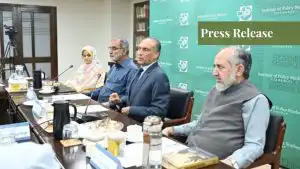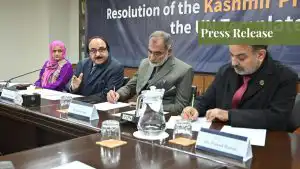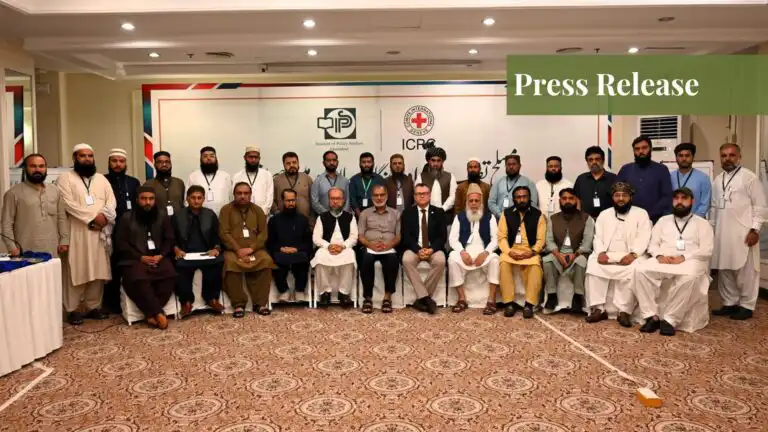
Islamabad, July 7: Journalists play a critical role during emergencies, serving as both the eyes and ears of the public and the government. In times of natural disasters or violent conflicts, the dissemination of accurate and timely information can be life-saving. Journalists help guide humanitarian efforts, identify urgent needs, and monitor irregularities. To avoid misinformation during periods of chaos and uncertainty, it is essential for reporters and analysts to have a deep understanding of emergency dynamics.
These points were emphasized during a two-day regional workshop for editors of religious journals and digital content creators. This media workshop was jointly organized by the Institute of Policy Studies (IPS), Islamabad, and the International Committee of the Red Cross (ICRC). The workshop aimed to equip participants with the knowledge and tools needed for effective reporting and analysis in the context of armed conflicts and humanitarian emergencies.
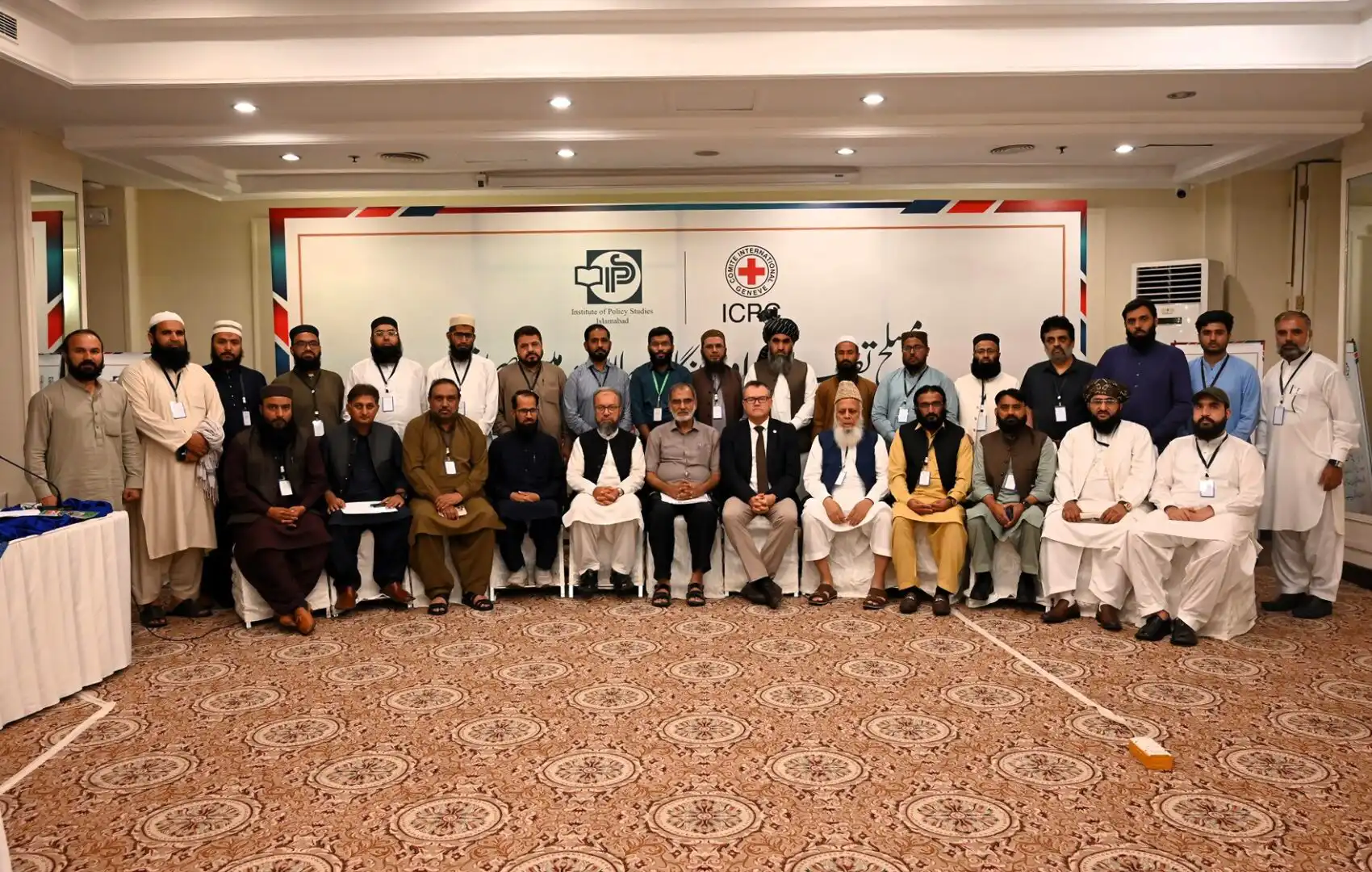
The sessions were led by Syed Nadeem Farhat, IPS research fellow; Dr. Ziaullah Rahmani, ICRC regional advisor; Dr. Yasir Riaz, a humanitarian officer at the United Nations; Muhammad Waqar Bhatti, senior health journalist; and Dr. Saqib Jawad, legal expert. The workshop concluded with remarks from ICRC Head of Delegation Christoph Sutter and IPS Chairman Khalid Rahman.
On the first day, the workshop focused on building the capacities of journalists and editors by introducing them to key aspects of humanitarian work. Topics included the evolving nature of human tragedies in the context of climate change and technological progress, the role of philanthropy and humanitarian organizations, relevant international laws, information-gathering strategies, and various types of crises. Drawing from personal field experiences, speakers stressed the importance of caution and empathy when reporting on human suffering and humanitarian emergencies.
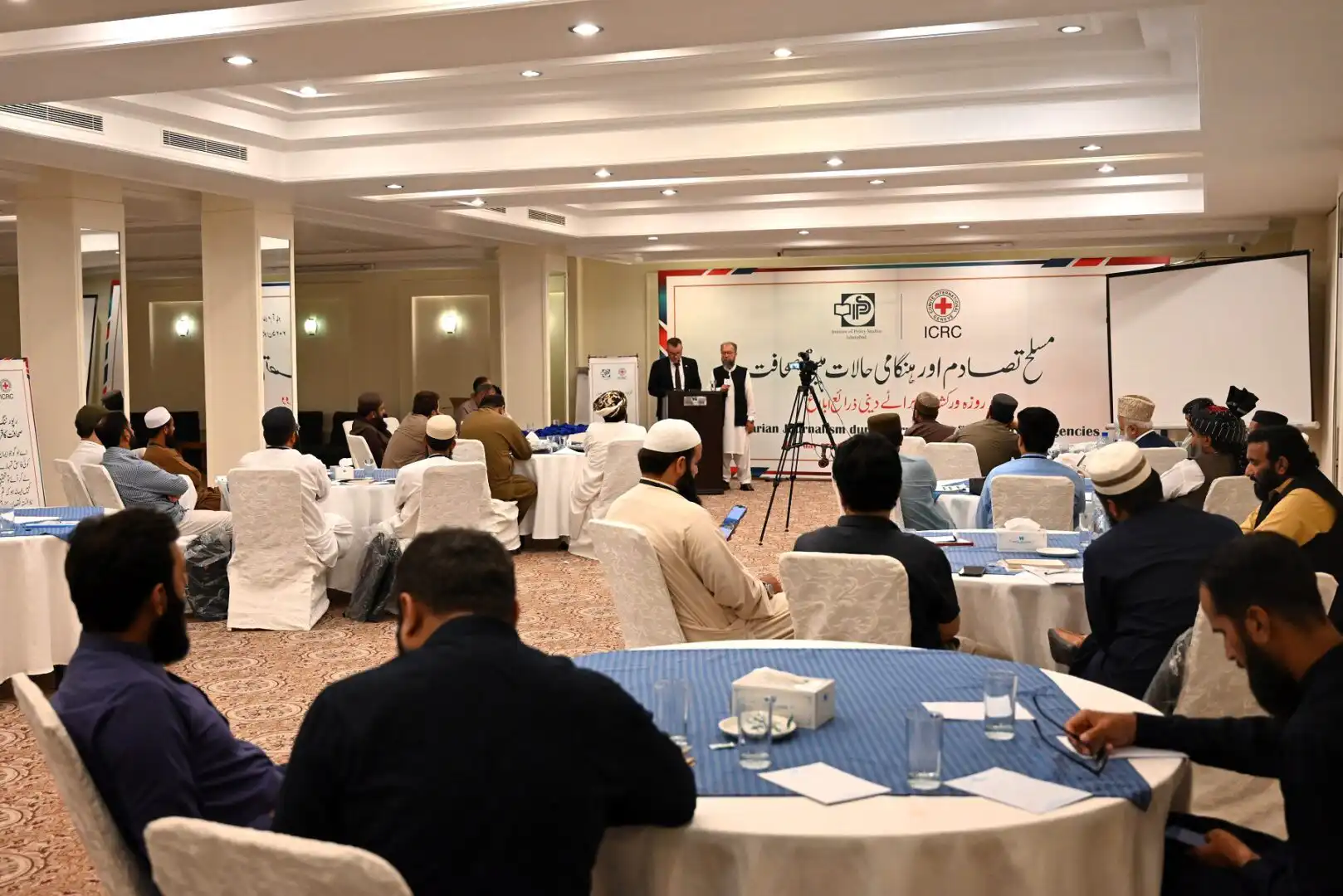
The second day explored the core principles guiding humanitarian organizations: humanity, impartiality, neutrality, independence, volunteerism, universality, and unity. Through interactive sessions, including study circles and scenario-based role-playing exercises, participants received practical training on how to responsibly engage with humanitarian issues and play a constructive role in times of crisis.
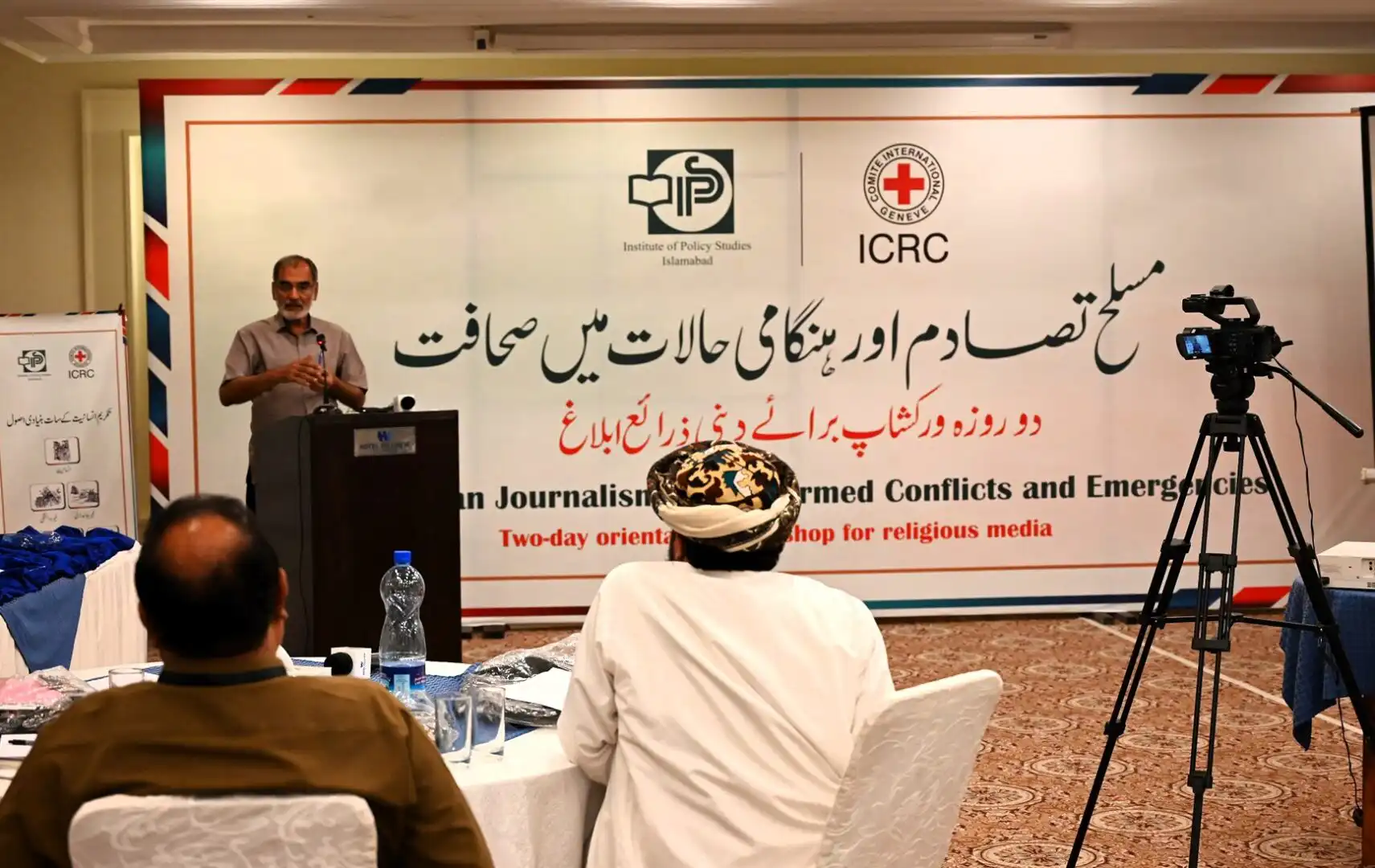
In his closing remarks, Khalid Rahman highlighted the significant contributions of religiously motivated humanitarian workers during times of crisis. He noted, however, that a deeper understanding of the global humanitarian framework is essential for them to operate effectively within broader systems of aid and support.

Christoph Sutter emphasized the ICRC’s commitment to continue assisting the government and people of Pakistan in times of humanitarian crises and emergencies by equipping relevant stakeholders.
If you want to submit your articles and/or research papers, please visit the Submissions page.
To stay updated with the latest jobs, CSS news, internships, scholarships, and current affairs articles, join our Community Forum!
The views and opinions expressed in this article/paper are the author’s own and do not necessarily reflect the editorial position of Paradigm Shift.

The Institute of Policy Studies (IPS) is an autonomous, not-for-profit civil society organization dedicated to promoting policy-oriented research, dialogue, and human & technological development for better governance. IPS provides a forum for informed discussion and dialogue on national and international issues. The contributions spanning over forty-three years and the overall impact signifies the importance of pragmatic research on policy issues. The institute highlights the role of think tanks in modern democratic polities.