
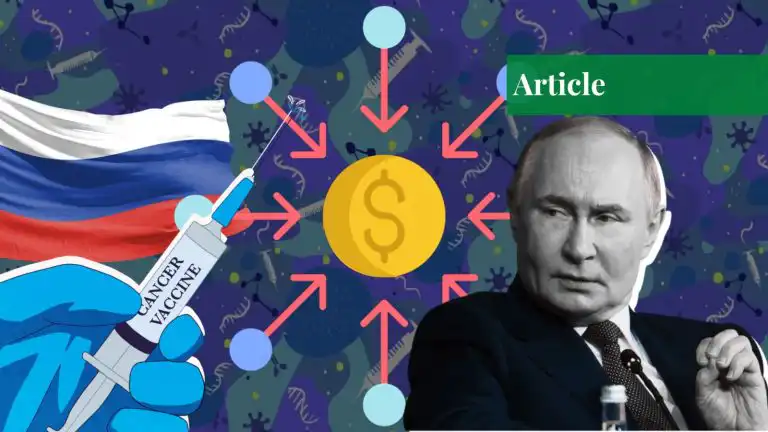

A new medical strategy shows how science, politics, and economics now move together. Russia has taken a bold step into personalized cancer care with the first use of its mRNA vaccine Neooncovac on a patient from the Kursk region. The treatment took place at the National Medical Research Center for Radiology in Moscow and marks a shift from mass medicine to patient-specific therapy. The project partners with three organizations, which include the Russian Ministry of Health, the Gamaleya National Research Center for Epidemiology and Microbiology, and the Blokhin National Medical Research Center of Oncology. The initiative also serves to advance a broader objective. Russia aims to develop a domestic medical system that enables it to compete with Western companies like Moderna and BioNTech and that eliminates their need for foreign supply chains.
Russia’s Shift to Personalized mRNA Cancer Vaccines
The scientific foundation of the project centers on mRNA research. The basic idea of the project delivers its most profound impact through its simple execution. Through their medical practice, doctors obtain tumor samples from patients, which they use to study the tumor’s genetic structure. They identify unique markers called neoantigens that exist only on cancer cells. Scientists create a personalized vaccine using the data, which trains the immune system to locate and eliminate those specific cells.
According to early reports from the National Medical Research Radiological Center, the process can take three to four months. The treatment may include several doses along with other forms of immunotherapy. The present methods of cancer treatment through chemotherapy and radiation pose a significant obstacle because they destroy both cancer cells and healthy body parts.
Russia is not relying on one method alone. Alongside Neooncovac, researchers are developing Enteromix and Oncopept. These target cancers include colorectal tumors and glioblastoma. Enteromix may use viral vectors to deliver genetic instructions, while Oncopept uses peptides to trigger an immune response. The initial results from India Today reports show positive outcomes, but research progress remains restricted to small-scale studies. Russia displays its strategic uncertainty through the various platforms that it uses for its operations. It is testing multiple paths to see which one delivers real clinical gains.
Enteromix and Oncopept Expand Russia’s Cancer Research Pipeline
The economic plan behind this science is just as important. The government intends to include these treatments in the national insurance system by 2026. According to Xinhua, the goal is to provide cancer vaccines free of charge under the compulsory medical insurance program. This would be a major expansion of state healthcare. Officials predict that the funding pool will increase to a total of four trillion rubles. The officials contend that making early investments will lead to future savings through decreased expenses for cancer treatment and hospital services. Yet the numbers raise questions. Personalized vaccines require advanced labs, trained staff, and steady supplies. These are expensive and hard to scale, especially under sanctions.
Russia’s military activities should be understood as part of a greater international competition. The National Health Service in the United Kingdom has established a partnership with BioNTech to develop the Cancer Vaccine Launch Pad program. The clinical trials will enable the treatment of thousands of patients by 2030. The melanoma vaccine developed by Moderna and Merck has shown impressive results in the United States testing, according to the two companies’ latest updates.
Their data shows a clear drop in the risk of cancer returning when the vaccine is combined with existing drugs. Details released by Merck suggest that the effect can last for years. Meanwhile, firms like Sequencio Therapeutics in Asia are building their own pipelines. The field is moving fast, but each country follows its own model.
Biodiplomacy
The medical field exists as the primary purpose for this initiative because it also serves geopolitical interests. By building its own mRNA infrastructure, Russia is trying to create what some analysts call a sovereign biotech system. This reduces reliance on Western patents and supply chains. It also opens the door to new partnerships in regions such as Africa and Asia. Countries that cannot afford Western treatments may look to Russia for cheaper options. Reports from Debug Lies describe this as a form of biodiplomacy. Yet, the same technology has dual-use risks. mRNA platforms can be adapted for other purposes, raising concerns among security groups about oversight and data protection.
Despite the ambition, doubts remain strong. Much of the claimed success comes from animal studies. Independent experts note the lack of large human trials and peer-reviewed data. The TribLive report shows problems with transparency that need verification. Cancer exists as multiple diseases instead of being a single medical condition. Each cancer type exhibits different characteristics that develop changes throughout its existence. This makes it hard to create a universal solution. There are also practical issues. mRNA vaccines require cold storage and precise handling. These demands could limit access in remote areas.
The First Patient as a Test Case for Russia’s Medical Strategy
The first patient in Moscow now stands at the center of this experiment. The upcoming program phase will depend on his progress and achievements. The doctors will monitor two things, which include melanoma reduction and the immune response maintenance. His case will not provide all answers, but it will offer a signal. If the results are positive, Russia may speed up its rollout. Otherwise, additional slow-and-simple methods that might solve the problem are needed.
The broader story is still unfolding. Russia’s cancer vaccine push shows how science now links with national strategy. It blends health policy with economic planning and global competition. The benefit of this is clear, but the risks are just as real. The evidence will determine success according to which of the two existing paths people will choose to follow. For now, the world watches as one patient’s treatment becomes a test of a much larger vision.
In the end, the effort reflects a simple truth. New technology can change medicine, but only careful proof can turn hope into a cure.
If you want to submit your articles and/or research papers, please visit the Submissions page.
To stay updated with the latest jobs, CSS news, internships, scholarships, and current affairs articles, join our Community Forum!
The views and opinions expressed in this article/paper are the author’s own and do not necessarily reflect the editorial position of Paradigm Shift.

Syed Salman Mehdi is a seasoned freelance writer and investigative journalist with a strong foundation in IT and software technology. Renowned for his in-depth explorations of governance, regional conflicts, and socio-political transformations, he focuses on South Asia and the Middle East. Salman’s rigorous research and unflinching analysis have earned him bylines in esteemed international platforms such as Global Voices, CounterPunch, Dissident Voice, Tolerance Canada, and Paradigm Shift. Blending technical expertise with a relentless pursuit of truth, he brings a sharp, critical perspective to today’s most pressing geopolitical narratives.