
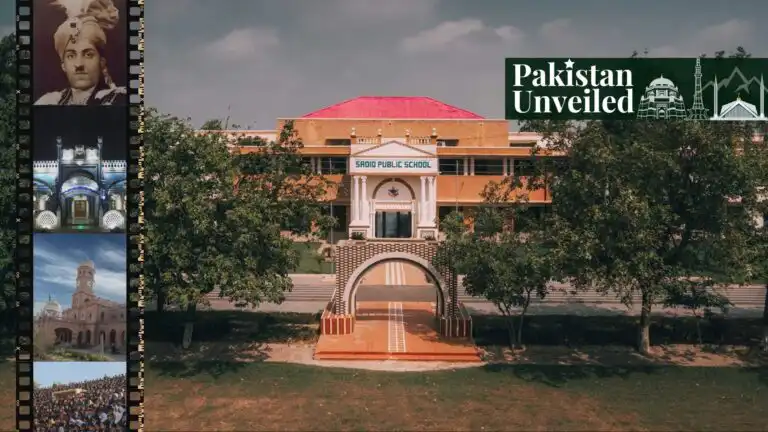
Sadiq Public School, located in Bahawalpur, Pakistan, is an extremely prestigious institution with its foundation steeped in glorious history. Established in 1953, the school is widely known for its dedication to academic excellence, the character development of its students, and a holistic educational experience.
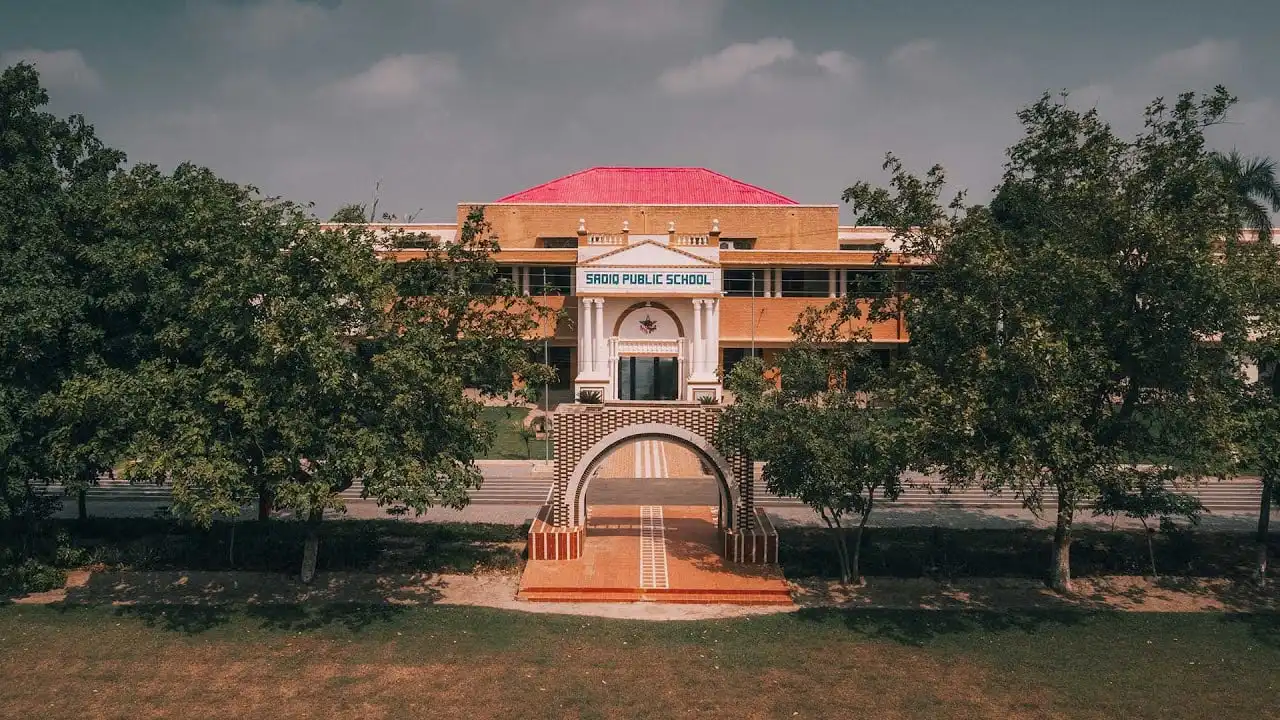
Since it has upheld its legacy as an institution providing quality education and developing the personalities of its students, it attracts students from across Pakistan – and beyond.
The History of Sadiq Public School
The Ruling Nawab Family of Bahawalpur (descendants of the Abbasid Caliphs of Baghdad) have long been patrons of education and knowledge. The Nawabs firmly believed that education was pivotal for uplifting the overall status and well-being of the region’s people. Historically, they constantly elevated the entire Bahawalpur region regarding development, education, employment, etc. Before the school’s inception, the family had been donating Jagirs (feudal land grants) to religious institutions, the centers of education at the time.
His Excellency Sir Sadiq Muhammad Khan Abbasi V, the Nawab of Bahawalpur at the time, laid the foundation stone of the school on March 4, 1953.
There were very few quality public schools in Pakistan then – namely Aitchison College in Lahore and Lawrence College in Murree. His Highness was determined to provide a top-tier English-medium public school for students in the Bahawalpur region. His vision of the school was to create an institution that would provide quality education rooted in Islamic values while embracing modern teaching methods that would bring the students at par with top-tier institutions worldwide.
He allocated a massive 450 acres of land in main Bahawalpur for the school and financed the construction. The land allocated was on the main route used by Sher Shah Suri, making it easy to access from the cities. Credit must also be given to his Chief Minister, Makhdoom Zada Hassan Mahmud, who was responsible for supervising the project.
Sadiq School was officially inaugurated by the Nawab on 18 January 1954. The inauguration was attended by dignitaries, educators, and community leaders. This event symbolized the faith in the Nawab’s dedication to education and the progress of the region.
The school started functioning after developing a main school block, a junior boarding house for fifty boys, a senior boarding house for fifty boys, and five staff bungalows. Within two years, a mosque, two swimming pools, a hospital, twelve more staff bungalows, and all the supplementary buildings were completed. The school’s architecture was a perfect blend of Islamic elements and modern aesthetics from the time, with the construction reminiscent of the glorious residences of the Nawabs.
To begin with, there were only 37 students and seven teachers. The first Principal, Khan Anwar Sikandar Khan (former Principal at Aitchison College Lahore), began his exemplary work of making the Nawab’s vision a reality. He was Principal for eighteen years and received the Sitara-e-Khidmat for his work in education. With time, the school kept expanding its infrastructure, capacity, and educational programs, slowly evolving into one of the premier educational institutions across the region.
The first batch of students appeared for Senior Cambridge in 1957. In 1958, students appeared for matriculation, in 1966, for Intermediate, and in 1994, for Cambridge A Levels.
Sadiq Public School Today
Infrastructure
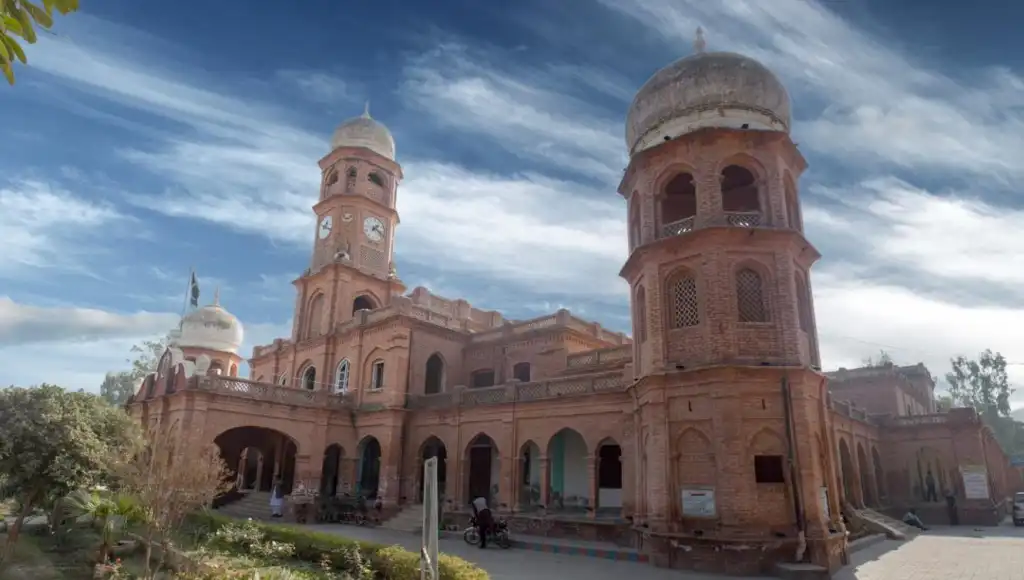
This institution currently ranks among the foremost Public Schools in the country. Today there are four academic blocks, eight boarding houses, around 2500 students (of whom 600 are boarders), 180 teachers, 67 staff houses, 109 staff quarters, two swimming pools, a library, a squash court, a gymnasium, a horse-riding club, an IT Centre, and an open-air amphitheatre. It is also the only school in Pakistan that offers boarding for both boys and girls. In terms of size, the school is the largest in Pakistan and continental Asia.
Curriculum
The academic programs at Sadiq Public School are designed according to their curriculum—which is made up of five elements. These elements are:
- Discipline
- Academics
- Sports Activities
- Non-Sports Activities
- Community Service.
This five-prong approach to education means that the student is developed holistically, focusing on character building. All students are required to participate in activities around all five elements.
Education
The school offers education from junior to higher secondary levels, adhering to national and international standards. There are four schools: Junior School (Classes 0 to 5), Prep Boys’ School (Classes 6-8), Girls’ School (Classes 6 to 12), and Senior Boys’ School (Classes 9 to 12).
Sadiq Public School prepares students for the Cambridge O-Level and A-Level examinations and the local matriculation and intermediate systems, ensuring a wide range of opportunities for higher education.
State-of-the-Art Facilities
Sadiq Public School boasts a sprawling campus equipped with world-class facilities:
Library: The library is an integral part of the school and boasts an extensive collection of reading materials.
Science and IT Labs: The science and IT labs are equipped with modern equipment to ensure that the students are up to date with the technological and scientific advancements across the world.
Sports Complex: Sports are a key part of the students’ education at Sadiq Public School, and are a mandatory part of the curriculum. The school has excellent cricket, football, tennis, horse-riding, and swimming facilities.

Hostel Accommodation: Boarding facilities were a part of the inaugural buildings and have only improved. Around six hundred students from across Pakistan avail the boarding facilities.
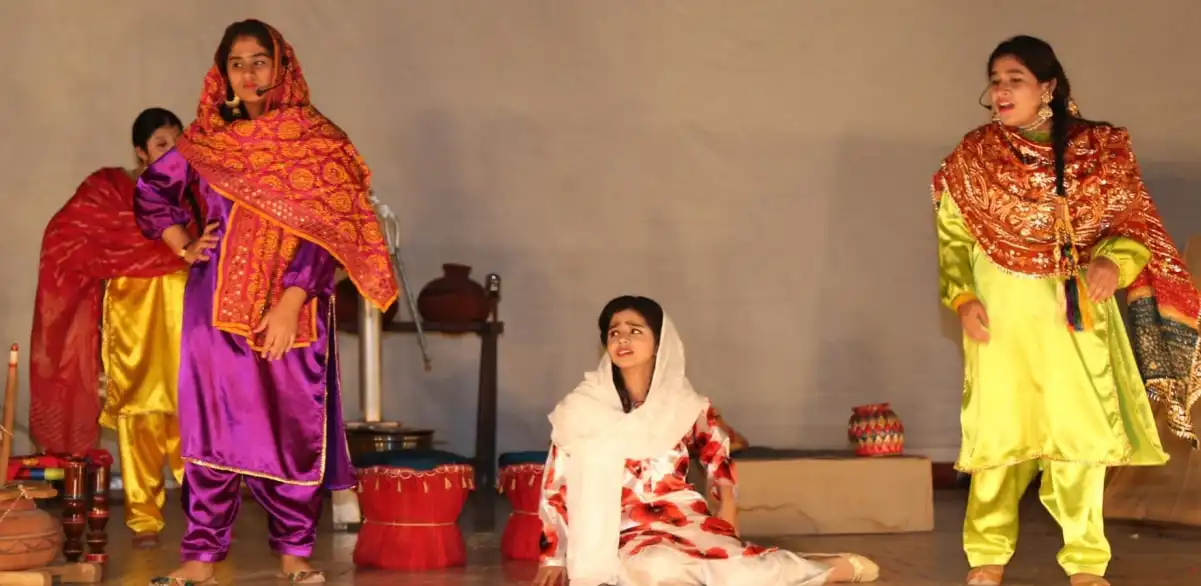
Auditorium: Non-sports activities include drama clubs. The auditorium is specially designed to accommodate theatre performances, cultural programs, seminars, and a plethora of other activities.
Mosque: One of the first buildings to be constructed, the mosque is a beautiful structure that students widely use.
Alumni Achievements
The alumni of Sadiq Public School are a class apart and have made major contributions in various fields, including governance, business, academia, and even the arts. The school’s alumni network is robust since the bonds made between the students during their time at the school are unbreakable. Moreover, the older students take pride in supporting the students of younger generations and supporting them in maintaining the school’s legacy. Some of the most notable alumni of the school are:
• His Highness, Muhammad Abbas Abbasi, the Ameer of Bahawalpur.
• Nawabzada Muhammad General Sher Ali Khan.
• Nawab Malik Ameer Muhammad Khan of Kalabagh, ex-governor of West Pakistan.
• Makhdumzada Syed Hassan Mehmud.
• Sardar Muhammad Akbar Khan Bugti.
• Nawab Muhammad Iftikhar Ali Khan of Patodi
Admission Process
Given the school’s reputation and the demand for admissions from across the country, admission to Sadiq Public School is an extremely competitive process. It involves entrance tests, interviews, and medical exams. The minimum age for admission is 3 years and 6 months, and only the students who clear the entrance formalities are granted admission.
The evaluation for admissions is normally held in three parts: a written examination, an interview, and a medical examination. The admissions are merit-based, depending on the student’s performance in the written exam and the interview. They are also subject to satisfactory medical results and the space available in boarding houses/classes.
Sadiq Public School also has strict age criteria. No student older than 11 years of age can be admitted to the junior school, and no student older than 18 years of age can be admitted to the school. Moreover, no student older than 20 will be allowed to remain enrolled in the school.
Focus on Religious Education
Islamic studies are given a special focus. Alongside the normal Islamic courses (which teach Islamic history, memorization and understanding of different prayers, and the Holy Quran), all Junior Boarding House students finish learning to read the Holy Quran. There is also a focus on the correct recitation of the Holy Quran, and in light of this, a Qirat (recitation) competition is held every year.
Moreover, attendance for the Maghrib prayers (the fourth prayer of the day) is compulsory for the Senior and Prep section boy boarders. The Friday Prayers are conducted in the school mosque, and religious functions are celebrated and observed.
The Progressive School: Education for All
The Progressive School, located within the campus of the Sadiq Public School, provides free education to the children of the school’s support staff. About 350 students attend classes up until matriculation (10th grade). The facility boasts fully equipped classrooms, science labs, a library, a multipurpose hall, a garden, and a play area.
The Progressive School is funded by the staff, students, and families of Sadiq Public School through fundraising activities and donations.
In Conclusion
Thanks to Nawab’s vision, planning, and generous donations at the time, Sadiq Public School has made a name for itself in terms of quality education. With a special focus on a holistic learning experience for the students, which includes character building, the school ensures that the students are ready to excel in their respective fields and become high-functioning members of society.
For more information about admissions and facilities, please consider visiting the official website of the school: https://www.sadiqpublicschool.com/
If you want to submit your articles and/or research papers, please check the Submissions page.
The views and opinions expressed in this article/paper are the author’s own and do not necessarily reflect the editorial position of Paradigm Shift.

Aleena Imran has an MBA from NUST and has worked as an HR professional at companies like MPCL, Coke, Jazz, and LMKT. In her spare time, she runs her home-based baking business. Apart from being an avid reader, she enjoys writing, photography, and art.