The international order is altering fundamentally. As 2026 unfolds, the old bloc politics of rigid patterns are slowly giving way to flexible, interest-based partnerships that are motivated by pragmatism rather than ideology. The Middle East is at the heart of this geopolitical realignment, a region formerly teeming with unending enmity, but now moving cautiously toward diplomacy, economic collaboration, and strategic equilibrium. This embryonic stability is still fragile, but it does mark a major departure from the destructive rivalry of the previous decade.
Geopolitical significance can get you in the door, but economic might determines whether you can stay in the room.”
This shifting circumstance is both an opportunity and an urgency for Pakistan. On the one hand, Islamabad is in a better diplomatic position with its growing role in regional connectivity, energy diplomacy, and shifting power alignments. On the other hand, external opportunities alone do not ensure long-term growth. Without sweeping institutional changes, economic restructuring, and political stability at home, Pakistan risks wasting a moment that may otherwise reshape its future.
The famous words of the British politician Winston Churchill were, “The more you can look back, the farther you are likely to see ahead.”
Today, Pakistan is at a crossroads, and in such a scenario, the national policy should be strategy-focused and not survival-driven.
The New Middle East: The Helsinki Phase
After years of turmoil in the Levant and Gulf, countries in the area have been forced to confront a grim reality: permanent animosity costs them economically, politically, and in terms of long-term stability. Even the wealthiest oil nations have understood that permanent crises are expensive, frighten away investors, and put their ambitious growth plans at risk.
A good illustration of this thinking is the growing idea of a possible Middle Eastern Non-Aggression Framework. In the spirit of the 1970s Helsinki Process that helped dial down Cold War tensions, the main regional actors, especially Riyadh and Tehran, are steadily moving towards structured contact and regulated cohabitation instead of unbridled competition.
This is a basic revolution in regional politics. For decades, security in the Gulf depended primarily on external protection, especially in the context of traditional American security. But many of the regional capitals now increasingly believe that long-term stability will have to come from working together in the region. Diplomacy is no longer a sign of weakness or a compromise. Rather, it is seen as a strategic tool to achieve economic goals, attract foreign investments, and insulate national “Vision” projects from the adverse repercussions of regional conflict.
In the words of former UN Secretary-General Kofi Annan, “The way from misunderstanding to understanding is dialogue.”
The Middle East, though still fraught with animosity and geopolitical competition, seems to be entering a new era in which the politics of perpetual antagonism are giving way to measured engagement.
Islamabad: A Bridge At A Time Of Shifting Alliances
In the changing sands of international politics, Pakistan is slowly regaining its role as an important diplomatic bridge between contending regional countries. The new relationship emerging between Saudi Arabia, Turkey, Qatar, and Pakistan is something new, shifting from the rigid military alliances of the twentieth century to alliances of convenience among big middle powers.
The rising convergence is fueled by a common interest in regional stability, economic integration, and strategic flexibility. Indeed, Islamabad is increasingly seen as a genuine space for discussion and de-escalation between Iran and the Arab world. Pakistan’s neutral diplomacy and long-standing ties with several regional actors have put it in a unique position to assist in creating communication channels in a polarising globe.
The economic side of this relationship matters too. The wider vision is connecting the energy-rich Gulf states with the emerging markets of Central and East Asia through trade routes, infrastructure projects, and investment partnerships. In this regard, the geographical situation of Pakistan has considerable strategic value. Pakistan may be a major transit hub for regional trade and connectivity at the intersection of China’s Belt and Road ambitions and the Gulf’s commercial push into Asia.
Strategic autonomy is another important ingredient of this changing paradigm. Regional powers want to diversify their relationships, not be too dependent on one global power center. The multipolar approach is compatible with a broader global trend where countries prioritize flexibility, economic interests, and regional cooperation over ideological commitments.
This is a historic moment for Pakistan. For decades, the country was mostly seen through the prism of security and geopolitics. Today, however, there is a possibility to redefine its identity – from a frontline security state to a regional transit and connectivity center that can integrate continents, markets, and geopolitical interests.
As the renowned geo-political strategist, Halford Mackinder, said, “Whoever controls the Heartland, controls the future.”
There is a lot of untapped potential in Pakistan, and in many ways it is not hidden beneath the surface of the earth, but in the very geography of the country.
The Economic Reality: From Extraction Toward Sustainable Growth
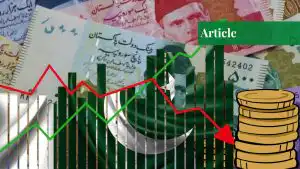
Diplomatic prestige alone will hardly calm a shaky economy. While Pakistan’s strategic importance might be rising in capitals such as Riyadh and Ankara, its domestic economy is burdened by deep-rooted structural issues. The problem is not merely the absence of a collection of revenues. The problem is the structure of an economic system that unfairly penalizes exactly those industries that produce productivity, investment, and jobs.
The formal sector of Pakistan, comprising the documented industries and enterprises that produce jobs and account for a large percentage of government revenue, continues to be under enormous stress. The climate is becoming increasingly unfriendly to legal companies with the heavy taxation on corporations, the additional super taxes, the unclear withholding levies, and the higher expenses of operations. The conforming enterprises endure among the highest burdens in the sector by 2026, including indirect expenditures and regulatory challenges.
This mismatch has produced a dangerous structural trap. The state continues to rely on taxing the documented half of the economy to cover the vast illegal part. The productive minority is being compelled to bear the financial load of the whole system. Such a strategy stifles entrepreneurship, erodes industrial confidence, and drives away capital as more and more investors pick real estate speculation or overseas markets rather than long-term local manufacturing.
Pakistan’s frequent appeal to the International Monetary Fund only compounds the problem. The nation has undoubtedly avoided financial collapse with IMF backing at crucial junctures, but the accompanying stabilization measures – particularly high interest rates, subsidy cuts, and currency depreciation – have often constrained industrial development and reduced economic competitiveness. “What gives you short-term financial breathing room comes at the cost of long-term economic momentum.”
To escape this trap, the focus needs to move from externally-driven stabilization to internal economic resilience. This kind of revolution needs extensive and meaningful changes. First, extend the tax base beyond the customary burden on industries and salaried workers and bring retail, wholesale trade, and large-scale agriculture under a clear documentation framework.
Second, digital governance must replace the inefficient and corrupt bureaucratic structures. End-to-end digitalisation of taxation, customs, and regulatory operations can lower human intervention and increase transparency and compliance. Lastly, there is a desperate need for policy continuity in Pakistan. Local and foreign investors need to be assured that the economic environment, investment incentives, and regulatory regimes will not be modified arbitrarily with every change of administration.
In the words of the brilliant economist John Maynard Keynes, “The trouble is not so much in making new ideas as in getting out of old ones.”
Ultimately, the economic future of Pakistan will depend on whether we can change from a paradigm of short-term extraction to one that supports creation, innovation, and sustained prosperity.
The Green Frontier: A New Window of Opportunity?
Despite the economic uncertainty, there have been good signs of resilience in Pakistan’s economy in the previous several years, and recent developments in 2025 and early 2026 have been no exception. The rapid adoption of solar energy and the sluggish rise of Electric Vehicles (EVs), battery storage, and green technology have been one of the most exciting breakthroughs. These results highlight an often-ignored fact: despite institutional barriers, Pakistan’s private sector remains extraordinarily resilient, adaptable, and sensitive to changing global trends.
Renewable energy consumption in households, industries, and small ventures is not only for ecological reasons, but it has become an economic necessity. Investment in solar solutions is being driven by higher power prices and energy shortages, while interest in EV infrastructure and battery tech is a hint of the beginning of a greater industrial revolution. With stable policy and regulatory clarity, these sectors might be the launchpad for a new era of economic growth and technological innovation.
The true opportunity is to bring Pakistan’s economy to the global green transformation. Countries throughout the world are investing in renewable energy, sustainable manufacturing, and the digital economy. Pakistan should not be left behind in these changes. The task is not only one of navigating through the next International Monetary Fund review or short-term budgetary challenges. The ultimate goal must be to develop an economy that can carve out a position in future-oriented global marketplaces powered by renewable energy, innovation, and digital services.
And Pakistan is now of immense strategic importance. Its geographic location and diplomatic flexibility have made it a more important player in the evolving security and economic architecture of the Middle East and South Asia. But history has taught us over and again that location does not automatically bring prosperity. Many governments with strategic advantages have fallen to internal deficiencies.
For Pakistan, the big question in 2026 and beyond is whether its leaders can show the political will to reform institutions, strengthen governance, and lay the basis for long-term economic stability. Strategic importance may win Pakistan a place at the regional table, but only economic strength, institutional legitimacy, and sustainable development can guarantee that its voice will continue to matter in the decades to come.
As a visionary scientist, A. P. J. Abdul Kalam said, “Actions today create tomorrow.”
Today, Pakistan stands at a crossroads. The decisions we make now – on change, innovation, and stability or the status quo – will influence the country’s direction for millennia to come.
Conclusion: From Geopolitical Advantage to Economic Destiny
Today, Pakistan is at a rare moment in history where global realignments are happening faster than local systems can adjust. The shifting Middle East landscape, the emergence of multipolar diplomacy, and Pakistan’s revival as a regional bridge are creating a unique geopolitical opportunity.
History tells us that only institutions generate resilience, but it is location that gives relevance. Pakistan’s position may win it a seat at the table of global connectivity, but whether it stays there or takes a position of leadership in the new order would depend on its economy, governance, and policies.
And therefore, the real test is within. Is Pakistan a developing, proactive state? Can it rebalance the economy, reform government, and improve productivity beyond structural constraints? These questions will define its economics. And its geopolitics.
Flexibility, interconnectivity, and strategic variety are growing. Pakistan needs to escape the cycles of instability and short-termism. Economic change and diplomatic leverage might convert temporary relevance into permanent effect.
The destiny of Pakistan is not determined by its potential, but by its readiness to progress. The crossroads is a choice, not just uncertainty. And that choice decides whether a state remains strategically relevant or becomes sustainably dominating.
If you want to submit your articles and/or research papers, please visit the Submissions page.
To stay updated with the latest jobs, CSS news, internships, scholarships, and current affairs articles, join our Community Forum!
The views and opinions expressed in this article/paper are the author’s own and do not necessarily reflect the editorial position of Paradigm Shift.