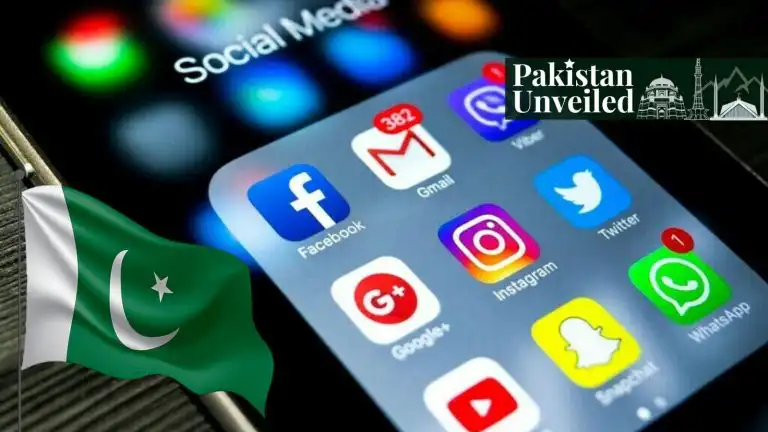
Social media in Pakistan has grown into one of the most closely watched digital ecosystems in South Asia, not just for its scale but for how tightly it’s regulated. With tens of millions of active users & a government that maintains firm oversight over platform access, understanding social media Pakistan today means looking at both the numbers & the policies shaping how people connect online.
This guide breaks down where things currently stand — from user demographics & platform market share to the regulatory environment affecting digital media in Pakistan & the broader Pakistani social media landscape.
How Many People Use Social Media in Pakistan?
Social media users in Pakistan in 2026 stand at roughly 80 million active user identities, representing around 31.2% of the country’s population of approximately 250 million. Within Pakistan’s internet-using population specifically, social media penetration is notably higher, accounting for close to 68.4% of all local internet users.
This places Pakistan among the larger social media markets in the region by raw user count, even though penetration as a share of total population remains lower than in many other countries, largely due to internet access disparities across urban & rural areas.
Gender Disparity Among Pakistani Social Media Users
One of the more notable trends in social media in Pakistan is the significant gender gap among users. Men account for approximately 71.2% of adult social media identities in the country, while women represent roughly 28.8%. This imbalance reflects broader patterns in internet access & smartphone ownership across the country, & it remains one of the more persistent characteristics of the Pakistani social media user base.
Top Social Media Platforms in Pakistan by Market Share
Understanding which platforms actually dominate helps explain a lot about how digital media in Pakistan functions day-to-day.
| Platform | Market Share / Users | Notes |
| Over 91% market share, 22+ million users | The dominant platform across most demographics | |
| 22.4+ million users | Popular among younger, more urban users | |
| YouTube | Roughly 4.3% of users | Primary platform for video content |
| X (formerly Twitter) | Around 1.7% market share | Usage limited by recurring restrictions & disruptions |
Facebook’s dominance in this Pakistani social media landscape is difficult to overstate — it remains the default platform for most users, spanning both personal use & increasingly, social media marketing Pakistan campaigns for businesses looking to reach a broad local audience. Instagram has carved out a strong secondary position, particularly among younger & urban demographics, making it a growing focus for brands running social media marketing Pakistan strategies aimed at that audience specifically.
X’s comparatively low market share is closely tied to the platform’s history of intermittent restrictions in the country, which has affected both its growth & everyday reliability for Pakistani users compared to competitors.
Government Regulation of Social Media in Pakistan
Social media in Pakistan operates under considerable government oversight, & recent years have seen a notable tightening of rules affecting both platforms & individual content creators.
Foreign Media Facilitation Guidelines 2026
Passed by the Ministry of Information and Broadcasting, these guidelines regulate international print, digital & social media platforms operating in the country. Foreign journalists & digital content creators are required to register with the government, & reporting outside major hubs — Islamabad, Karachi & Lahore — generally requires a No Objection Certificate (NOC).
Pressure Around Extremist Content
The government actively pressures major technology companies to remove accounts linked to regional extremist activity. Platforms including Meta, YouTube & Telegram have reportedly cooperated closely with these requests, while the state has been more critical of X’s level of compliance in this area.
Crackdown on Misinformation
Following official statements characterizing a significant share of local social media content as “fake news,” regulatory attention has increasingly turned toward independent vloggers & podcasters. Content creators posting narratives outside officially sanctioned channels have faced cybercrime investigations, part of a broader effort by authorities to control the spread of unverified information online.
Social Media Pakistan Firewall & Platform Bans
The Pakistan Telecommunication Authority (PTA) has played a central role in shaping access to platforms through what’s often referred to as a social media firewall approach in Pakistan — a combination of administrative measures, temporary blackouts & outright bans applied during periods of political tension or unrest.
List of Commonly Restricted or Banned Platforms in Pakistan
- X (formerly Twitter) — subject to repeated temporary restrictions
- Various VPN services — periodically restricted as a workaround-prevention measure
- Select messaging apps — occasionally restricted during periods of unrest
- Specific websites flagged for hosting extremist or unauthorized content
It’s worth noting that bans & restrictions in Pakistan tend to be applied selectively & often temporarily, frequently tied to specific political events, security concerns, or public order situations rather than existing as a permanent, unchanging list. Anyone seeking the most current status of a specific platform or website should check directly with PTA’s official communications, since this landscape shifts fairly often.
What This Means for Businesses & Marketers
For brands running social media marketing Pakistan campaigns, this regulatory environment adds a layer of complexity that doesn’t exist in many other markets. Facebook’s overwhelming dominance makes it the default starting point for most campaigns, while Instagram offers a strong secondary channel for reaching younger audiences. Platforms with less stable access, like X, generally carry more risk for consistent campaign delivery given their history of disruption in the country.
Businesses & content creators operating in this space also need to stay aware of the broader compliance environment — particularly around content that could be flagged under misinformation-related rules, given the level of scrutiny currently applied to independent digital content.
The Road Ahead for Digital Media Pakistan
Digital media in Pakistan continues to expand in raw user numbers even as the regulatory environment tightens. This dual trend — growing adoption alongside stricter oversight — is likely to remain the defining characteristic of the Pakistani social media landscape going forward, shaping both how ordinary users interact online & how businesses approach social media marketing Pakistan strategies moving into the rest of 2026.\
FAQs
Approximately 80 million active user identities, representing around 31.2% of Pakistan’s total population & roughly 68.4% of the country’s internet users.
Facebook remains the dominant platform, holding over 91% market share among Pakistani users.
X has faced repeated temporary restrictions & disruptions in Pakistan, which has significantly limited its market share compared to other platforms, though access has varied over time depending on the political situation.
It refers to the combination of administrative measures, temporary blackouts & platform bans used by Pakistani authorities, primarily coordinated through the PTA, to restrict access to specific platforms or content during periods of unrest or security concern.
Under the Foreign Media Facilitation Guidelines 2026, foreign journalists & digital content creators must register with the government, & reporting outside major cities generally requires a No Objection Certificate (NOC).
If you want to submit your articles and/or research papers, please visit the Submissions page.
To stay updated with the latest jobs, CSS news, internships, scholarships, and current affairs articles, join our Community Forum!
The views and opinions expressed in this article/paper are the author’s own and do not necessarily reflect the editorial position of Paradigm Shift.
Paradigm Shift is an official staff account.