

15 May 2025: The National Institute of Maritime Affairs (NIMA), in collaboration with the Institute of Strategic Studies Islamabad (ISSI), hosted a maiden international seminar titled “Deep-Sea Mining: Prospects & The Global Conservation Imperatives” at Islamabad. The event drew over 200 participants, including policymakers, scientists, environmentalists, industry leaders, and students.
The seminar agitated critical debate on balancing deep-sea resource exploitation with the need to protect fragile ocean ecosystems. Vice Admiral Ahmed Saeed, President of NIMA, opened the event by emphasizing the ocean’s dual identity as both a vital resource and a shared legacy.

Dr. Diva Amon, a National Geographic explorer and biologist at the University of California, cautioned against the irreversible damage mining could inflict on undiscovered species and carbon-rich ecosystems. In his keynote address, Senator Mushahid Hussain highlighted the geopolitical dimensions of deep-sea mining and urged Pakistan to harness its strategic Indian Ocean position while advocating for fair global governance, while ensuring a balanced natural ecosystem.
Ambassador Per Albert of Norway stressed exploring economic opportunities linked with deep-sea mining while being cautious of the environment. He highlighted that Norway’s government is already using less harmful technology for exploration in its EEZ and continental shelf. Other experts included Dr. Fasiha Safdar (NIMA), Mahmood Akhtar Cheema (IUCN), Eng. Naimat Ullah Sohoo (NIO), Dr. Nawaz Ahmed Virk (MOE), Mr. Jahanzeb Sikandar (YouCan LLC), Ms. Amna Munawar Awan, SVP of PBF, and Ms. Shagufta Iqbal, Dy Secretary MoMA, who shared Pakistan’s perspectives.
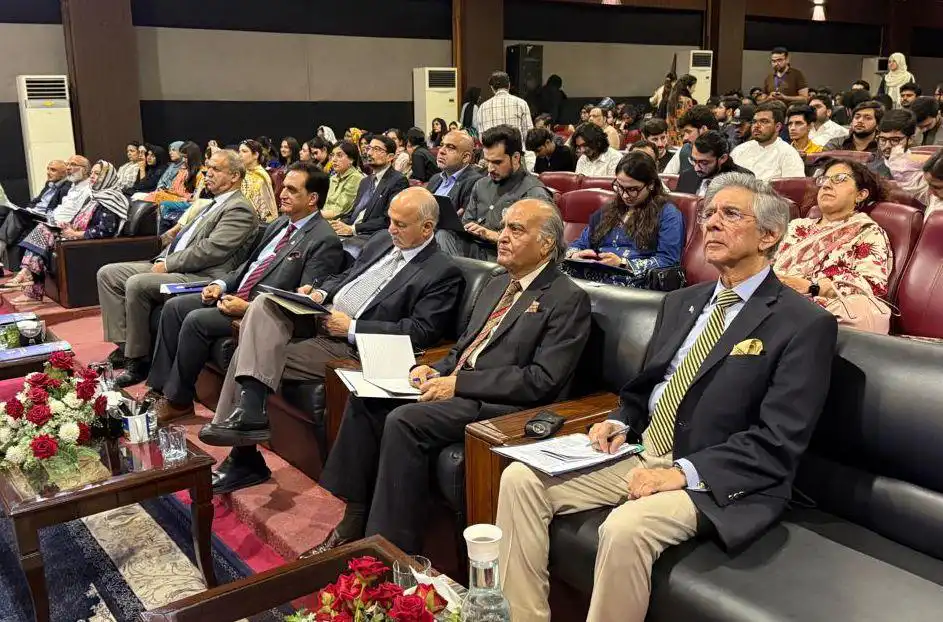
International experts Shigeru Tanaka (Deep-Sea Conservation Coalition, USA), Sérgio Carvalho (Oceano Azul Foundation, Portugal), Julian Jackson (Pew Charitable Trusts, USA), and François Mosnier (Planet Tracker, UK) enriched the discussion with global insights. Chief guest Dr. Sajjad Ahmad, DG Geological Survey of Pakistan, emphasized that Pakistan’s Exclusive Economic Zone (EEZ) holds potential but called for science-led, environmentally responsible collaboration.

During the discussion, consensus was achieved that international cooperation is not just desirable—it is essential. No single country, regardless of its technological prowess or economic strength, can address the complex challenges of deep-sea governance on its own. We must work together across scientific, legal, political, and industrial sectors to ensure that any development aligns with the overarching principle of ecological conservation. Ambassador Khalid Mahmood, chairman BoG of ISSI, closed the session by commending NIMA’s efforts in creating a platform where diverse interests aligned to seek shared solutions.
If you want to submit your articles and/or research papers, please visit the Submissions page.
To stay updated with the latest jobs, CSS news, internships, scholarships, and current affairs articles, join our Community Forum!
The views and opinions expressed in this article/paper are the author’s own and do not necessarily reflect the editorial position of Paradigm Shift.

NIMA is a premier maritime-related think tank of Pakistan, which undertakes analysis and evaluation of National and International Maritime issues and policies in order to recommend solutions to advance the maritime interest of the country. NIMA is also focusing on spreading awareness about the importance of the maritime sector.