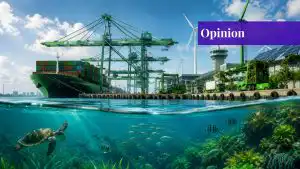
There is no difference of opinion that among all the 17 SDGs, progress on SDG-14 (i.e., Life Below Water) is one of the most challenging considering complex governance arrangements in national and sub-national contexts. Some of the major challenges in marine areas are over-exploitation of resources with a profit-making approach, emerging non-traditional security threats, the adverse impact of anthropogenic activities, high levels of poverty as well as vulnerable livelihood of the fisherfolk community in coastal areas of developing countries. Climate extreme events have increased in frequency and severity; hence, resilient infrastructure in coastal areas and early warning systems are required to mitigate human and material loss. The case of Pakistan is no exception.
Overall SDG-14 has 10 targets as well as 10 indicators, which overlap with other SDGs, particularly with SDG-1(No Poverty), SDG-2 (Zero Hunger), SDG-3 (Good Health & wellbeing), SDG-6 (Clean Water & Sanitation), SDG-7 (Affordable & Clean energy), SDG-8 (Decent work & economic growth), SDG-13 (Climate action) and SDG-17 (partnership for the goals). It revolves around environmental security by emphasizing the use and conservation of marine resources sustainably, as the ocean propels global systems to make it possible for human beings to survive on Earth.
The targets of SDG-14 focus on reducing marine pollution, protecting and restoring ecosystems, minimizing ocean acidification, promoting sustainable fishing, conserving coastal and marine areas, ending subsidies contributing to overfishing and illegal fishing, and increasing the economic benefits from the sustainable use of marine resources.
The Small-Scale Fisheries (SSF) guidelines of FAO (Food and Agriculture Organization) adopted by member countries in 2014, provide a global consensus on the principles, good fishing practices, and guidance to ensure small-scale fisheries become sustainable. These practices would benefit small-scale fisheries, fishermen, their communities, and society at large.
In the context of food security and poverty alleviation, small-scale fisheries are not only one of the key actors in the governance for ocean sustainability but can also play a significant role in achieving SDGs targets set by SDG-1, SDG-2, SDG-3, SDG-5, and SDG-8. In this regard, provincial governments in Pakistan particularly Balochistan and Sindh need to devise adequate policy measures along with action-oriented strategies to meet SDGs targets.
According to research carried out by FAO in 2020, the fisheries sector supports the livelihoods of over 120 million people worldwide. Small-scale fisheries produce two-thirds of all catches destined for direct human consumption and provide 90% of the employment in the sector. There is a need to align national legislation with various policies to support holistic development in small-scale fishing communities to meet SDG-3, SDG-4, and SDG-8.
The increasing factor of acidification (SDG-14.2) threatens marine life, and it limits the ocean’s capacity to moderate climate change. Nearly, one out of every five fish that are caught worldwide comes from illegal, unreported, and unregulated (IUU) fishing as it puts the sustainability of fish stocks at higher risk.
It is a matter of concern that Pakistan’s marine fisheries resources have been considerably affected due to overfishing, unsustainable practices, and anthropogenic pollution aspects. An estimate suggests that Pakistan has already lost 80% of its fishery stocks due to IUU fishing practices. In addition, bottom trawlers, old-fashioned traditional fishing, and wrong netting techniques have exacerbated these issues. In this regard, the Indian Ocean Tuna Commission (IOTC) has recommended suitable fishing gears which need to be adopted along with best and modern practices.
Some of the targets of SDG-14, which focuses on safeguarding our oceans, expired in 2020. Disappointingly, the indicators show limited progress across most nations, often due to prevailing sea blindness, inadequate resources, funding, and dedication. As we move forward, declaring Astola Island and Churna Island as Pakistan’s marine protected areas (MPAs) was an important step in achieving commitments made by Pakistan under SDG-14 to complement the efforts towards targets set as SDG-14.2 and SDG-14.5. But it only makes up 0.21% of the 10% of coastal and marine areas that we committed to achieve by 2020. More areas other than Astola as identified by the National Coordinating Body (NCB) of Mangroves for the Future Pakistan headed by the Ministry of Climate Change. It is imperative to declare more MPAs as identified by NCB and implement effective strategies to ensure their meaningful protection and management.
In addition, fisheries subsidies (SDG-14.6), while providing tangible benefits to fishermen can also fuel overcapacity and overfishing in marine ecosystems. For instance, as per NIMA research, Pakistan has over 28,000 fishing boats as compared to the actual requirements of 1000 boats for sustainable fishing in Pakistani waters. In 2022, the Balochistan Government distributed 2,000 boat engines to help poor fishermen. This situation underscores the need to shift focus from harmful subsidies to establishing fish processing plants, which would promote better fishing practices and improve fish quality. Therefore, the provincial and federal governments in Pakistan need to rationalize any new incentive or subsidy.
In the context of SDG-14, sustainable practices in industrial fishing and incentives for small-scale fisheries are also very important, and a balanced approach along with coherent procedures at both provincial and federal levels is needed to have a win-win scenario. Addressing the realm of small-scale fisheries, which includes both artisanal and industrial fishing within 12 nautical miles, there is a need to formulate targeted policies and strategies by provinces. The federal government may give rights to provinces for issuance of licenses for sustainable use of deep-sea fisheries resources by observing the IOTC guidelines.
Last but not least, mangroves need to be conserved which are the exceptional intertidal forests at the land-sea interface, and play a pivotal role in both marine and terrestrial life. They serve as vital nursery grounds for numerous fish species. These holistic policy considerations can pave the road towards sustainable marine practices and ecosystem conservation in Pakistan.
This piece was originally published in the Navy News Magazine and has been republished based on an MoU signed between Paradigm Shift and the National Institute of Maritime Affairs.
If you want to submit your articles and/or research papers, please check the Submissions page.
The views and opinions expressed in this article/paper are the author’s own and do not necessarily reflect the editorial position of Paradigm Shift.

Ms Saba Zeenat is the Research Assistant at the National Institute of Maritime Affairs (NIMA), Islamabad.