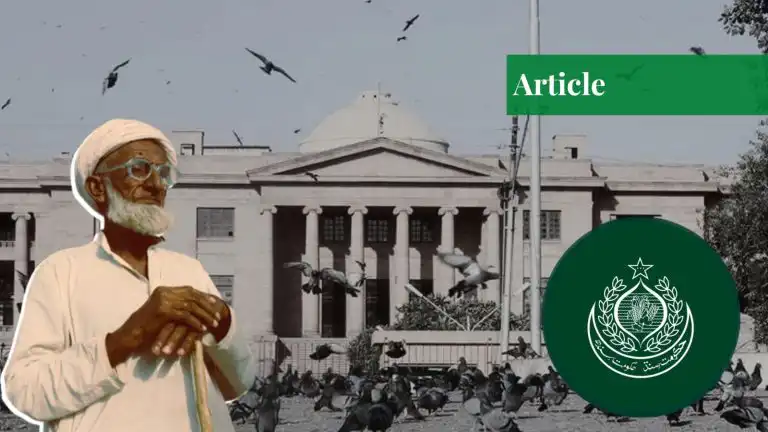

The most neglected segment of our society is our “senior citizens.” They are the ones who have devoted their entire youth to serving others, whether the nation, the community, or their own families. They played a vital role in building the country’s economy and shaping the foundations of our homeland. Throughout their life, they have dedicated their time, their sweat, blood, and tears to others. After a lifetime of devotion, they at least deserve a dignified, peaceful, and respectful life from society and the state.
For years, we have been working for the marginalized class of our society, advocating for legal protections and social recognition. Internationally, many treaties exist to protect the rights of marginalized segments of society, yet remarkably, not even a single treaty is dedicated specifically to safeguarding the rights of elderly people. The most relevant international framework remains the “Madrid International Plan of Action on Ageing, 2002,” to which Pakistan is a signatory. The document provides guidelines on three priority areas: development, advancing health and well-being, and enabling supportive environments to protect senior citizens. The document is a comprehensive, well-drafted document that carries protection, prevention, provision, and respect for the rights of older people. But it contains recommendations, not obligations.
Senior Citizens’ Welfare Act
Following the 18th Amendment, provinces enacted legislation to protect the rights of senior citizens in Pakistan. Sindh, once again, outperformed many others by enacting its Senior Citizens’ Welfare Act, 2014, enforced in 2016, after KPK. The Sindh Act was well-articulated and senior citizen-friendly, as it considered approaches to facilitate and protect them according to their health and socio-economic needs. However, very few of the beneficiaries were aware of the rights and protection provided under the Act.
The Act contained a holistic approach in ensuring a peaceful family environment, healthy living standards, accessible health care facilities, economic empowerment, and protection of property rights. The Senior Citizens’ Welfare Act imposed clear obligations on both the government and the Council, established under the Act, requiring them to take all possible measures for the welfare and well-being of the elderly and their participation in society. The following are some significant duties granted to the Council:
- Senior Citizens Card: Provides essential benefits for senior citizens. It’s available by following the manual application process and penalizes those who refuse to honor the card with rigorous imprisonment for one to three years or a fine, which may extend to thirty thousand rupees, or with both.
- Health Services: Free geriatric, medical, and health services with free medicines from government healthcare facilities and a 25% concession on all private healthcare facilities.
- Transportation: A 50% concession in fares in road transport.
- Daily Essentials: 25% discount on the purchase of daily essential commodities and medicines.
- Entertainment and Public Spaces: 25% discount at recreation centers, cinemas, theaters, and visiting places, including hotels, motels, resorts, restaurants, and lodging establishments.
- Funeral and Burial Services: Free services on the death of senior citizens by the local councils.
- Participation in National Life: Utilizing the knowledge, skills, and experience of older persons in social and national development.
- Old Age Homes: Establishment of at least one old age home in each district. The District Social Welfare Officer shall be in charge of the old age homes for financial matters, and a trained health/geriatric care worker.
Simultaneously, the government was obligated to ensure the availability of some additional facilities, including:
- Provision of all health facilities, including day care, to promote their physical, mental, and recreational needs; and a 25% concession on drugs and medicines for the treatment of age-related illness.
- Exemption from payment of any tax by any department, bank, or institution on their incomes and profits earned.
- 50% concession in fare of both public and private intra- and inter-city transport, including the concession for Railways and PIA on prescribed forms.
- Provision of Benevolent, Zakat, and Baitul Maal funds for the maintenance, medical, and other financial needs of senior citizens.
- Work opportunity to contribute through their expertise and get recognition through awards.
- Awareness and publicity of the Act, and ensuring sensitization training for government and justice sector officers.
Protection of Property Rights: A Progressive Safeguard
The Senior Citizens’ Welfare Act effectively and beautifully protected the property rights of senior citizens, an emerging issue they face, and served as a strong shield against exploitation. Under the Act, senior citizens were allowed to transfer their property, subject to any legal condition. If the transferee disobeys any terms of the transfer deed, the senior citizen has the right to declare the transfer void through the government. The said transfer shall be deemed to have been made through fraud, coercion, or under undue influence.
Care Responsibility: Formal and Informal
The Act also imposed the responsibility on caregivers, including family members and spouses. It penalized those who intentionally abandon senior citizens through willful neglect, with ‘rigorous imprisonment’ of three months or a fine. While the punishment is modest, it reminds us of the moral and legal duty towards senior citizens.
The 2023 Amendment: A Concerning Retreat
In 2023, a significant upheaval and a new wave of disappointment for the senior citizens took place in the province. The amended law rolled back many of the rights and protections guaranteed under the Act of 2014. Particularly, the triangular construct of right to life, dignity, and equality is seriously affected by the latest amendment.
According to the available sources, senior citizens constitute around 5% of the province’s population, which is now at increased risk of exploitation and neglect. The amended act took the following significant setbacks against the senior citizens:
- The obligations entrusted to the council were turned into mere recommendations by replacing the word “shall” with “may.”
- The council’s authority to exercise additional functions for achieving the objectives of this Act was curtailed.
- The government was no longer bound to provide health facilities to the senior citizens, though it may assign only ‘priority’ to such facilities.
- The obligation regarding a 25% concession on the private healthcare units was withdrawn.
- The 50% concession on transport was replaced with the vague term ‘admissible concession’ in fares.
- Old-age homes are no longer required to provide the “geriatric care work/services,” although this tailored care is crucial to manage multiple chronic conditions, maintain independence, and prevent functional decline in elderly people.
- There are no more exemptions from taxes of any kind.
- Even at the time of their death, the council withdraws support for free funeral and burial services.
- The vital property right protection, which authorized senior citizens to cancel the transfer upon violation of transfer conditions, was also removed.
- The strict penalties for neglect or abuse of senior citizens were also disregarded in the 2023 Act. Potentially causing the decline of formal as well as informal care responsibilities towards elderly citizens, thus exposing them to more abusive behavior.
These amendments represent a disturbing departure from a rights-based framework to an arbitrary measure that undermines individual entitlements and protections, ultimately jeopardizing the well-being of those in need.
Time to Reconsider Towards a Respectful Society
It’s time to rethink, reconsider, and review these amendments. The world is moving towards improving the quality of life for all people, including elderly people. The human rights model or rights-based model embodies the values of dignity, respect, equality, and social justice for everyone, including senior citizens. An inclusive society recognizes the ageing; thus, those who spent their lives building our present and future deserve more than sympathy; they deserve protection, recognition, and respect through enforceable rights.
If you want to submit your articles and/or research papers, please visit the Submissions page.
To stay updated with the latest jobs, CSS news, internships, scholarships, and current affairs articles, join our Community Forum!
The views and opinions expressed in this article/paper are the author’s own and do not necessarily reflect the editorial position of Paradigm Shift.

Syeda Izza Maryam Rizvi is a human rights lawyer and an LL.M. (International Human Rights Law) gold medalist. She functions as an independent researcher at Maseeha Law Associates & Mediation Services (MLAMS) and is currently serving as a human rights coordinator with the United Nations Development Programme as a United Nations volunteer. She is a published author on both national and international platforms, with her work primarily addressing issues related to human rights, legal reform, and access to justice. Her contributions particularly focus on women's rights, minority rights, senior citizens' rights, and child rights.