
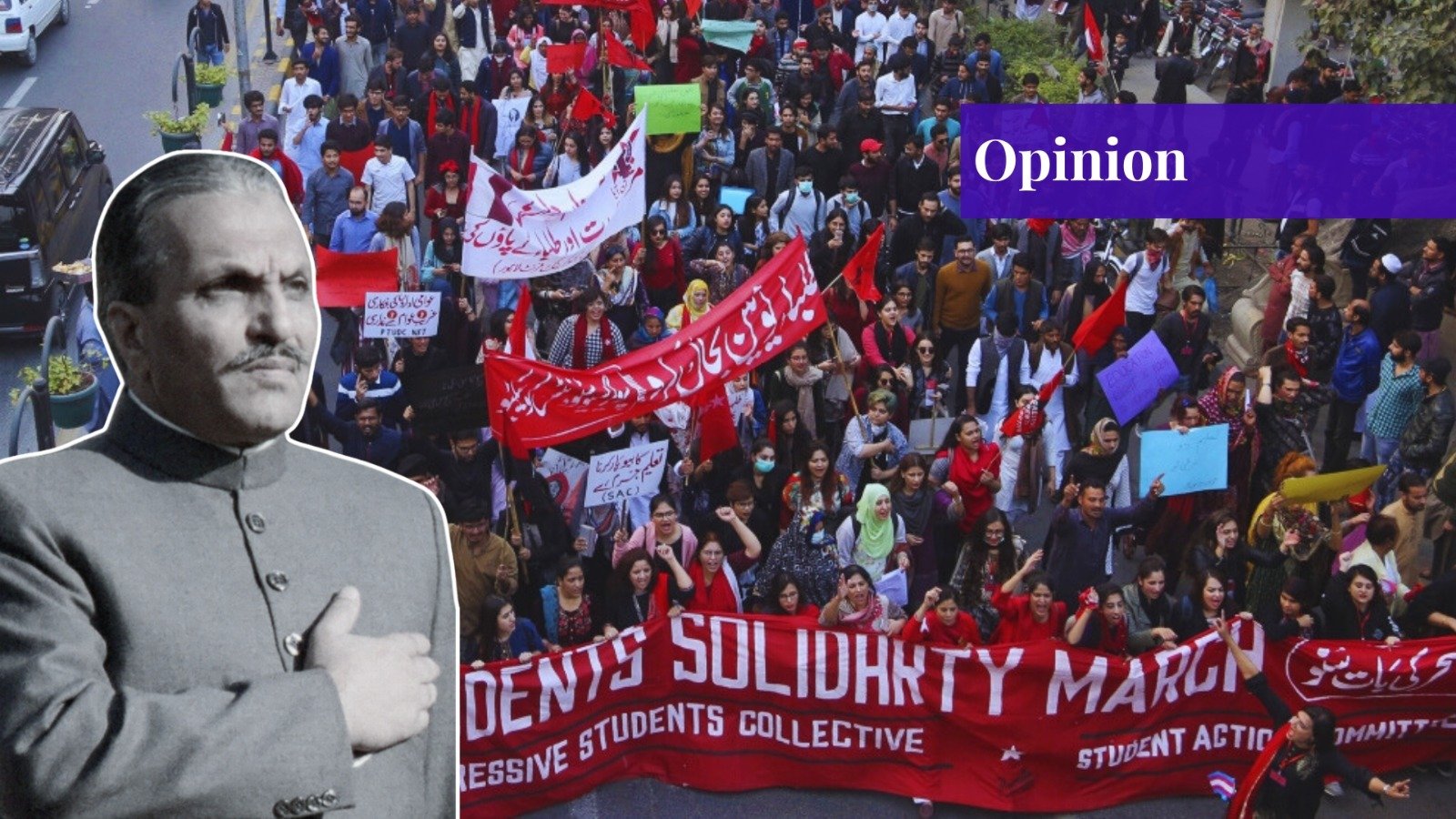

Student unions carry the essence of political governance that represents, hears, and advocates for the interests of students. Administrative bodies in institutions provide a general service to students, but their priorities often lie in protecting themselves and not the individual in matters of conflicts. Unions, however, cater to the comprehensive requirements of students, from social activities and debating on top topics, to countering the anarchy of autonomy, becoming a central right only. The establishment and autonomy of student unions have been villainized a lot, but it is still not enough to erase their necessity and endorsement. The present-day flooding situation in Pakistan has caused students to be left at the mercy of their respective institutions; the problem arises when these institutions are unable to provide the proper support, thereby creating a vacuum of responsibilities that should be performed by student unions.
A distant dream for now, but a reality in years before the dictatorship of General Zia-ul-Haq, there was a thriving culture of student unions in Pakistan. They had respected acknowledgement from the universities and were considered before any institutional policy came into action. A time when students becoming political proxies for their representation was not threatening to faculties, let alone the state establishments. Left-wing movements such as the National Students Federation (NSF) (previously known as the Democratic Students Federation), and right-wing movements like ‘Islami Jamiat-e-Talaba’, although both advocated vastly different ideologies, were united by their rebellion against the dictatorship of General Ayub Khan. The NSF rallied against any change to democratic purity in the country, and the IJT against the wave of secularism General Ayub Khan brought along during his tenure. With their collaborative efforts, the dictator did eventually resign from his position. These unions would have become a solidified standard of democracy, against future martial laws or any constitutional breach for that matter, in Pakistan if not for the ban imposed on them by General Zia-ul-Haq.
Unions have never been flawless. They walked a tight rope of pros and cons, which brought rigid beliefs about them. Unguarded social, political, and economic awareness among youth is risky, yet a necessary tool for democracy. Because what is democracy without opposition? And what is stronger opposition than students who can think and speak for themselves? There have been instances of student unions indulging in abduction, militancy, murders, and exploitation of means. During the entire ‘gun culture’ era at Karachi University, members of different political wings constructed a lethal environment brick by brick, which left people dead, panicked, and caught in a bloodshed they were not able to stop. Major universities in Punjab witnessed the illegal and unauthorized occupation of hostels by student groups. Sindh has also seen its fair share of violence during the clashes of 2009 and 2011.
The infamous legacy of student unions went far beyond its ban. Political proxies continued to thrive. While these events complicate advocacy, they do not negate the importance of unions. In retrospect, a ban on politicians and their parties from using students as pawns would have been more suitable than actively disengaging a platform for students to engage in diplomacy. The positive ruling of the Supreme Court in 1993, an act passed by the Sindh provincial assembly in favor of them, and multiple fights by individual institutions for the restoration of student unions have been unsuccessful in reinstating the glory and liberation of student unions.
Recent torrential rains and floods have shown an apathetic side of universities, especially DUHS, JSMU, and FAST Karachi. Students spoke out about the nightmare they faced that day. These institutions left their students stranded, scared, and in extreme danger at a point when their support was the most critical. Instead of managing their way through the chaos and giving students support and a safe space, they recklessly abandoned their students. Despite hazardous conditions at bay, these universities refused to cancel any lectures and did not accommodate the students when the situation got out of hand. The university transports broke down quickly and failed to drop off students at any safe location. The sheer lack of communication cost someone his life; a worried father who waited for over 14 hours for his stranded daughter. And even the leaders in these places disappointed us with their absence and negligence. It is times like these that the rocky history of student unions feels even more regrettable; had their very foundation not been butchered, student unions could have been a solution to the calamities faced by students of such universities.
Unfair policies and appalling actions have long captivated Pakistani students. Hikes in transportation and tuition fees, as well as dangerous living conditions in hostels, and discriminatory quotas are some of the points of contention that have sparked student rebellion lately. However, with climate change and its consequential flooding, we face another major concern. If student unions are not fully revived even now, universities will continue to push their students into real-time terror. Pakistani students must have a voice, a support system, and they must have it now.
If you want to submit your articles and/or research papers, please visit the Submissions page.
To stay updated with the latest jobs, CSS news, internships, scholarships, and current affairs articles, join our Community Forum!
The views and opinions expressed in this article/paper are the author’s own and do not necessarily reflect the editorial position of Paradigm Shift.

A student pursuing a career in journalism. She is also a public speaker, passionate and experienced in debates, declamations, and MUNs.