Naka Culture
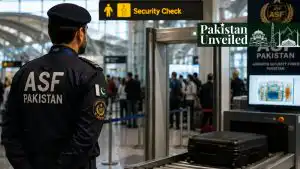
Naka culture, named after the Urdu word “naka bandi” (checkpoint system), is a long-established practice in Pakistan whereby there are short-term or semi-permanent checkpoints established by law-enforcement agencies, local civic authorities, criminal networks, and even militants. In Pakistan, the naka culture is a multi-layered socio-political phenomenon having deep traces in both the security apparatus and governance of the country. These checkpoints were initially aimed at improving the security of civilians, combating terrorism, and regulating traffic, but they have now become means of exploitation, harassment, and adjuncts to control. Rather than serving the common good, it is now seen by many as a means of illegal rent-seeking, racial profiling, and over-surveillance.
The idea of a checkpoint in the Indian subcontinent dates as far back as ancient times, when they would be utilized by rulers to control trade lines and collect taxes. In the Mughal and British colonial periods, nakas gained institutions with the revenue collection and law enforcement systems. Upon the independence of Pakistan in 1947, the new administration continued on with this mechanism, largely as a security measure along borders and to collect border customs. The very nature and role of the nakas have changed with the 1980s Afghan jihad and especially post-9/11, as Pakistan becomes a frontline state in the War on Terror.
What Does the Data Reveal?
Recently reported figures by the Punjab Police Annual Security Report (2025) have shown a rise of 17 percent in registered checkpoints all over the province, the total being 1,407 checkpoints. This growth has also come with the Safe Punjab Initiative by the provincial government, which has introduced 214 new smart nakas that would use fourth-generation surveillance technologies, such as AI-powered behavior analysis systems, along with integrated drone surveillance.
Naka culture has been a firmly established component in Pakistan’s policing arena, and 2025 numbers reveal the extent to which naka culture has penetrated the daily operations of governance, safety, and citizen-state interactions.
| Month | People Checked | Vehicles Checked | Offenders Arrested | Stolen Vehicles Recovered | Overloaded Vehicles Penalized | Licenses Issued | Missing Children Reunited | Other Seizures/Confiscations |
| January 2025 | 3,300,000 | 1,400,000 | 632 | 221 | 46,168 | 17698 | 44 | Removed 338 encroachments; aided 13,000+ passengers |
| February 2025 | 3,100,000 | 1,500,000 | 680 | 261 | 43,866 | 13000+ | 30 | 932L alcohol; 1,555g charas; 120g heroin |
| March 2025 | 3,700,000 | 1,700,000 | 629 | 280 | 56,539 | 12,955 | 37 | 989L alcohol; 37,980g charas; 120g ice |
| April 2025 | 3,800,000 | 1,600,000 | 492 | 280 | 45,091 | 23,293 | 64 | 4 Kalashnikovs; 12 rifles; 61 pistols; 2,086L alcohol; 4,730g charas; 100g ice |
Monthly data from Punjab Police in early 2025 reflect a steady pace: in January, PHP checked 3.3 million people and 1.4 million vehicles, arrested 632 proclaimed offenders, recovered 221 stolen vehicles, penalized 46,168 overloaded vehicles, and issued 17,698 licenses, while also reuniting 44 missing children, removing 338 encroachments, and aiding over 13,000 passengers.
February 2025 saw 3.1 million individuals and 1.5 million vehicles checked, 680 offenders arrested, 261 stolen vehicles recovered, action against 43,866 overloaded vehicles, over 13,000 licenses issued, 30 children reunited, and seizures of 932L alcohol, 1,555g charas, and 120g heroin. In March, checks rose to 3.7 million individuals and 1.7 million vehicles, with 629 arrests, 280 stolen recoveries, 56,539 overloaded vehicles penalized, 12,955 licenses issued, 37 children reunited, and confiscation of 989L of alcohol, 37,980g of charas, and 120g of ice.
Meanwhile, in April, the numbers reached 3.8 million individuals and 1.6 million vehicles, with 492 proclaimed offenders arrested, 280 stolen vehicles recovered, 45,091 overloaded vehicles tackled, 23,293 licenses issued, 64 children reunited, and seizures of 4 Kalashnikovs, 12 rifles, 61 pistols, plus 2,086 L of alcohol, 4,730 g of charas, and 100 g of ice.
Corruption and Control
All these figures on the surface seem amazing, but are reflective of underlying issues. The extensive nature of these checkpoints—handling over 30 million people every year—is highly troubling in terms of civil liberties. Citizens report harassment and often extensive surveillance and bribe demands at nakas, and such spaces that are designed for civic safety become zones of possible extortion.
Nowadays, the naka culture is not about safeguarding society or keeping citizens safe; it is about dominating them. The authoritarian nature of the practices of naka culture, particularly the checking of phones by police in Lahore and Islamabad, is something feared, as it risks political spying and intrusions into privacy, and the trust citizens have in the police declines as they are seen as controlling rather than protective.
Corruption at nakas has adapted to changing times, shifting from traditional cash bribes to digital transfers and “fast-track fees.” Transparency International Pakistan (2024) reported that 61% of transporters still faced extortion, despite these new methods. The Punjab Anti-Corruption Department estimated bribe collections at PKR 12 billion annually in 2023, with individual payments ranging from PKR 750 to PKR 6,300 per vehicle. In 2024 alone, the Punjab Police’s publicly accessible “Police Performance Dashboard” recorded 14,892 corruption complaints.
Transporters have actively protested against these practices. The All Pakistan Goods Transporters Association staged a 10-day sit-in at Karachi’s Sohrab Goth, alleging that each truck was forced to pay Rs. 1,200–2,000 per naka, amounting to Rs. 40,000–60,000 monthly. Despite government committees, little reform followed. As one truck owner described, “Every naka has its own rate. If we don’t pay, they detain us for hours or file false FIRs.”
In Lahore, motorbike riders often face harassment during “special checking” drives. The Urban Resource Centre (URC) reported that 73% of those stopped were youth aged 18–28, with over half pressured for “chai pani” bribes, particularly in low-income areas like Shahdara and Kot Lakhpat.
Economically, nakas impose heavy costs. A PIDE study estimated losses of billions annually to the trucking sector due to bribes and delays, pushing consumer prices up by 5–10%. The FBR reported PKR 500 billion in untaxed goods bypassing nakas each year.
Public trust in checkpoints remains deeply eroded. Gallup Pakistan’s 2025 survey found only 34% of citizens see nakas as security-driven, compared to 63% linking them to extortion. Gendered abuse persists, too, with 22% of women reporting harassment.
The economic loss due to the naka culture is large. According to the study by PIDE (2024), it estimated 7-12 percent increases in logistics costs due to bribery and delays at checkpoints that hurt the competitiveness of Pakistani trade. FBR data prior to that showed smuggling of PKR 250 billion in 2023, which was subsequently curbed to PKR 180 billion in the following year of 2024 as a result of increased scrutiny. The Khyber Pakhtunkhwa Citizens Report also indicated that low-income citizens could not avoid paying bribes despite holding valid papers, which are ultimately paid by the consumers as a form of a hidden tax.
Conclusion
The duality highlights how urgently reform is required. Pakistan does not require more nakas; it requires smarter policing. Full implementation of the Police Order 2002, functional oversight bodies, clear SOPs, and technology like bodycams and license plate systems can ensure transparency. Reforming the naka culture ultimately tests Pakistan’s constitutional commitment to dignity, fairness, accountability, democratic governance, and the rule of law.
If you want to submit your articles and/or research papers, please visit the Submissions page.
To stay updated with the latest jobs, CSS news, internships, scholarships, and current affairs articles, join our Community Forum!
The views and opinions expressed in this article/paper are the author’s own and do not necessarily reflect the editorial position of Paradigm Shift.

Arslan Mehndi Nekokara is a lecturer at GCUF Chiniot Campus. He has an MPhil in political science from Punjab University Lahore, and his expertise lies in global politics, comparative governments, world constitutions, political thoughts, and theories. He can be reached at mehndiarslan@gmail.com.

Malik Sallah Ud Din is a lecturer of English at Government College University, Faisalabad. He can be reached at maliksallahuddin@gcuf.edu.pk.