


Haadiya Areej completed her bachelor's degree in gender and development studies from Lahore College for Women University. She is working as an educator in a school. Furthermore, she also has an interest in research writing and data visualization.
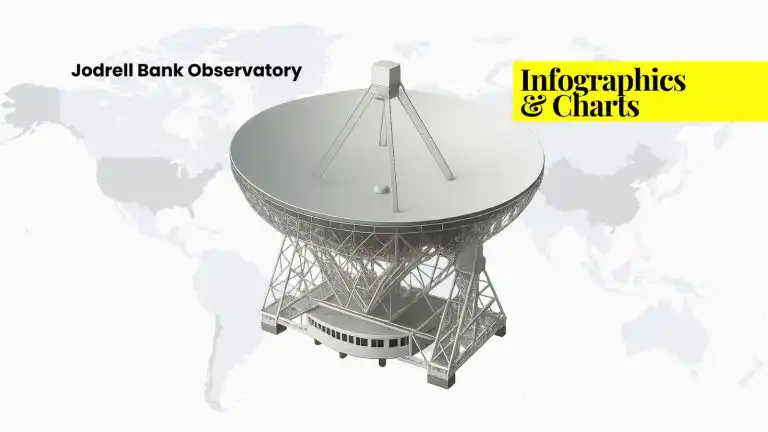
The global telescope observatories demonstrate how powerful optical and radio telescopes expand our understanding of space. Observatories make use of optical and radio telescopes to study the world beyond the stars.
Famous optical telescopes include: the Mauna Kea (Hawaii, USA), which focuses on black holes and dark energy via the Keck, I&II, and Subaru telescopes; the Paranal (Chile), home to the Very Large Telescope for stellar evolution; Roque de los Muchachos (Canary Islands, Spain), which studies distant galaxy clusters; and the Mount Graham International (USA), dedicated to spectroscopy.

On the other hand, the world’s famous radio observatories include the Green Bank (USA), Effelsberg Radio Telescope (Germany), the FAST (China), and the ALMA (Chile). These observatories collectively represent a global effort in astronomy, covering the spectrum from visible light to millimeter-waves.
If you want to submit your articles and/or research papers, please visit the Submissions page.
To stay updated with the latest jobs, CSS news, internships, scholarships, and current affairs articles, join our Community Forum!
The views and opinions expressed in this article/paper are the author’s own and do not necessarily reflect the editorial position of Paradigm Shift.